

What To Do If Your Hydrangeas Are Covered In Spider Mites

Spider mites are a common and destructive pest that plagues many kinds of plants, and they can ruin the foliage of your beautiful hydrangeas (Hydrangea spp.). Though these tiny arachnids are all but invisible to the naked eye, it's hard to ignore the damage they cause your plants. Finding an active infestation anywhere in your garden is a great way to ruin your day, and you might be wondering what to do when you find spider mites in your yard. Thankfully, there's a super effective option out there that can help kick spider mites to the curb: a horticultural oil called neem oil.
Spider mites are a regular culprit for hydrangea damage. The pests hang out in huge colonies on the undersides of hydrangea leaves. To feed, they pierce the plant tissue to get to tasty plant cells; this, obviously, can rapidly drain the life out of your hydrangeas.
Make sure you know exactly what to look for when inspecting your garden for spider mites. Because they're so tiny – often appearing as moving specks of dust – you'll usually notice plant damage before spotting the mites themselves. Keep your eyes out for leaves that appear stippled or yellowed. As the colony grows, though, you may also see silk webs stretching across leaves and stems. If you look closely and notice tiny moving specks along the webbing, you've likely confirmed a spider mite infestation.
How to treat spider mites on hydrangeas
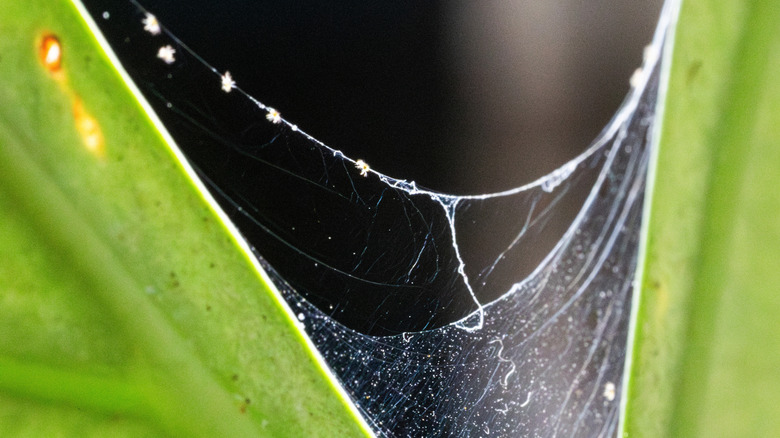
There are many ways to get rid of spider mites, but the easiest is to treat the problem as soon as you notice it. Start by grabbing your hose and using a strong blast of water from it to physically knock the mites off the plant; make sure you get the undersides of the leaves, too. This is a good first step, but it may not be 100% effective on its own. If the mites return or their population is large, you should bring in the big guns: neem oil.
This oil works by suffocating spider mites, helping reduce their population over time and preventing them from terrorizing your hydrangeas. Once you have some neem oil in hand, mix some in a spray bottle with water and a few drops of dish soap. From there, all you need to do is make sure you coat each of the affected plant leaves entirely, especially the undersides, since that's where mites lay their eggs. Keeping hydrangeas consistently watered may also help since spider mites tend to prefer hot, dry conditions. Ensuring constant soil moisture alongside the targeted neem oil treatments can help eliminate the infestation, but if they persist, there are other ways you could try to stop spider mites from invading your home.