

What To Do If You Spot A Swarm Of Yellowjackets Around Your Home Or Yard
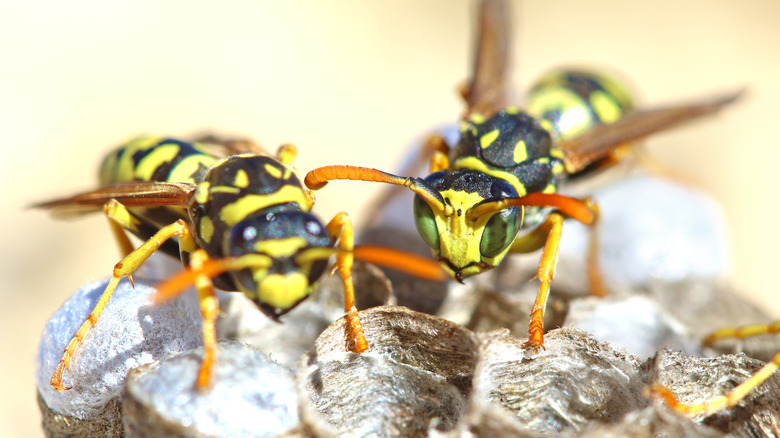
Having a fear of insects (entomophobia) is common. Some people might consider certain insect fears to be a little silly, such as a fear of harmless butterflies, but there are some insects where it's universally considered a good idea to have a healthy fear. Yellowjackets are one such example. A yellowjacket is a type of stinging wasp with a distinctive yellow and black striped pattern across the main part of the body.
If you see a swarm of these particular insects around your home, your first instinct might be to quickly figure out the best way to get rid of yellowjackets. Initially, though, you should be cautious above all else. Yellowjackets are territorial insects that likely won't randomly sting humans, but they are far more likely to attack and sting if you approach the nest or appear to be a threat. If you see a swarm, stop and back away or turn around and walk in the opposite direction. Do not flail your arms or swing something you're carrying at them to try to chase them away. They see this type of reaction as a threat, which increases the risk of suffering multiple stings.
These insects may build nests that hang from trees or eaves, but they more frequently build underground, making it more difficult to spot a yellowjacket nest. You might stumble near a ground-based nest without realizing it. If you see a swarm, you can assume that a nest is nearby, and you should avoid the area until figuring out your next steps.
Subsequent steps to take after seeing a yellowjacket swarm
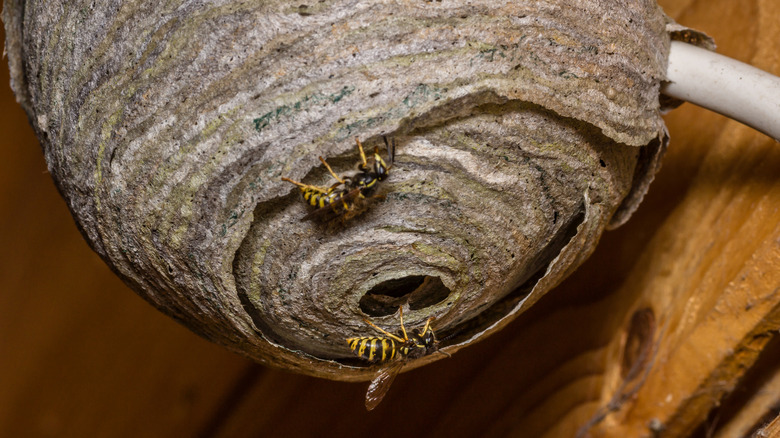
Although your first move when seeing a swarm of yellowjackets should be to go in the other direction, you'll need to take care of the problem soon. You don't want these territorial insects to drive you away from certain areas of your yard and prevent you from enjoying summer evenings outdoors.
To find a hanging nest, watch the swarm from a safe distance. Look for them during times when they're most active, usually from late morning to late afternoon, and watch the direction in which they're flying. They may lead you directly to the location of the hanging nest in a tree or under the eave of a building. The nest will look like it's wrapped in thin gray paper. It will have a hole at the bottom that serves as an entrance and exit.
To find a ground-based nest of yellowjackets, again watch from a safe distance to figure out if they're flying toward holes in the yard. You might even see several of these wasps entering and existing the hole. Take note of suspected nests and mark their locations. A nest might have more than one opening, and you could have multiple nests in the yard, so search across the entire space even after you find one hole. Yellowjackets may also make nests in hollow trees, old fallen logs, and wall voids inside buildings, so pay attention to any areas like this on your property.
Steps to take to eliminate yellowjackets after seeing swarms
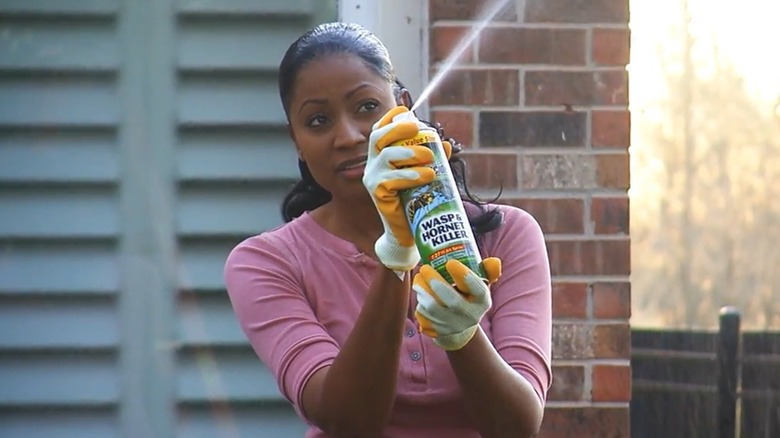
After you study the insects and find the locations of suspected nests, you can decide whether you want to attempt to kill them yourself or hire a professional. You can purchase a spray or foam to kill the insects in a hanging nest from a distance. Most sprays you can buy at the store will give you at least 20 feet of distance. Spreading an insecticide powder made for yellowjackets near the hole is the best option for a ground-based nest. Otherwise, if you're worried about each yellowjacket's ability to sting several times in a row and cause painful welts (with a possibility of allergic reactions), hire a professional exterminator.
If you want to spray or apply insecticide dust to eliminate the yellowjackets' nest, consider doing the work at night. These wasps look for food from late morning to late afternoon, which is when they're more likely to swarm. They usually return to the nest as night approaches, making them less likely to attack you. Understand that you are still at risk of being stung at night; the risk is simply lower. Use a flashlight with a red filter to reduce the chance of disturbing the yellowjackets.
A common mistake that brings yellowjackets into your yard in the first place is leaving food scraps or sugary drinks behind. They might also be drawn to leaks around outdoor faucets, pet water bowls, or overripe fruit that's fallen onto the ground. Eliminating these situations will encourage the insects to build nests closer to other food sources.