

Don't Fall For Its Beauty: The Perennial You Don't Want In Your Garden
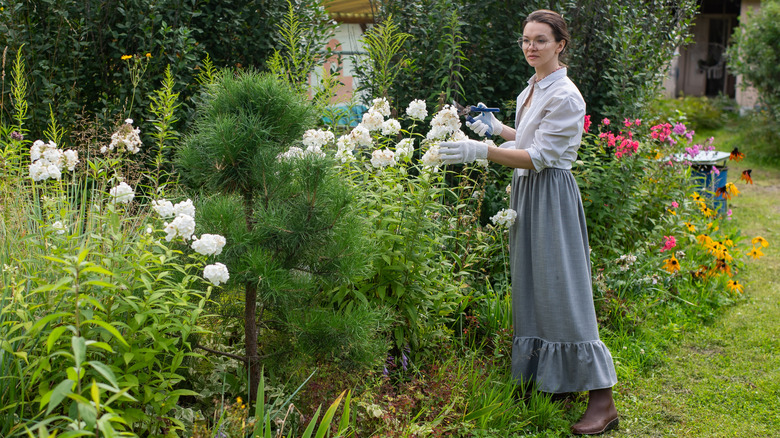
There are plenty of gorgeous perennials to add to your flower garden if you had the space and time to plant them all. In fact, there are even a few perennials that bloom more than once for a colorful garden year-round. However, for most gardeners, it comes down to a choice. Due to limited space, they're forced to select just a few pretty, easy-to-maintain perennials. To keep your garden looking lovely without having to spend every minute of your weekend tending it, look for species that are both beautiful and well-behaved. While evening primrose (Oenothera speciosa) is definitely pleasing on the eye, it's also aggressive. You may quickly regret planting it in your garden.
With its pretty white or pink cup-shaped flowers that can reach 3 inches in diameter, this native herbaceous perennial is undeniably bewitching. Evening primrose is incredibly easy to grow in USDA Plant Hardiness Zones 5 through 8 and will thrive in full sun or part shade. What's not to love about this beauty? The problem is that it has a tendency to spread. Left unchecked, it can easily take over that gorgeous garden bed you've so carefully planned and planted out. Evening primrose colonizes an area using underground rhizomes and seed dispersal. It's one of those popular perennials that isn't worth planting, no matter how pretty it is.
If you really love evening primrose, you can still grow it (with caveats)
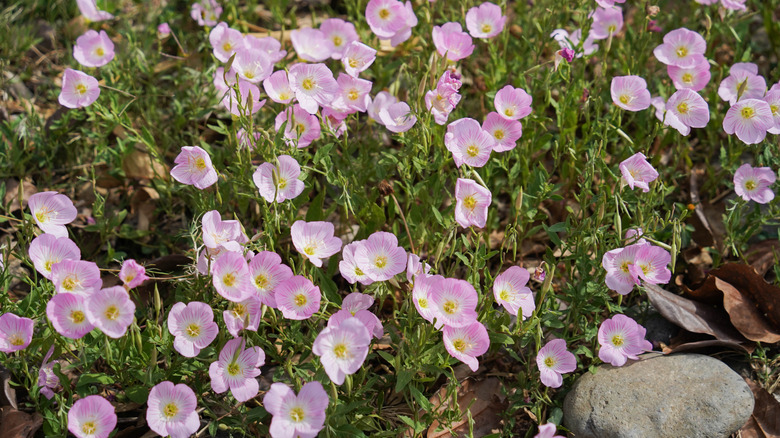
Although evening primrose is a native species, not all natives are well-behaved. Some simply don't belong in every garden — especially if you like a tidy outdoor space. This little gem is so effective at ensuring its survival that it has spread from its native range of Missouri and Texas — as well as Mexico — to become naturalized in other states, such as Louisiana, Florida, Illinois, and Pennsylvania. If it can spread across entire states, just imagine what it can do if planted in your garden. Unless you want to dedicate entire flower beds to this pretty but vigorous species and are happy for it to encroach into neighboring areas, it's best to avoid planting evening primrose altogether.
However, if you feel like you can't live without those stunning flowers, which open in the evening and close the following morning, all is not lost. While you don't want to plant evening primrose directly in your garden beds, it's well-suited to areas where it's free to naturalize, such as wildflower gardens and meadows. If you have a wide-open piece of land where you're trying to establish a field of blooms for pollinators, go ahead and plant evening primrose. If you've seeded the area with other native perennial wildflowers that need similar growing conditions, they should all happily coexist. The pretty pink flowers are perfect for hanging baskets and containers, too. Trim off the blooms before they go to seed to limit dispersal — though deadheading will also encourage more abundant blooming.