

The Potted Hosta Cultivar That's Great For Shaded Porches
We may receive a commission on purchases made from links.
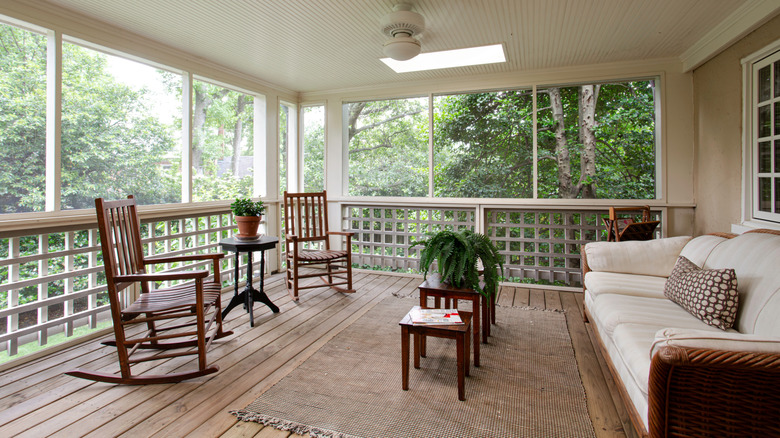
Nothing elevates the look of a porch quite like a few beautiful plants. However, if your porch is heavily shaded, choosing the right plants can become a bit tricky. Still, shade does not mean you have to settle for a dull or empty space. Plenty of plants can thrive in low-light conditions. Coleus, caladium, impatiens, hostas – the list just goes on. And if you like hostas and want to add them to your shaded porch, one cultivar you should definitely check out is the Shadowland 'Diamond Lake' hosta.
This clumping hosta is known for its large blue-green leaves with a heart-shaped form, heavily ridged texture, and softly rippled margins. You can grow it in containers on your porch or simply put it in the ground in your shade garden. Its leaves can grow about 1 foot long, making this bold hosta a great focal point. As for its size, it grows up to 2 ½ feet tall and 4 ½ feet wide. So, if you are growing it in pots, choose a large planter that can accommodate this wide hosta variety to give it adequate root space so it can reach its full size.
The Shadowland 'Diamond Lake' hosta produces pretty lavender flowers that appear on the plants in spring and summer. Even better? They attract pollinators like hummingbirds and butterflies. 'Diamond Lake' hosta is hardy from USDA zones 3 to 9. If you want to add even more interest to your shaded porch, there are many other hosta varieties that grow striking leaves and flowers.
'Diamond Lake' hosta does not like dry soil & hates full sun
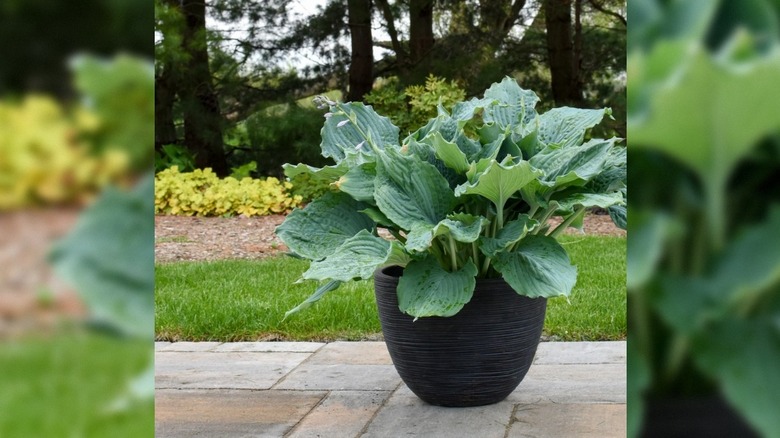
If you are planning to grow the Shadowland 'Diamond Lake' hosta on your porch, choose a fertile, well-draining, moist growing medium. If you are growing it in groups in containers, make sure to maintain a spacing of about 3 feet between the plants. Place it on your porch where it won't get direct sun because it only retains its distinctive blue-green color in shady spots; too much sun will scorch its leaves. If your porch is too sunny, look for different cultivars of hostas that are tolerant to the sun.
To ensure your hosta thrives, keep the soil pH between 5.8 and 6.5. There are many home-based soil testing kits that you can use to check the pH of your soil, like the AKSBTEC 4-in-1 Soil Test Kit for Lawns and Gardens. If the soil pH is too high, add some sulfur, or if the pH is too low, mix lime into the soil. As for watering, 'Diamond Lake' hosta has moderate watering needs, but you should never let the soil get dry.
Fertilizing is a similar story, too. This hosta variety only needs a light application of a balanced fertilizer in early spring. Try to use a liquid fertilizer. However, if you are using a granular fertilizer, do not let the granules touch the plant. Always follow all the label instructions when applying the fertilizer and do not use more than the recommended amounts.