

The Pungent Root Vegetable That Could Be The Solution To Repelling Pests In Your Garden
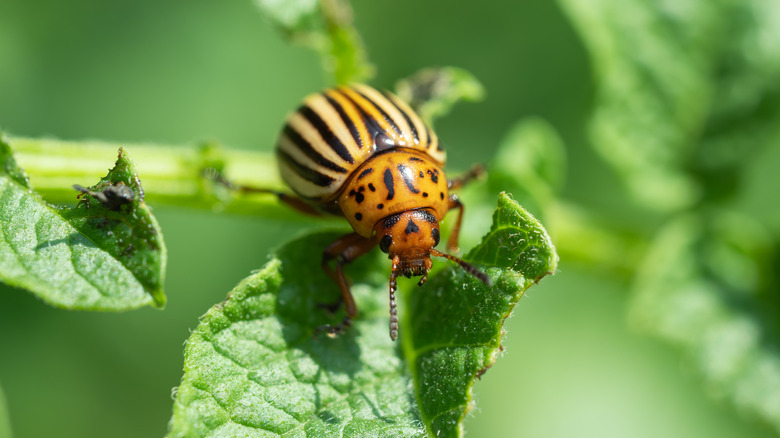
As an easily grown perennial, horseradish (Armoracia rusticana) packs a lot of punch — and not just in cocktail sauce! Along with its own culinary uses, the root vegetable acts as a valuable companion plant when established near vulnerable crops, most famously potatoes and fruit trees. Horseradish is reputed to not only repel pests near potatoes, but also improve potatoes' resistance to diseases, as well as fruit trees' struggles with problems like brown rot.
In the veggie garden, horseradish is usually enlisted to aid potatoes. Specifically, horseradish helps stop pesky Colorado potato beetles. These pests feed on the above-ground, leafy parts of the potato plant, which can eventually kill growing spuds. Plant the horseradish in one corner of your potato patch or set a container-growing horseradish plant near the patch.
Gardener and chef Dorothy Bigelow also points out on her blog that as an orchard companion, horseradish may not only ward off fruit tree diseases like brown rot, but repel root-bothering pests such as voles and mice. In an interview for For Animals. For Earth, farmer and environmental educator Ame Vanorio additionally harvests some of the leaves from her horseradish crop to keep pests and diseases from harming fruit trees. She recommends a ratio of 1 part freshly-chopped horseradish greens to 3 parts water. Let the mixture steep for about half an hour before straining and decanting into a spray bottle. Vanorio finds it effective against fruit tree maladies such as apple-scab and brown rot, which plagues plums and peaches.
Grow horseradish near vulnerable plants, either in-ground or within containers
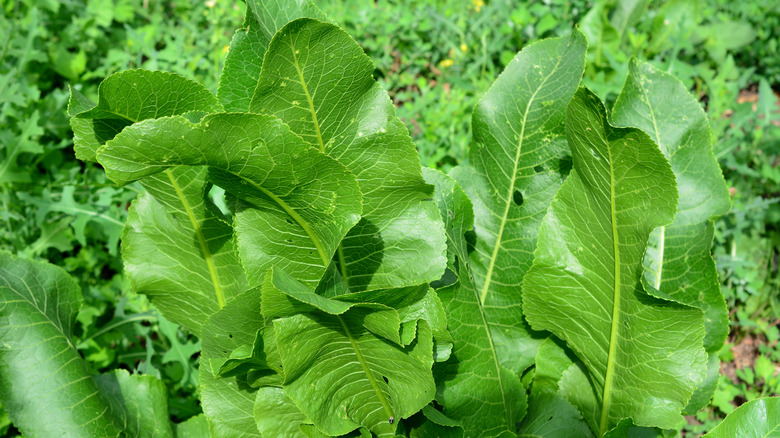
To establish horseradish in a garden or orchard, begin by working the soil to a depth of about 10 inches. Adding compost will improve texture, if needed, while aged manure or 10-10-10 fertilizer adds the needed nutrients. Horseradish grows best if planted either vertically or at an angle rather than horizontally. Place the horseradish set into the ground at a depth of about 3 inches, and cover it with soil.
While the young horseradish is growing, keep the area as weed-free as possible. If you're growing it in an orchard, you may have plenty of space to let the horseradish grow freely. But if it's a mini-grove in which every square foot counts, consider planting the horseradish into a patch of earth in which a bottomless container has been placed. This controls spreading. Left to its own devices, the pungent plant can run wild in gardens and grows about 2 ½ feet tall and wide.
Although horseradish can be grown as a perennial, giving it a permanent place in a garden bed can pose problems for those counting on them to repel specific pests from specific plants. If you rotate your potato patch, for example, that horseradish plant at the back end of the garden will suddenly not do much for this year's front-patch spuds. That's why growing horseradish in a container can be helpful. Place horseradish root in a bucket that's a least 5 gallons in size, and move the potted horseradish close to wherever it's most needed that season.