

The Forgotten Appliance That Was In Every Early 20th Century Laundry Room
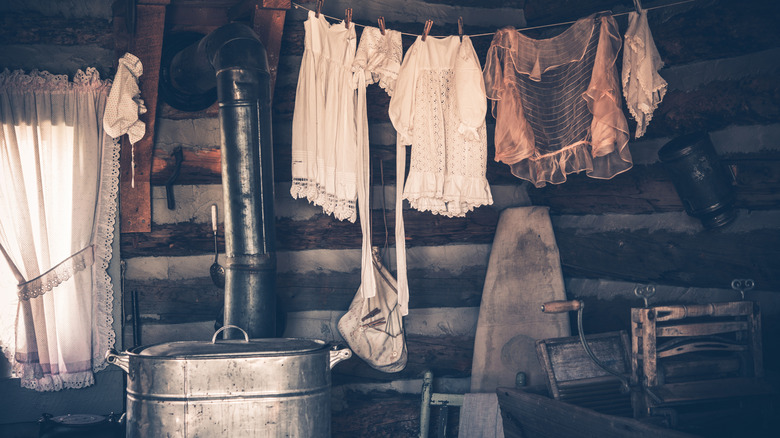
Over the decades, many different appliances have come and gone due to the changing needs of homeowners and various technological advancements. Some of these are retro appliances we wish would make a comeback, but others are better off being left in the past. And when it comes to doing laundry, there have been numerous appliances that homeowners have used in an effort to make the troublesome chore easier. One interestingly named antique appliance that was a part of many people's laundry routine was the sad iron. While you may feel sad whenever you have to iron your clothes, the sad iron gets its name from the Old English word for "solid," and that's not a misnomer. These antique irons were often made of cast iron, making them extremely heavy. These irons were in popular use up until the 1920s when they were replaced with electric irons.
Often when technology advances, devices of bygone eras become obsolete and get forgotten about. There are many old-school laundry room items that nobody uses anymore (the mangle, for example, was left in the past for a reason). When it came to the sad iron, no one was sad to see it go. This type of iron was heated by being set next to a fire or by heating it on a stove, and as you can imagine, made ironing clothes and linens a high-stakes situation. In addition to risking getting burned while ironing, using a sad iron also put you at risk for crushing your fingers with its up to 9 pounds of dead weight. While you may not want to use one of these irons to press the wrinkles out of your shirts today, these irons were great tools for their time.
What was a sad iron, and does it have a place in modern homes?
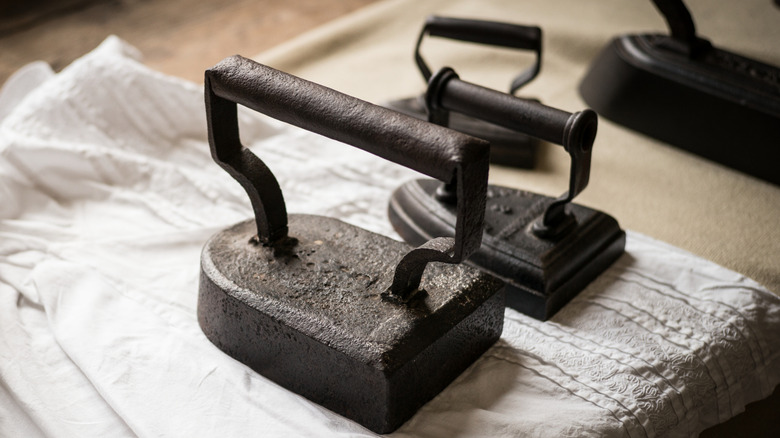
Sad irons weren't just a way to iron the wrinkles out of laundry; they also provided a necessary benefit to the health of a household. You see, because these clothes irons were heated to such high temperatures, they were utilized to sanitize linens and clothing as well. They were also used to kill lice. So, you can imagine how important the step of using a sad iron was for the whole laundry process during the late 19th century and early 20th century. It wasn't just a mindless chore — it was an essential part of sanitation. The biggest drawback to using a sad iron was the fact that it was often so hot that it could scorch and burn your clothes. Because the handle in the early days was typically made of metal as well, it could have the same effect on your hand — that is, until Mary Florence Potts came along. Mary redesigned the sad iron in the late 1800s and patented one that was much safer and easier to use.
Sad irons can often be found in antique stores, at swap meets, and estate sales. Online, depending on the design, sad irons can sell for hundreds of dollars for the more intricate types to under $100 for the more basic styles. And while many think there is simply no need to have an iron anymore, you could always use an antique sad iron as a lovely vintage decor piece for your retro-inspired interior design. While you might not want to use one to iron clothes, sad irons can still have a place in the home.