

Upcycle Old Jar Lids Into A Vintage-Inspired Mini Plant Stand
We may receive a commission on purchases made from links.
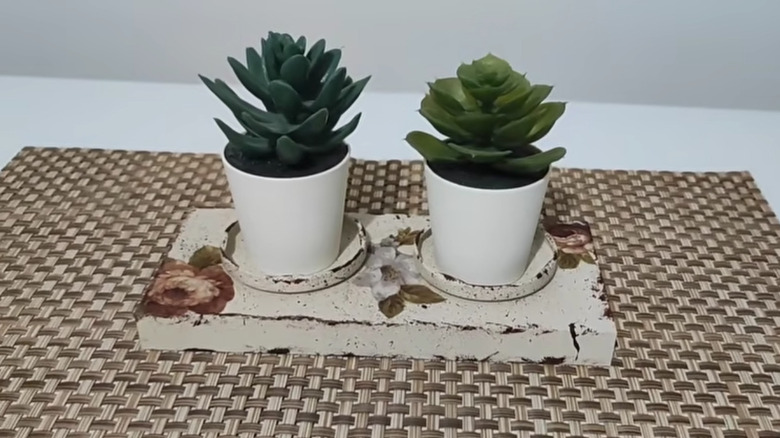
If your houseplants growing in low light had tippy toes, they'd be standing on them, trying to lean closer to any window they could. In the absence of said little piggies, your leafy friends would benefit from a plant stand. A perch raises their height — getting them closer to a light source and increasing air flow around them — and makes 'em look stylin'. While there's no lack of plant risers on the market, crafty YouTuber Mini Atölyem deserves accolades for her vintage-inspired mini plant stand idea. For this DIY, she glued two old jar lids onto a piece of scrap wood, aged the stand with paint, and added floral embellishments. Tiny plants never looked so good as they do standing on this number.
This beginner-friendly DIY plant stand only requires a few items to make. The lids you choose don't need to match in size. However, you may want to choose a material that fits your chosen aesthetic for the stand — metal jar lids often look more high-end than plastic lids, for example. Clean the lids thoroughly to get rid of any leftover food or smells and allow them to dry completely. You'll need two colors of non-toxic acrylic paint: off-white and brown or black. You'll also need some paint brushes, a toothbrush, some fabric with a pretty pattern, a pair of scissors, and some craft glue. The size of the lids determines how wide and long your piece of wood needs to be. The height or thickness is your choice. Grab some sand paper and your hot glue gun, too. Finally, get a couple of houseplants in small pots that fit inside the lids.
Building a stand for a few of your mini houseplants
Ready to get started crafting this modern plant stand you can DIY without spending the big bucks? The first step is preparation. Paint usually doesn't stick to metal — or plastic, for that matter — without a little assistance. Help, in this case, means giving lids a good sanding. If you wind up scuffing or scratching them in the process, that's okay. The plant stand is supposed to look vintage, and any minor blemishes will only make it appear more authentic. You may also need to sand any rough patches or sharp edges on the block of wood. Do that before moving on to the next step.
Next, glue the lids onto the wooden block. Then, working with a sponge brush, cover both the wood block and lids with off-white paint. Apply it using a dabbing motion. Chalk paint is a good option for this. Its slightly gritty, matte texture will look old once it dries, helping you to pull off the stand's vintage appearance. Once that dries, dip the bristles of a toothbrush into dark paint and flick small splats of the medium all over the stand. Then, brush the corners of the wood and the lip of the lids with more dark paint. Use a light touch. The dark trim should look like wood is peeking through cracks and scuffs in the white paint.
Embellishing the plant stand and customizing its shape
You can use thin floral-patterned fabric to enhance the vintage vibe. Cut some of the blooms from the material and glue them onto the painted wooden base. However, fancy napkins decoupaged onto the wood would also have a similar effect. The benefit of using them is that it's easy to find themed napkins. For example, if you're making this DIY for a specific purpose, like a fall tablescape or mantel vignette, look for napkins adorned with red and orange leaves. Once you're done and the planter is dry, nestle your small potted plants inside the lids. There you have it — an indoor plant stand that livens up any space.
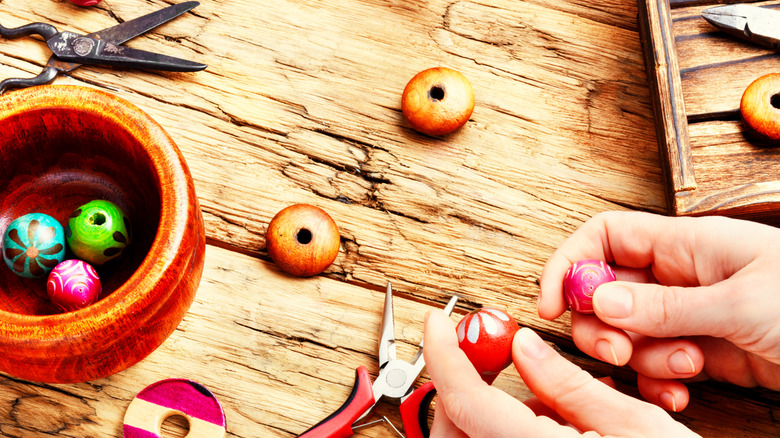
You can also experiment with the design of the base. For example, get two pieces of wood of different sizes. Glue the smaller piece of wood on top of the larger one in any stair-step configuration you prefer. This gives you more options for where you can attach the lids. Don't be afraid to play around with lid styles, sizes, and placement until you land on something that appeals to you. For example, one large lid flanked by two small lids looks quirky and asymmetrical — plus, you can fit bigger and smaller plant pots in one stand. You can also make some feet for your plant stand. Use a hot glue gun to adhere four large Meccanixity Unfinished Natural Round Wood Beads to each corner on the bottom of the wooden block.