

Attract Butterflies And Other Pollinators With A Hosta Companion They Can't Resist
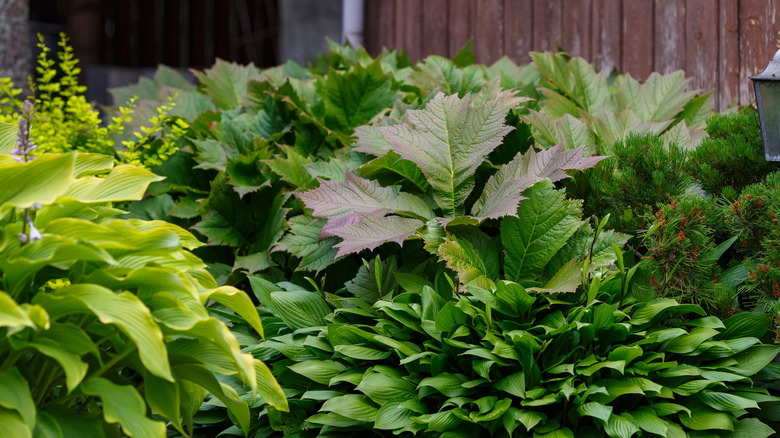
You probably know that hostas are the perfect plants for shady spots and people who don't have a lot of time to fuss over their gardens. They're bold, beautiful, and add some impressive structural elements to those peaceful and shady areas of your yard. But what about if you want to add some extra excitement to those spots and grow a plant that flowers profusely to attract butterflies and other pollinators? For that, you'll need a species that can handle partial shade and appreciates moist, organically-rich soil. While there are actually quite a few companion plants to grow alongside your hostas, there's one that's a standout for its stunning flowers, and that is clematis.
Clematis are perennials that will grow in USDA hardiness zones 3 through 9, with many of the 400 species and additional hybrids and cultivars being climbers or vining plants. As the stems of these plants are quite fragile, they will benefit from some type of support structure that you can place behind your hostas. To create an attractive display, grow the clematis up a wall or fence, then position hostas in front to add ground-hugging interest. Clematis flowers, which come in a whole range of colors, are filled with nectar and pollen, making many varieties irresistible to bees, butterflies, and hummingbirds. As a bonus, other small birds like to use the cover of the vines for nesting.
Growing clematis with hostas to attract pollinators
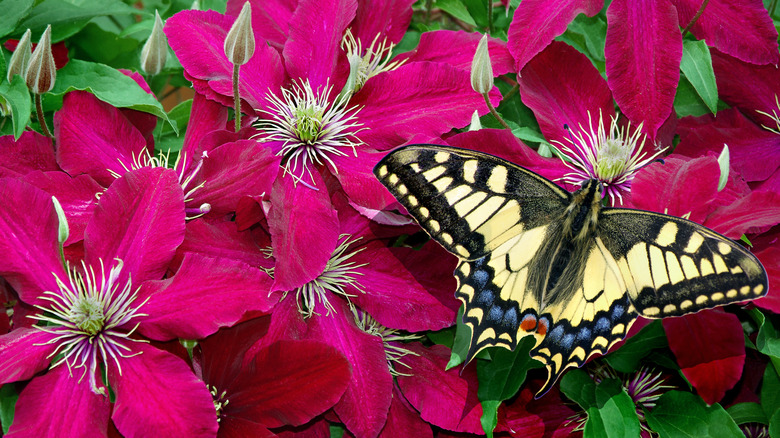
Clematis grow best when they receive morning sun and afternoon shade, especially in areas that experience hot summers. Keeping these vines protected from the scorching rays will prevent the flowers from fading, so you can enjoy their brilliant colors longer. You'll find that the best place to plant clematis in your garden is next to your hostas because the latter species will shade the roots of the vines, which is what they prefer. Clematis plants will absolutely flourish if their upper foliage and flowers receive at least 6 hours of sunshine daily, but the roots and lower part of the plants are well-shaded.
Like hostas, clematis appreciate moist soil that contains plenty of organic matter and drains well. This means that the watering requirements of both plants are virtually identical, making it easy for you to ensure that you can keep your clematis from wilting by providing adequate hydration. To keep your clematis growing to its full potential, you'll want to fertilize it at least once a year with a balanced, slow-release fertilizer around spring or after the first lot of flowers, depending on the type that you're growing. This will also benefit your hostas, which tend to put on a lot of new growth during this time. Just take care not to fertilize clematis when they're just starting to form flower buds or are in full bloom.