

What Do The Different Colors On Extension Cords Mean?
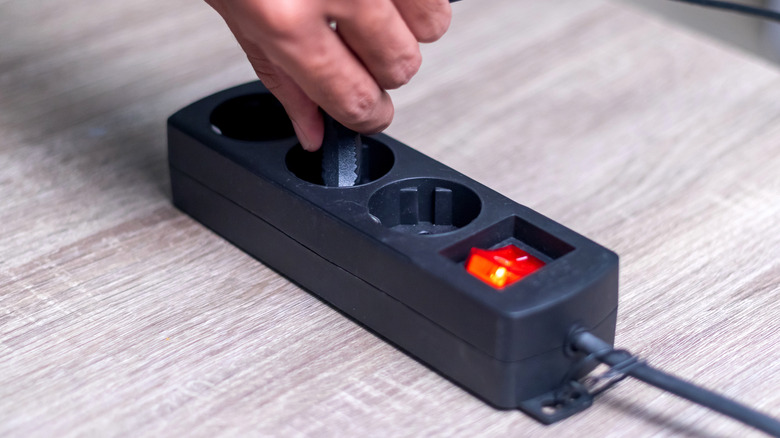
If you've ever seen blue utility markings on your curb or learned about why some receptacles are orange, you know that color coding is pretty common when it comes to construction and utility work. Whether it's the National Electrical Code that governs the color of the wiring in your home or the Uniform Color Code for public utilities work, many of the systems that workers rely on are color-coded for safety. However, when it comes to the different colors of extension cords, there aren't any formal standards.
There's a common assumption that certain colors are intended for outdoor use, but that's not the case. The general rule of thumb (or just plain common sense) is to use bright colors that are highly visible outside and on jobsites, which is why you'll often find yellow or orange extension cords used in outdoor work. That said, some outdoor extension cords are also dark, like the ones used for landscape lighting. In fact, extension cords come in every shade, and colors can be selected to match trim, paint, or even Christmas decorations. Instead of following rules about colors, when it comes to choosing the right extension cord, it's better to read the label and find one that works for your intended use.
What to consider when choosing an extension cord
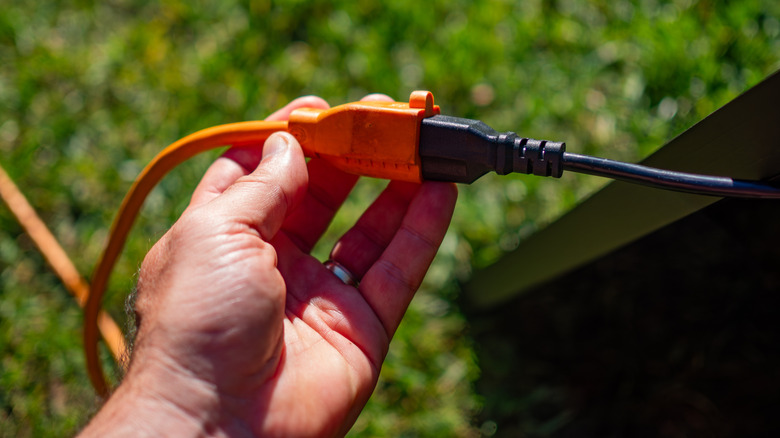
When it comes to manufacturing extension cords, UL listing isn't mandated. And more to the point, none of the specifications or requirements have anything to do with the color of the cord itself. However, since extension cords can cause fires or electrical shocks, choosing the right one matters, which is why it's smart to look for UL-listed cords with labels.
The first thing to know about choosing an extension cord is that some are rated for indoor use and some are rated for outdoor use. Outdoor extension cords, which can also be used indoors, have a thicker jacket of insulation to protect against damage, UV rays, and moisture. They also have a grounded plug in the form of a third, rounded pin, for safety. You can determine if an extension cord is rated for outdoor use by looking for the "W" on the label or the jacket, which indicates it's rated for "weather."
When choosing an extension cord to use, whether it's one you already own or one you need to buy, if it has a label, it will list important measurements like the gauge (width), length, amperage, and wattage. For example, using the wrong gauge of wire is a simple extension cord mistake that could cause a fire in your home, and using cords that are too long can also be an issue. Since longer wires create more electrical resistance over long runs, this leads to overheating and creates the risk of fire.