

Ditch Boring Floating Shelves: There's A Simple Wood DIY To Try
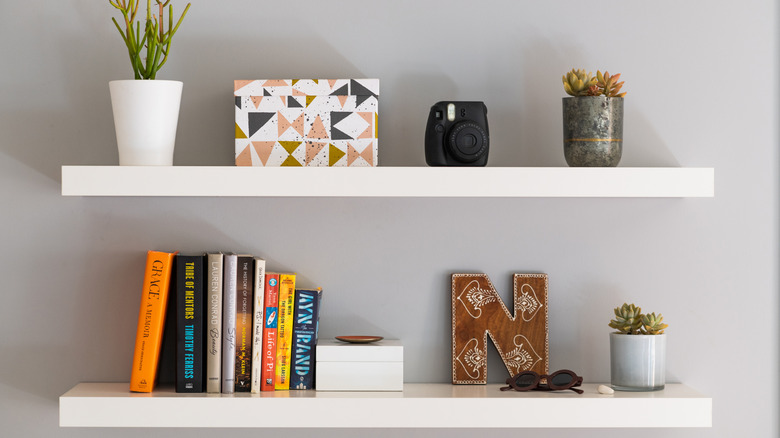
Floating shelves can be a stylish and minimal solution for additional storage space. However, basic floating shelves have lost their fervor. Those wondering if floating shelves are becoming outdated can look to expert opinions. Today, designers encourage homeowners to think beyond boring floating shelves for more sculptural, architectural, or artistic statement pieces.
One such example could be the clever spine floating shelf, which features a single central vertical bar or plank attached to the wall with floating shelves branching horizontally from it. What's great about this shelf is that it can be fairly simple to DIY. Using some 1-by-4s, a drill, and some screws, it's possible to whip up a gorgeous asymmetrical spine shelf in under 30 minutes. Since there are limited tools for this project, it could also be beginner-friendly.
Whether you're looking for DIY shelving ideas that'll give your kitchen the extra storage space it needs or just want to create a statement piece in your living room, it's important to note that, like traditional floating shelves, this spine shelf has similar drawbacks. Since the boards screw into a central support board, the further the board overhangs from the center, the less sturdy it will be. Limited weight capacity, overcluttering, and a small footprint for holding items are also something to keep in mind.
However, this is an affordable DIY shelf as you may only need to buy a couple of 1-by-4s and screws to complete it. Additionally, the back support could make the unit sturdier than traditional floating shelves.
How to create a simple floating spine shelf with 1-by-4s
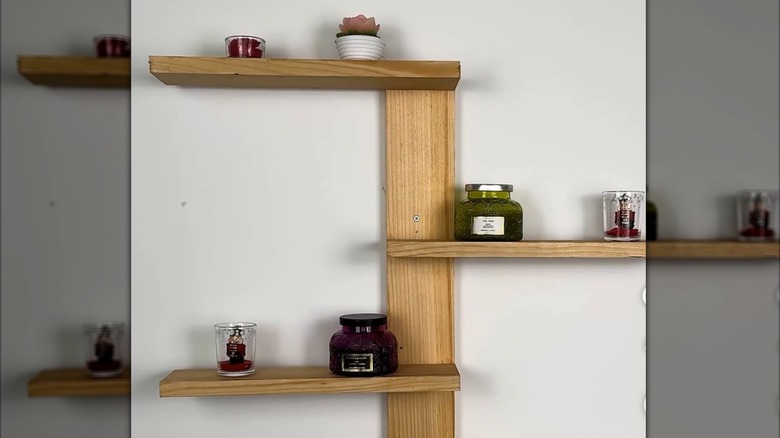
Before you begin, measure your space and draw a mock-up of what you want your shelf to look like. The central board can be as long or as short as you need. For the shelves, you can align them centrally or go for an asymmetrical look. One tip to keep in mind is that shelves should not extend out too far from the support board, as this could lead to the shelf being unstable.
Next, determine the perfect material for your DIY floating shelf. You could use 1-by-4 wood boards as both the back support and the shelves. Alternatively, you could use a 3-inch support board and wider shelves, like 1-by-6s.
To keep this DIY simple, you could lay your 1-by-4 shelf boards on their sides, placed roughly where you want them to be, as if they were on the shelf. Then, lay your support board on top so it is perpendicular to the shelf boards. From here, you could begin drilling screws into the back of the support board and into the sides of the shelves. For a more precise method, you might use a measuring tape and pencil to mark out where your shelves will go before screwing them into place.
Last, paint or stain your shelf before screwing the shelf into studs on your wall for maximum security.