

What Is The Best Pressure Washer Setting For Vinyl Siding?
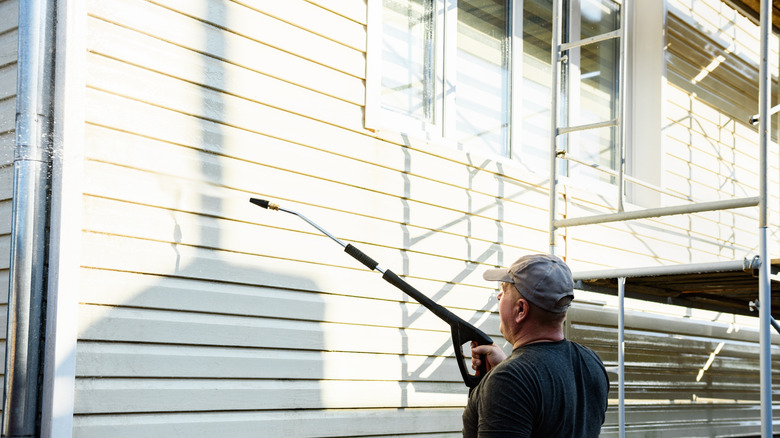
Vinyl siding is built to withstand a pressure washer, but that doesn't mean you can't damage it if you don't know what you're doing. Using the wrong settings can do real, permanent harm to vinyl siding. It's one of the common mistakes everyone makes when pressure washing. In most cases, the correct pressure is between 1,500 and 2,000 PSI. That's enough power to wash away dirt, algae, pollen, dust, and other debris build up on the surface of the siding without damaging the vinyl.
Anything more powerful risks cracking panels, loosening the siding from the walls, leaking water behind the siding, and stripping away the siding's protective finish. Older vinyl is especially susceptible, and corners, seams, and edges are most likely to be damaged by too much force. It's not just about PSI, though.
A good siding wash is about patience, not brute force. Slow, overlapping passes are more efficient, and less likely to cause damage, than blasting one spot. Too much force concentrated on one spot, like with a narrower stream, might clean quicker but can damage the siding. A wider spray tip nozzle, like a 25-degree or 40-degree nozzle, spreads the water out to clean the surface effectively.
How to pressure wash vinyl siding efficiently and safely
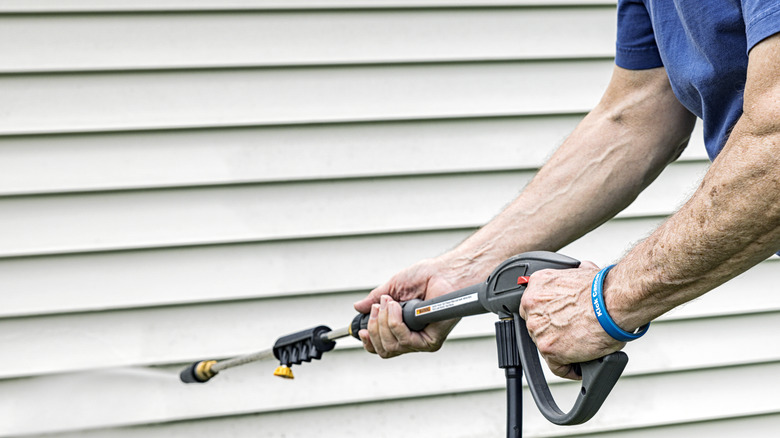
Before you fire up the pressure washer, examine your home's exterior for any problem spots like loose panels, cracked trim, gaps, etc., that can be further damaged or allow water to get trapped behind the siding or enter the home. Also, cover all outlets, furniture, plants, decor, and anything else vulnerable near the house that shouldn't get wet. If your pressure washer has a clog, use this one ingredient to clean the nozzle. Once the surface area is ready, go over it with a cleaning solution designed for vinyl siding. This will break down debris and save you time not having to go over the same area multiple times.
Hold the nozzle about 12-18 inches away from the surface. Spray straight or downward at the siding, not upward. Going at the wrong angle can trap water by going behind the siding. This will likely require you to use a ladder. Follow safe ladder safety precautions like wearing sturdy, closed-in shoes, setting up the ladder on solid ground, maintaining three points of contact, and never overreaching while working. Using an extension wand is better than overreaching and potentially slipping. And when you're done, make sure you're storing your ladder the right way.
Lastly, always use a pressure washer during safe weather conditions. Washing in the rain increases the chance of slipping on a ladder and also will reduce the quality of your results. Cooler mornings are usually better as direct afternoon sun can leave streaks and the cleaning solution and water won't dry as quickly on the siding, which means more time to loosen dirt and grime.