

Give Cucumber Plants A Major Nutrient Boost With A Natural Fertilizer
We may receive a commission on purchases made from links.
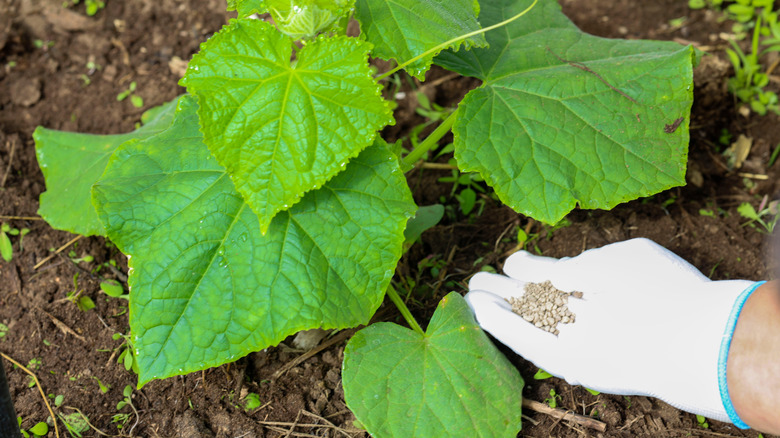
When it's time to throw together a fresh garden salad for dinner, nothing beats being able to go out into the garden and snip a ripe cucumber from the vine happily growing in the veggie bed. You don't even need a big garden to grow cucumbers, and they're relatively easy going as long as they get enough sunshine, plenty of water, and all the luscious nutrients they need to flourish. However, you'll find that these plants are heavy feeders, and they do need quite a bit of nitrogen to put on abundant growth. That's why cucumbers and peas are a match made in vegetable heaven: The peas actually add nitrogen to the soil. You'll also want to add plenty of good organic matter before planting your cukes. On top of that, to support their nutrient needs and give them more of a boost, there's a natural fertilizer that you should be using — fish fertilizer.
Ensuring that your cucumber plants get the nutrients they need, including a high amount of nitrogen in the beginning, will help the vines grow large enough to produce flowers and support those tasty fruits. Healthy plants that are well fertilized are also able to withstand a bit of insect damage and ward off diseases better. On the other hand, if your cucumber plants aren't getting enough nutrients, they'll show signs of stunted growth and pale leaves. So, if the leaves on your young plants are anything less than a lovely green color, it's a good indication that they need a decent nutritional boost in the form of fish fertilizer.
Why fish fertilizer is great for cucumbers
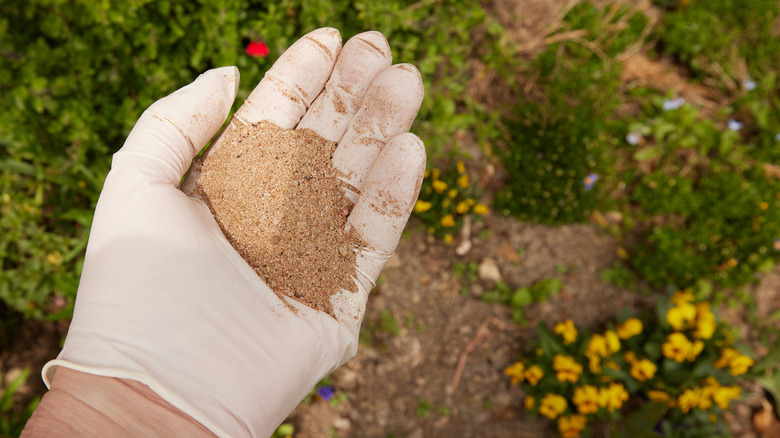
Whether you select a fish bone meal or a liquid fish emulsion, these products are natural and completely organic. They're a byproduct of commercial fish processing and contain all the parts that are removed when fish are prepared for consumption. Not only are these products good for growth, but they also help condition the soil, and vibrant microbial soil life leads to healthy roots and optimum plant vitality. As a bonus, you'll find that fish fertilizer is also great for your lawn, thanks to its ample nitrogen content.
The Nitrogen-Phosphorus-Potassium (N-P-K) composition of fish fertilizers varies depending on the brand you select. That said, most products will have higher levels of nitrogen, slightly less phosphorus, and only a small amount of potassium. For example, this Alaska liquid fish fertilizer had a ratio of 5-1-1, while this Down To Earth granular fish bone meal has a more balanced ratio of 7-7-2.
Generally, cucumbers will thrive with a ratio of around 10-7-7. While neither of the fish fertilizers mentioned has the exact same ratio, they do have ample nitrogen to get those vines growing strongly. The liquid fertilizer will certainly work well while the plants are still putting on a lot of growth, but once they're ready to start fruiting, you might want to switch to a fertilizer product that contains a bit more potassium and phosphorus. Remember that the ratios don't have to be exact, as long as you're giving your plants the nutrients they need in a natural form they can easily use.