

Everyone Owned It In The '60s — Now It's The Planter We Want In Our Gardens
The 1960s saw the peak of Modernism, where design was simple and more minimalistic, featuring geometric shapes and materials that were durable and often even industrial in nature. This included items used outdoors, like planters, whether they were a plain, rectangular one or one that was more cylindrical or cone-shaped. In fact, the fad was driven by a well-known Swiss designer of outdoor planters, Willy Guhl. Today, gardeners are still seeking to add concrete planters to their own gardens, known for their durability and sleek design. Although you might be able to find a vintage planter at a thrift store, you may want to think twice because they often contain asbestos.
Although concrete itself has been around since the Roman days, concrete planters rose to popularity in the mid-century, and by the 60s, they were a common addition both to residential homes and public spaces. They age beautifully, gathering a gorgeous patina, and generally don't require regular maintenance or replacement — more reasons why they were such a strong choice in the mid-1900s and now. To find true 60s concrete planters, you'll likely need to search vintage marketplaces and antique dealers, although you may occasionally see them in online marketplaces, too. For those who are creatively inclined, you can easily transform cheap plastic pots into chic cement planters as a more affordable alternative.
Benefits of concrete planters
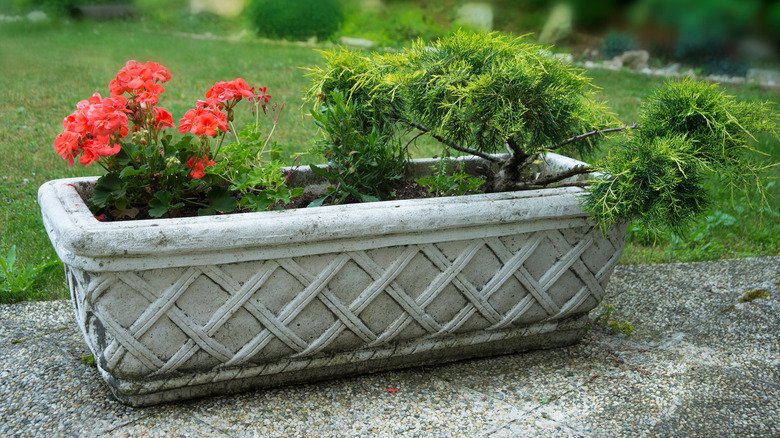
Apart from looking good and being sturdy, concrete planters have a few other benefits as well. First, concrete is porous, which means that unless the planters have been waterproofed, the soil is likely to drain very well. The walls of the planters will absorb water, which the roots of plants will seek out when they're searching for moisture. Concrete pots are also fairly well insulated thanks to the thickness of the cement walls. This can benefit plant roots greatly by maintaining a relatively stable temperature, no matter what the weather might be doing.
Concrete planters can be extremely heavy. While this might sound like a downside, as moving them is difficult, it also prevents animals from knocking them over. This is particularly handy if you have deer visiting your yard. If you do happen to score a lovely, large vintage concrete planter, be sure to check out the best materials to use to fill the bottom of the pot, from peanut shells to sand.
One element that gardeners should note is that brand-new concrete planters can affect the pH of your soil. They often leach lime into the mix, which could make the soil more alkaline. However, if the pots are sealed, the problem is avoided. This is something to be aware of if you follow DIYs that show you how to make concrete planters using quick-drying cement. It's probably a good idea not to plant acid-loving plants in these pots or to test the potting mix regularly and replace it when needed.