

What Does The Deer Symbol On A Plant Tag Mean?
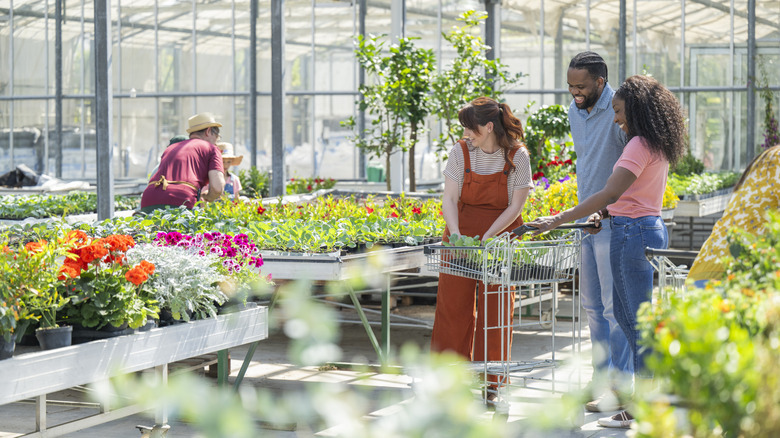
When browsing your local nursery or garden store, it can sometimes be difficult to make sense of the various signs and tags on the inventory of plants. If you're new to gardening, it can feel overwhelming, as you want to make sure you're selecting the right plants and seedlings for your garden's specific needs. There are plenty of labels on available plants, from plant care instructions to USDA Hardiness Zones. One symbol you may want to look out for is the icon of a deer. If you spot this on a plant at a garden store, it typically means the plant is deer-resistant. In other words, deer are not likely to eat it.
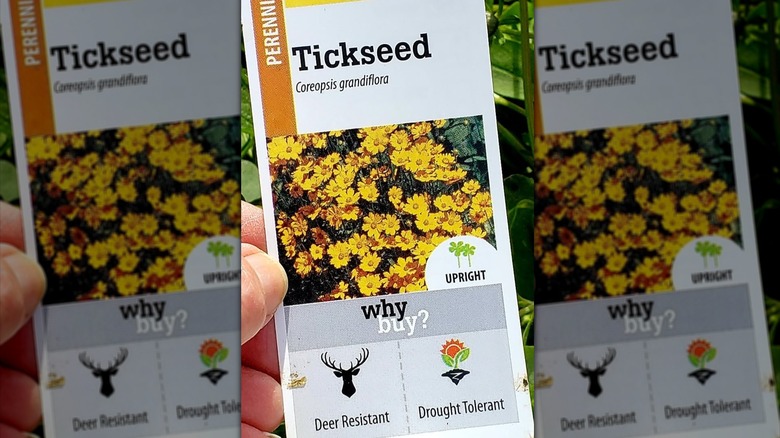
Typically, a deer-resistant plant sign looks like a deer inside a circular icon with a line cutting across. It could also look like a deer outline with the words "deer resistant" written underneath. On many plant tags, this symbol is located at the very bottom of the sign. It would be beyond disappointing to spend seasons caring for a plant only for it to become a tasty deer snack in just a few seconds, so shopping for plants with this label can be helpful. However, it's important to note that even with a "deer-resistant" label, it's impossible to guarantee a plant is 100% deer-proof.
What plants are deer-resistant?
While it's not possible to ensure all of your plants will be deer-proof, you can choose varieties that deer are known to avoid, especially if you live in an area with a heavy deer population. Deer, like other garden pests, aren't big fans of poisonous or strong-scented plants, including foxglove, daffodils, lavender, mint, or rosemary. They also tend to avoid plants with hairy or prickly textures, such as lamb's ear or succulents like agave.
Common annuals that deer tend to leave alone include morning glories, dahlias, poppies, forget-me-nots, and parsley. There are also many deer-resistant perennials, including butterfly bushes, clematis, buttercups, sage, wisteria, and lilies-of-the-valley. Note that deer are more likely to eat young plants, so even if you have deer-resistant plants in your garden, you may want to take measures to protect them while they are still maturing. This could include installing fencing or netting, or applying repellents directly to the plants themselves. Note that you do not want to add repellents to plants you plan to eat.
Similarly, you should think twice about adding certain plants to your garden if you have a deer problem. Deer have been known to enjoy popular flowers like azaleas, roses, hostas, daylilies, rhododendrons, and tulips. If you do still plan to incorporate these plants into your garden, you can use physical barriers or spray repellents to help keep hungry deer away.