

Antique Furniture Materials To Always Look For At The Thrift Store
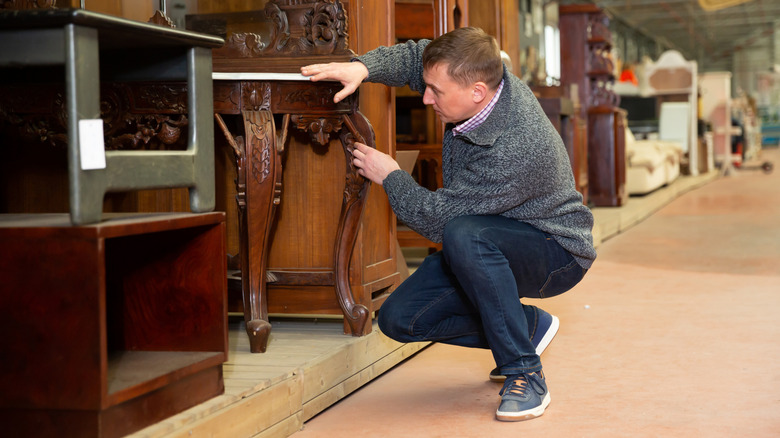
Nowadays, it can be a challenge to ensure you're buying furniture that's built to last. Modern retailers like IKEA, Target, and Wayfair are some of the most popular shopping destinations thanks to their low prices and convenient delivery, but many of the items from these stores fall into the category of "fast furniture" — pieces that are made with inexpensive materials, only intended to last for a few years with regular wear and tear. Think an increase in price will save you from this fate? Even mid-level retailers often rely on flimsier materials that break down over time. West Elm's best-selling dressers use engineered wood in their designs, and Pottery Barn does the same with much of its furniture.
So, what's the solution? Should you shell out thousands for custom furniture, or perhaps pick up woodworking as a hobby? Either of these options will certainly get the job done, but there's a simpler and more affordable choice right under your nose: antiques. While not all building materials of the past are necessarily better than modern alternatives — looking at you, asbestos — antique wood pieces, in particular, are a durable and sustainable choice. With proper care, you can expect pieces that have already lasted 100 years or more to continue to do so in your space, even if they fall victim to occasional spills and bumps. Not all woods are created equal, however, and some are considered more valuable than others thanks to their rarity, durability, and uniqueness. Such sought-after picks include oak, mahogany, walnut, pine, rosewood, and elm, among others. If you're able to source antique furniture made out of these woods, especially for secondhand prices, you've hit the jackpot.
How to identify valuable furniture materials
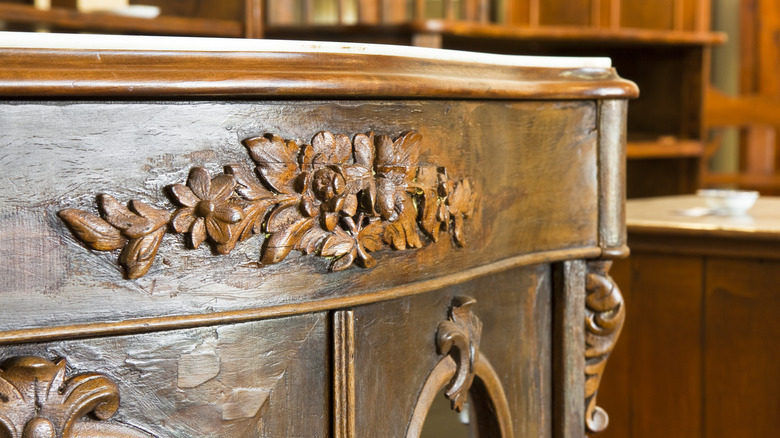
Before you head out to go antique shopping, it's a good idea to have a general understanding of how to identify different types of wood. Some of the most common valuable materials you'll encounter include mahogany, oak, pine, walnut, cherry, and maple. Mahogany and cherry are both deeply colored, boasting a warm brown hue, while pine and maple sit on the lighter side of the spectrum. Wood can also be identified by its pattern — walnut has a fairly straight or slightly wavy grain, creating an almost striped look, and oak has an open grain, leading to more variations in its appearance.
When it comes to more rare and exotic kinds of wood, like rosewood, laburnum, kingwood, ebony, and English yew, things get a bit more complicated, but the same rules still apply. Look at the coloring and grain to get a better idea of what a piece might be constructed out of. Many of these exotic woods are prized for their unique patterns and colors, so if you see a piece that stands out amongst the crowd, it might be worth doing some additional research into those specific characteristics to determine whether you've spotted a diamond in the rough. With that said, however, it's also important to inspect the furniture itself to determine whether it's a reproduction or an original, handmade piece. There are several obvious signs that antique furniture might not be authentic, and a quick glimpse at the joinery, maker's marks, and wear patterns can clue you into the age and potential value of an item.