

Here's Why European Appliances Aren't Compatible With U.S. Outlets
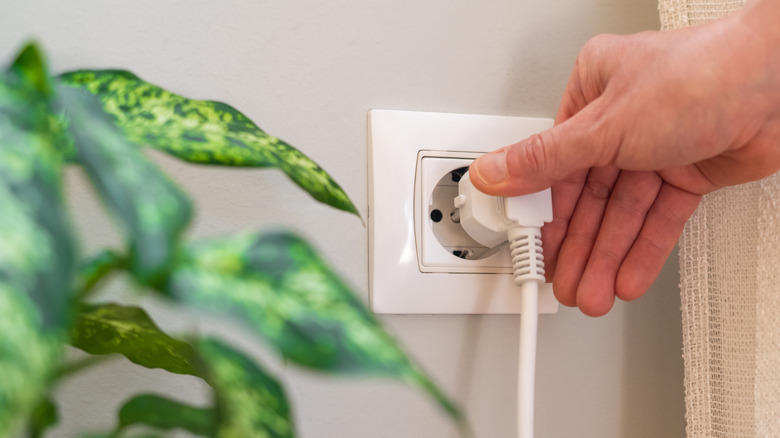
If you've ever tried to plug a European appliance into an American kitchen outlet, you've likely been met with immediate disappointment. While they might look like they serve the same purpose, the electrical grids of Europe and the United States speak entirely different languages. It's not you, and it's not a broken appliance — it's an overall mismatch. The incompatibility between European appliances and U.S. outlets is related to two main technical variations: voltage and frequency and the construction of the plugs.
Standard residential outlets in the United States operate at 120 or 240 Volts (V). However, most of Europe uses a standard of 230 V. Even if you solve the voltage issue, the "pulse" of the electricity is different. The U.S. uses 60 Hertz (Hz), meaning the current changes direction and returns to where it started 60 times per second. Meanwhile, Europe uses 50 Hz — a direct conflict that can cause overseas motors to run too fast and overheat when run at higher frequencies. And if this wasn't enough of an internal technical headache, the biggest and most obvious barrier is the sheer geometry of the hardware. The physical connectors between American sockets and European plugs are entirely different to prevent accidental "mis-plugging." U.S. plugs feature two flat parallel pins (and sometimes a round grounding pin), but European plugs typically feature two round pins. Because the shapes don't match, you cannot physically insert a European cord into a U.S. wall socket without an adapter.
European appliances can become damaged when used in U.S. outlets
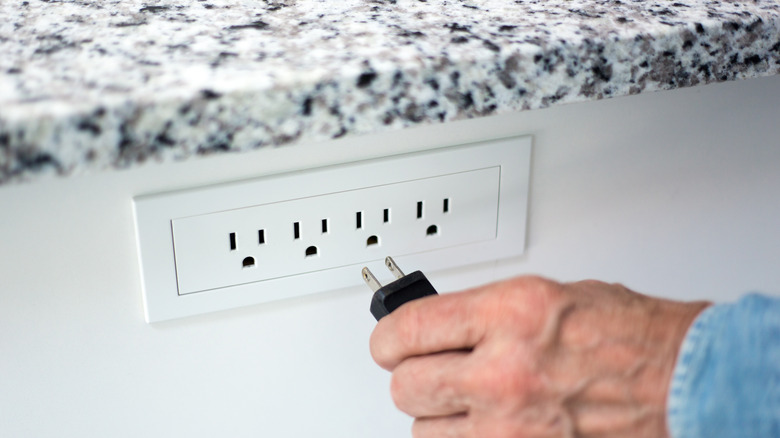
Skip the sleek European espresso machine and opt for an impressive and affordable model under $300 that will give you a perfect morning brew without risking an electrical hazard. Since European appliances feature two round pins but U.S. outlets have flat parallel prongs, they are physically incompatible right out of the box. If you try to plug a European appliance into a standard U.S. outlet, the short answer is that it won't work. Assuming you use a basic plastic travel adapter just to make the prongs fit into the wall, a few things will happen behind the scenes to disrupt your device. First, because of the different voltage, the appliance will essentially be starved of power. Heating elements will barely get warm — a European kettle might take 30 minutes to boil water, or the heating element simply won't trigger at all. Motors will spin incredibly slowly, lack torque, or hum loudly without turning, which can quickly burn out the motor windings.
Even if the appliance manages to turn on, the "pulse" of American electricity is faster. Any internal AC motor or clock designed for 50 Hz will try to run about 20% faster in the U.S. This causes excessive friction, rapid overheating, and premature mechanical failure, even if the voltage issue is somehow bypassed. And modern European appliances with digital displays, smart features, or internal microchips rely on clean, specific power parameters. When fed half the voltage and a faster frequency, the electronic control boards will usually trigger an error code, shut down immediately, or fail to boot up entirely. All in all, it's best to skip the European options and reap the benefits of buying American-made appliances for hassle-free operation and seamless compatibility with your home's existing electrical system.