

Not Redwood, Not Bradford Pear: The Evergreen Tree You Should Never Plant In Your Yard
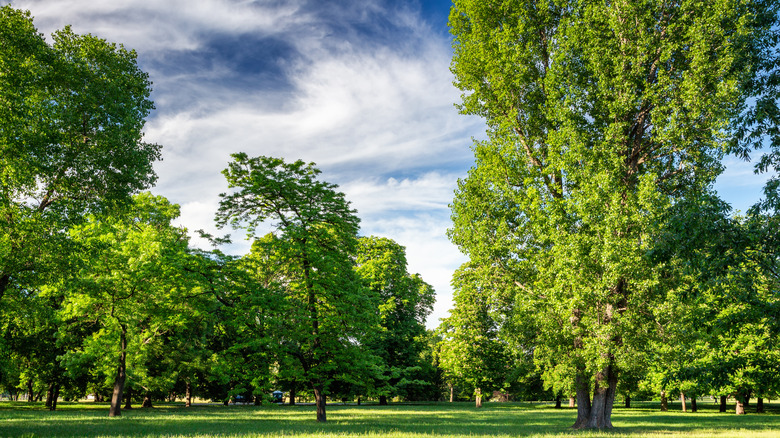
Not every beautiful plant is meant to live in your yard. Some are incredibly toxic, not just to animals, but to humans, and can wreak havoc on your property. Despite its unique and unassuming appearance, there is one tree that you'll want to stay far away from and avoid planting in your yard. The manchineel tree (Hippomane mancinella), which is often appropriately named the Tree of Death, is a rounded shrub native to West Africa, Puerto Rico, the Caribbean, coastal Mexico, the Virgin Islands, and some parts of Florida. It grows to about 30 to 40 feet tall and can be spotted by its individual characteristics, including its deep green fruits and milky sap. While it's technically legal for you to plant a manchineel tree on your property, it is a deadly decision to make. If you find one in your yard, it is vital to have it safely removed by professionals and not attempt the removal yourself.
In the U.S., the manchineel tree is most commonly found in its native state of Florida. Its Latin name, Hippomane, translates to "horse" and "madness." According to Ask IFAS, this is due to the fact that in ancient Greece, a toxic plant was said to cause madness in the horses that ingested it. The manchineel of North and South America was later given the same name due to its own toxic properties. Historically, Indigenous people even used the sap of the tree to tip poison arrows. In areas like Florida, the manchineel tree is heavily regulated and considered endangered. No matter where you live, it is never recommended to plant or cultivate a manchineel tree for the sake of your safety and the wildlife on your property.
What to do if you find a manchineel tree on your property?
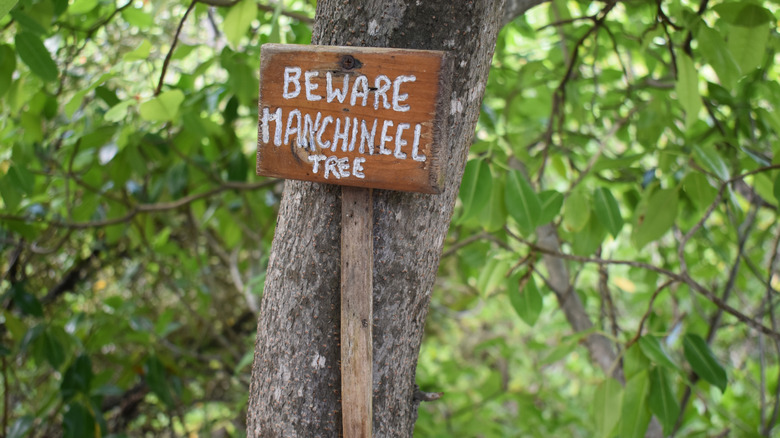
There are a lot of plants you don't want to find in your yard, and the manchineel is one of them. The primary characteristics of a manchineel tree are as follows: A height of about 30 to 50 feet, grey or reddish bark, 1 to 2-inch tiny green fruits, and a white sap that can leak out of the leaves and bark. Do not go near the tree or attempt to touch it in any way.
When it comes to toxic trees and weeds in your yard, never attempt to remove them on your own. This process requires extreme caution as virtually every part of the manchineel tree is toxic to humans. From its pit-filled fruits to its oval-shaped leaves, the manchineel tree can be lethal in several ways. The manchineel tree excretes a white, milky sap from multiple areas, including the fruit, bark, and leaves. Touching this sap, which contains a chemical called phorbol, can cause severe irritation to the skin and eyes. If you stand underneath the tree, specifically when it's raining, the phorbol running off of the leaves and the affected rainwater on your skin can cause severe skin blisters. If the tree is burned in any way, the irritants from the smoke can even cause temporary blindness.
If you think you've spotted a manchineel tree, contact your local professional tree removal service. If you or someone else has had direct contact with the tree or is experiencing symptoms like severe blisters, temporary blindness, or a painful lump in their throat, call 911 or seek help from Poison Control.