

The Low-Maintenance Tree That Benefits The Birds & Wildlife In Your Yard
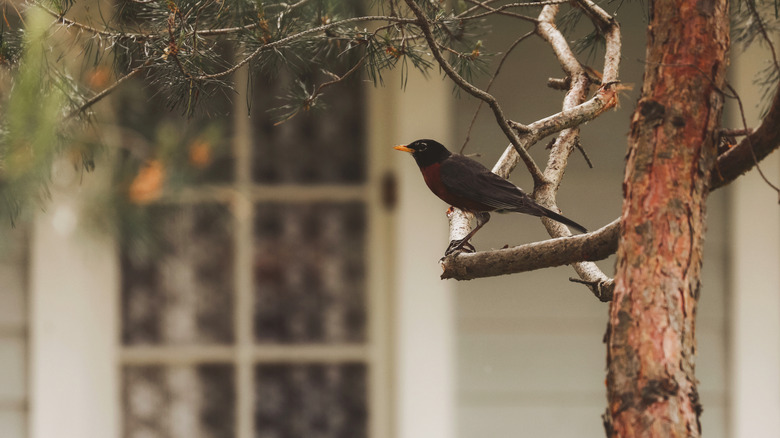
For many common animals, trees are an essential part of life. They provide shelter, food, and build up many of the ecosystems stretching across the globe. As a result, if you're looking for ways to make your yard or garden better suited to accommodating wildlife, adding a tree can be a great place to start. The coulter pine is a low-maintenance tree, allowing you to reap the benefits of attracting birds and other animals without a large time commitment.
Also known as the pitch pine, the coulter pine is a large pine tree native to North America, specifically Southern California coastal and mountain regions, along with northern Baja California, Mexico. It can reach heights up to 75 feet, with trunks growing up to 3 feet in diameter on average. While the coulter pine can be space-consuming in your yard, it offers a variety of wildlife benefits. First, a large tree like this provides elevated structure, which allows wildlife to nest, perch, and rest off the ground. Animals also rely on the coulter pine for a source of food, such as the western grey squirrels that can skillfully extract seeds from its large cones measuring up to 20 inches in length and weighing as much as 8 pounds.
How to grow a coulter pine for wildlife
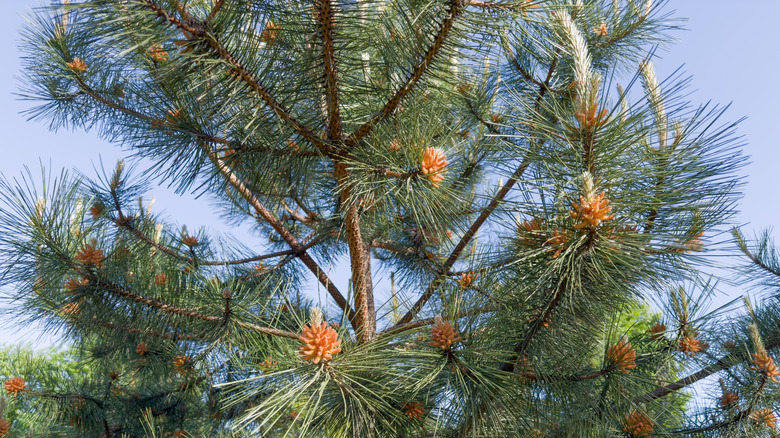
To enjoy the coulter pine as a low-maintenance addition to your wildlife garden, it's important to ensure that it has a proper location and routine. Coulter pines are only winter hardy in a small region, specifically USDA growing zones 8b, 9a, 9b, 10a, and 10b. As a result, outside of this area, you may not be able to grow this evergreen without it failing once the weather gets cold.
When it comes to yard location, choose a spot with ample sunlight. Coulter pines are full sun trees, so you'll want to make sure they're not tucked into the shade. However, you should keep in mind that their impressive heights can lead to large amounts of shade throughout your yard. As a result, consider what other plants you already have in your yard — as you wouldn't want to accidentally put this tree near a full-sun plant that it'll eventually outcompete. This consideration is especially relevant considering how coulter pines can grow as much as 10 feet per year. Soil type is also important, as the coulter pine is adapted to drier, rockier spots and may not hold up well to heavy moisture. On the bright side, it is drought-tolerant.
If you're worried about pruning, you'll be glad to learn that the coulter pine doesn't need much. While aesthetic pruning may not be a requirement, it's still important to keep an eye on your tree's health. Skipping tree pruning could lead to structural damage if a damaged, diseased, or dying branch were to fall, especially with a species as large as this.