

Is A Rug An Absolute Must In A Dining Room? Here's What The Designers Say
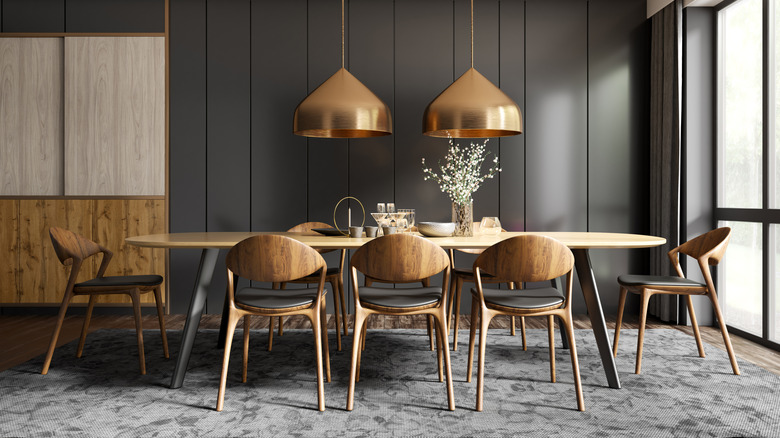
When searching for inspirational photos to help with designing a dining room, you may frequently see rugs underneath the table and chairs. Choosing a beautiful dining room rug can certainly add color to the space. However, is it a total must-have? In exclusive interviews with House Digest, two professional designers gave their opinions.
Neither of the designers emphatically called a rug in a dining room an essential accessory in every home. However, both said that the benefits make it a good idea in many instances. "If you have a formal dining room, I would suggest a rug," said Whitney Vredenburgh, owner of Nested Spaces Home Staging & Design. "An area rug often grounds a dining room and provides an anchor point, [along with] texture, color, warmth, and personality. In many cases, I agree that an area rug should be part of the dining room design plan."
Bilal Rehman, CEO and Principal Designer of Bilal Rehman Studio and founder of Bilal Rehman Gallery, said a homeowner should focus on whether the rug will improve the atmosphere of the space before adding one. "A dining room rug is not always a must-have, but in the right space, it can completely elevate the room," Rehman explained. "A rug helps ground the dining table, adds warmth and texture, softens acoustics, and makes the space feel more layered and inviting."
Deciding which dining room elements benefit from a rug
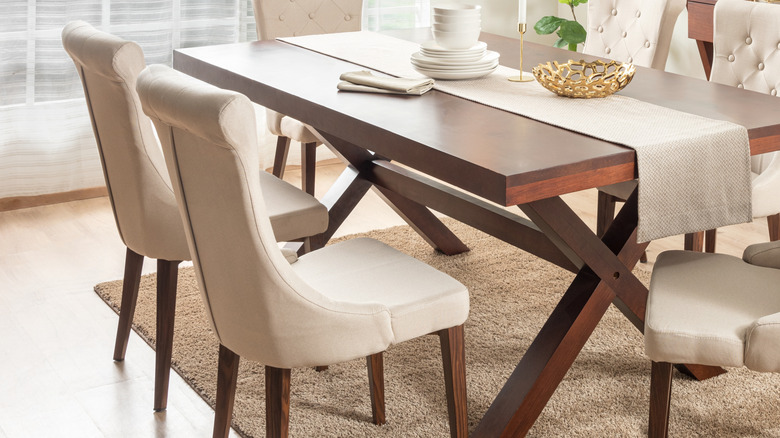
Communicating exclusively with House Digest, Bilal Rehman highlighted several dining room styles that look nicer with a rug and add warmth to the space. "Styles like contemporary luxury, transitional, traditional, and organic modern interiors work beautifully with rugs because they benefit from softness, texture, and layering," Rehman said. "Traditional spaces especially pair well with rugs because they add richness and elegance, while modern luxury interiors use rugs to balance cleaner lines and harder materials."
Whitney Vredenburgh pointed out that the type of furniture you have could play a role in your decision-making. "If you have wooden chairs and tables, a rug will soften the space and add color and dimension," she told House Digest in an exclusive interview. "If you have fabric chairs, rugs can feel optional."
Paying attention to the size of the dining room and how it fits in the overall design of your home can help you determine whether you'll see benefits from this addition. A large rug is one of the elements that define areas in an open floor plan concept. "Rugs are also a great way to define the dining area, especially in open-plan homes where spaces flow together," Rehman said. "A well-placed rug creates a sense of intimacy and anchors the room visually."
Situations where a large dining room rug might not work well
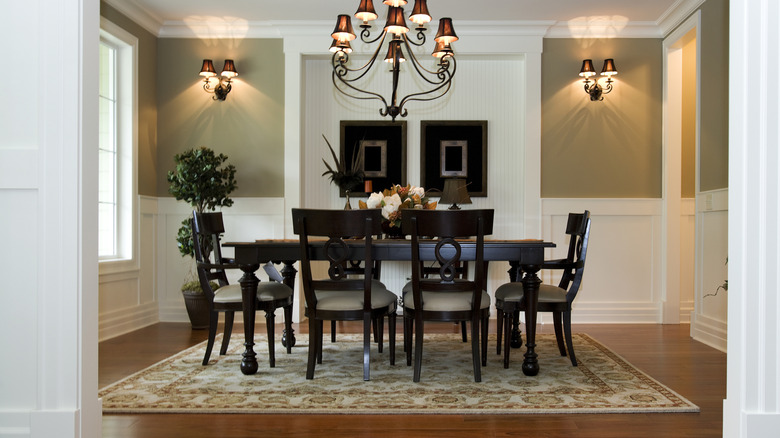
In their exclusive interviews with House Digest, both designers said situations exist where you might not want one at all. Bilal Rehman said dining room floors that have beautiful tile, stone, or parquet with clean lines may not benefit from adding one. Using a rug over this type of dining room floor could ruin the feel of your space by covering the high-end flooring. "In more minimal or architectural spaces, skipping the rug can make the room feel cleaner and more intentional," he said.
Both designers emphasized the importance of selecting a rug that's the right size. Rehman said the chairs should still fit on top, even when they're pulled outward from the table. "If not, the room immediately feels awkward," he said.
Whitney Vredenburgh said that the rug should also be large enough to be centered on the table and overhead light. However, you should carefully consider whether you want one at all if you expect to have a very busy dining room. "Will the rug be in the walkway and get lots of foot traffic requiring cleaning and maintenance?" Vredenburgh said. "Is there space between the door and rug?" She recommended leaving at least 20 inches of free space for people walking through the door to limit the amount of soil and dirt they track across the rug. If you can't use a size that keeps the walkway clear, "I would suggest a low pile rug that cleans easily and is not bright white," Vredenburgh remarked.