

Not Banana Peels Or Coffee Grounds: The Kitchen Scrap You Can Add To Your Compost
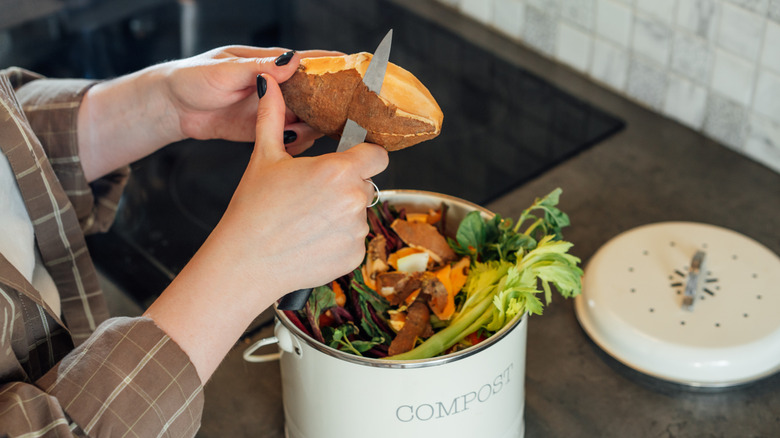
Banana peels, vegetable scraps, egg shells, and coffee grounds — these are things you can readily find in the kitchen that come in handy when making your own DIY compost. However, there's actually another leftover that often gets tossed straight into the trash without a second thought, and it's also just as useful for this purpose.
Old or unused pet food, whether it's dry kibble or wet food that expired in the pantry, can still be composted instead of being wasted. It's not among the materials typically found in DIY fertilizers, since most people would rather stick to what should or should not be added to a compost based on common knowledge, but pet food is still organic material, and when subjected to the right conditions, it can also break down alongside other composting ingredients.
If your goal is to reduce food waste in your household while crafting a natural fertilizer for your garden, pet food is a practical addition to your compost bin. However, composting pet food can be tricky. You may need a little more caution when adding it to the mix. Most pet foods contain meat, fats, and carbohydrates, so they readily attract pests or even create unpleasant odors. This can become a major problem if your collection container is indoors. Suffice to say, you need to understand first what kind of pet food can go into compost and how to handle it properly before you can include it in your roster of composting materials.
How to compost pet food
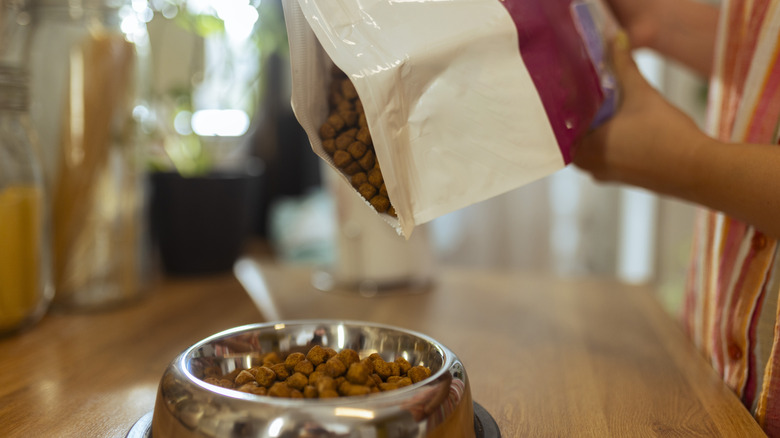
Dry pet food is easier to manage than the wet kind since it contains very minimal moisture or oil. Crush kibble and other dry pet food types for faster breakdown, then combine with organic waste such as leaves, paper, and cardboard. This is an important step, as it helps minimize the odor from the decomposition process. As a general rule, for every part of dry pet food, add three parts of organic waste. Bury it in the middle of your compost bin so it doesn't attract critters and to keep its odor to a minimum.
Meanwhile, although wet pet food breaks down much faster than its dry counterparts, there's a bigger challenge with how to prepare it for composting, as it can produce a much stronger odor. To prevent or limit unwanted smells from seeping through the composting bin, it's imperative that you only use small amounts at a time. You should also bury it deep in the compost mixture, because wet pet food tends to have a very strong protein smell.
For outdoor composts, a tumbling bin or enclosed system is ideal so your pet animals won't be able to rummage through the pile once they smell the pet food. If you only have a small open compost heap, be careful with how much pet food you add and where you keep it. By following the right preparation and setup for pet food compost, you can unlock the biggest benefits of composting at home.