

Why There's Simply No Need For An Electric Kettle In Your Kitchen
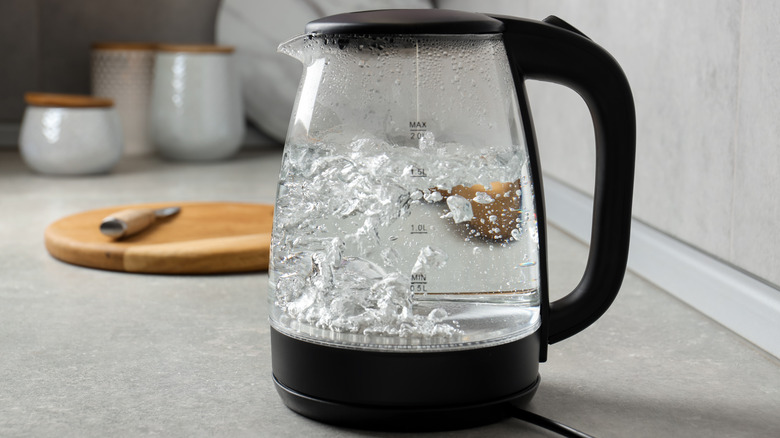
The modern kitchen is overrun by single-use gadgets promising to save you time, but few occupy more unearned counter space than the electric kettle. Marketed as a morning essential, this bulky appliance duplicates a job your kitchen is already fully equipped to handle. This, plus the hidden downsides to electric kettles, means they often fail to justify their footprint. The primary selling point of an electric kettle is raw speed, but standard kitchen outlets severely limit that advantage. Standard homes are wired with 120 volt power outlets, which caps a standard electric kettle's power draw at roughly 1,500 watts. Because of this power ceiling, boiling a full pot of water takes considerably longer than it does on high-powered heavy appliances, like a modern induction cooktop. This drastically shrinks the time savings that normally justify buying a separate plug-in device.
When considering what appliances are necessary for your kitchen, you must consider both appliance redundancy and the maintenance tax. An electric kettle does exactly one thing: heat water. Your kitchen is likely already equipped with tools that do this without taking up an extra outlet or counter space. Not only that, but like any small appliance with a cheap heating element, electric kettles are prone to eventual mechanical failure. Switches break, plastic components degrade, and bases stop registering over time. If you live in an area with hard water, the heating elements rapidly accumulate calcium and magnesium scale. Keeping it running efficiently requires regular descaling cycles with vinegar or citric acid — a chore you can easily avoid by sticking to multi-purpose cookware that can go straight into the dishwasher.
What you can use instead of an electric kettle
Counters are only so big, and unless you have an expansive luxury kitchen, you most likely don't have the extra space to waste on a single-use gadget. Pair that with the fact that this appliance is the opposite of versatile, and you're better off warming up water for your tea or oatmeal a different way. If you have an induction stove, it is the ultimate electric kettle killer. Because induction uses magnetic fields to turn the cookware itself into the heating element, it transfers energy with incredible efficiency. It can easily bring a quart of water to a rolling boil in under three minutes — faster than a standard 120-volt electric kettle.
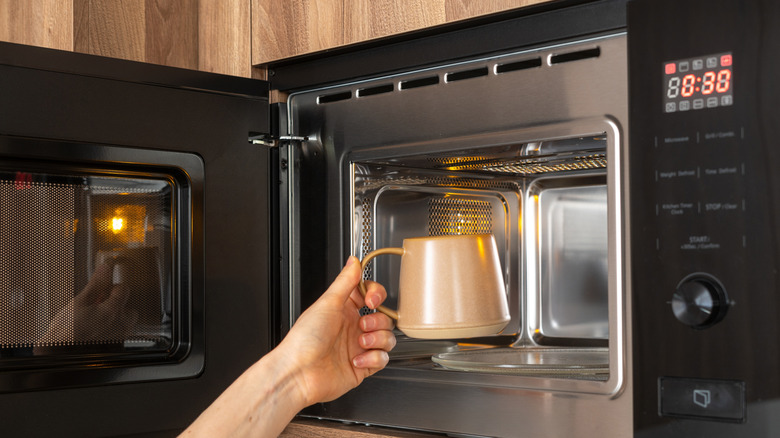
In the case of a single hot drink, the microwave is often the simplest, most practical alternative. Instead of heating up a whole vessel and then pouring the water out, the microwave fires radio waves that directly agitate the water molecules inside your mug. This solution means you don't have to clean one more piece of dishware, takes up zero additional counter space, and takes around 60 to 90 seconds to heat a single cup of water to tea-ready temperatures.
Sometimes, you just can't beat the classics. If you love the ritual of tea or pour-over coffee but hate countertop clutter, a classic stovetop kettle is the standard alternative. While slightly slower on a traditional gas or radiant electric stove, it offers unmatched longevity and requires no descaling maintenance beyond a quick rinse or wash in the sink. Plus, it's the item you can get at the thrift store that adds vintage style to your kitchen, all while outlasting its electric counterpart.