

The Genius Way To Give An Old Seat Belt Buckle A New Life In Your Yard
We may receive a commission on purchases made from links.
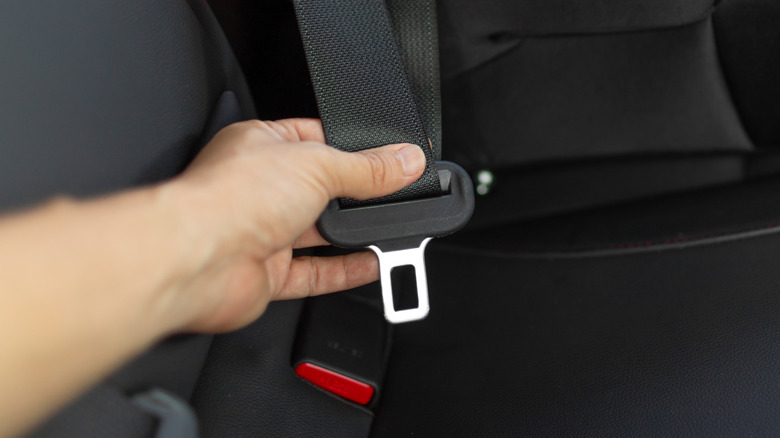
If you've been repurposing parts from an old vehicle or your kids have grown out of their car seats, you might wonder: what on earth can you do with a spare car seat buckle? You don't have to toss it in the garbage or let it take up space in your garage. There's actually a great way to reuse old seat belts in your yard. This genius trick solves a very specific problem: a broken or missing gate latch. You can take that old seat belt buckle and turn it into a brand new latch for your garden gate.
Over time, gate latches can rust and corrode, eventually falling apart. If your gate latch is broken or missing, it can cause some real problems. A broken latch could lead to pets getting lost, your children wandering into a part of the yard they're not supposed to be in, or animals entering when you would rather keep them out. The open gate could also bang in the wind and potentially break.
Using a seat belt for a gate latch can be quite a timesaver if you don't have time to go to the hardware store or reseat your fence posts. This is also a useful tip for fixing a sagging fence gate that won't close, especially if you can use some of the seat belt's webbing to create a little bit of wiggle room and make it easier to latch the gate. You don't need many tools or supplies; you just need a screwdriver, a drill, the right screws for your DIY project – wood or metal screws — and an old car seat buckle.
How to mount a seatbelt tongue and buckle as a gate latch
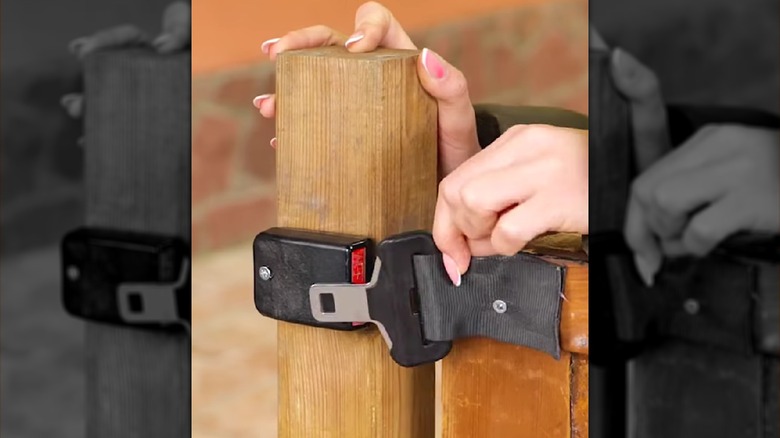
To turn an old car seat buckle into a gate latch, first you'll need to gather up your supplies: screws, a drill, a screwdriver, and of course, your car seat buckle and webbing. You'll probably want to grab a few washers, too. The buckle (that's the part with the button) should mount directly to the fence post, and the tongue (the metal part that goes into the buckle) should be mounted onto the gate. When the gate closes, the tongue locks into the buckle and latches, holding it firmly shut. To open the gate, simply push the button on the buckle, and it will open right up.
If you have a wooden fence, you'll need wood screws to attach the buckle. On the other hand, if you have a metal gate, use metal screws. Before mounting the car seat latch, put the tongue into the receiver and buckle it. Close the gate, and hold the buckle and latch where they are supposed to go to see if the set is long enough to connect the post and the gate. Mark their location, then drill a couple of tap holes into the post where the buckle will go. Insert a screw and washer into the hole and screw the buckle into place. Use enough screws to make sure the buckle is secure. If you're concerned about drilling straight through the button piece, you can also mount it with a flexible bracket, like this AxiSculpt Galvanized Metal Pipe Strap. Next, attach the tongue piece to the gate side by screwing through a small piece of seatbelt webbing. For sliding gates, forego the webbing and attach the tongue so it slides directly into the button.
Modifying for your gate and making the buckle last
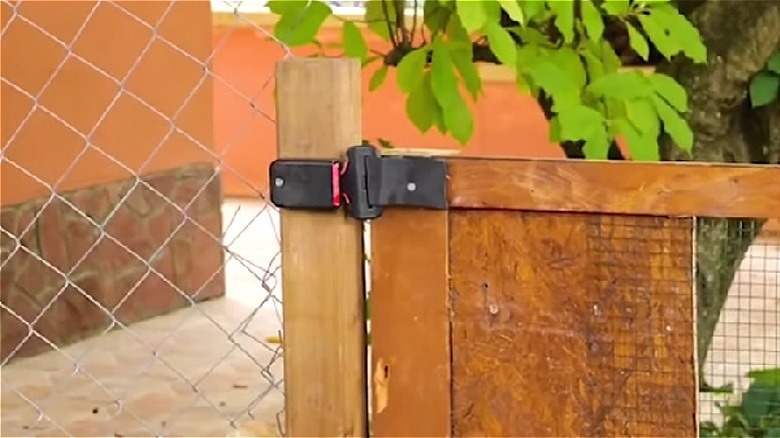
If your gate and fence posts are too far apart or sit at an odd angle, leave some of the webbing attached to the buckle to give you more length. You can screw through the webbing into the fence post, since both the webbing and buckle are both designed to withstand thousands of pounds of force. There's more than one way to employ this buckle hack, too. You could use this same system to hold a door or gate in an open position rather than closed. Simply mount the buckle to a wall or post near the ground, so that the gate swing open and clicks into position. You can also mount the buckle on shed or cabinet doors to keep them latched and prevent little fingers from opening them. However, this method should probably be used for convenience rather than safety.
This gate hack works when you don't need to lock the gate, since anyone can open the buckle. One minor challenge with using car buckles as latches is that they aren't meant to be outside, so long-term exposure to rain and humidity could cause the internal mechanism to rust, making it hard to use. You can prolong the shelf life by lightly oiling the springs inside. As for the remaining seatbelt webbing, buckles, or seats themselves, explore other creative ways to repurpose auto parts around your home.