

What's The Average Lifespan Of A Gas Furnace?
We may receive a commission on purchases made from links.
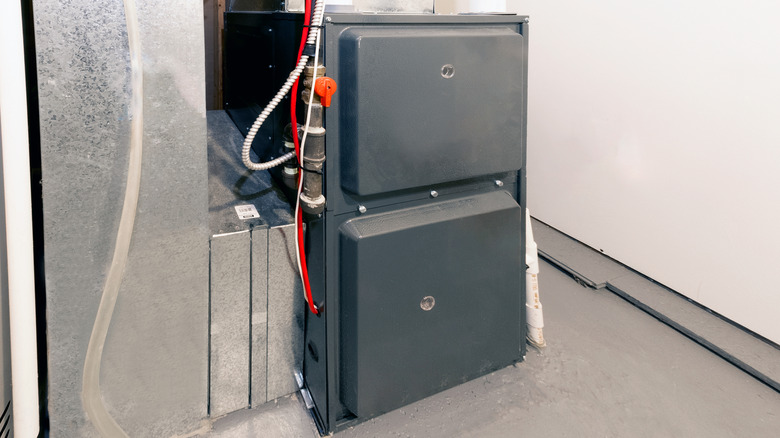
When temperatures dip below zero, the last thing you want is for your gas furnace to break down. Dealing with the cold is hard enough, but dashing to the nearest Home Depot for space heaters until a technician comes to have a look is even worse. Whether you're trying to avoid this predicament, dodge the fatigue of constantly dealing with repairs, or budget for a replacement, you may be wondering how long a gas furnace lasts. Turns out, they have an average lifespan of 15 to 20 years, with 20 being the sweet median spot, according to Consumer Reports. However, some may require repairs as soon as they turn 10.
Factors such as location, size, the length of the heating season, and timely maintenance may influence a furnace's longevity. Anecdotally, some high-quality gas furnaces have been known to last over 30 years when homeowners take the time and effort to maintain and service them regularly. Still, older systems tend to lose out on efficiency gains, especially as heating technology continues to improve.
Why your gas furnace may not last long — and how to extends its life

One thing you may not know is that your furnace placement can affect your appliance's lifespan. If it's located in a humid or poorly ventilated area, its mechanical parts, including the heat exchanger, can rust from moisture, necessitating unplanned replacements. Cold exposure may similarly damage the components. Such issues can be avoided by adding insulation after accounting for clearance.
Poor size selection or improper installation can also be responsible for shorter life. When the gas furnace is too large for the space, it will repeatedly turn on and off without completing a full cycle (also called "short cycling"), which stresses the components. But when it's too small, it works overtime, requiring a replacement sooner than planned. You can modify or retrofit them to achieve a more suitable operating capacity. Appropriate sealing and weatherstripping can help take some pressure off, improving performance and longevity.
The length of the heating season also plays a major role. In colder climates, a gas furnace runs for extended periods, incurring greater wear. But in milder climates, it doesn't have to work as many hours and can therefore last longer. A similar rule applies if you run your heating system longer based on your temperature preferences and overall comfort.
The upkeep of your gas furnace matters, too
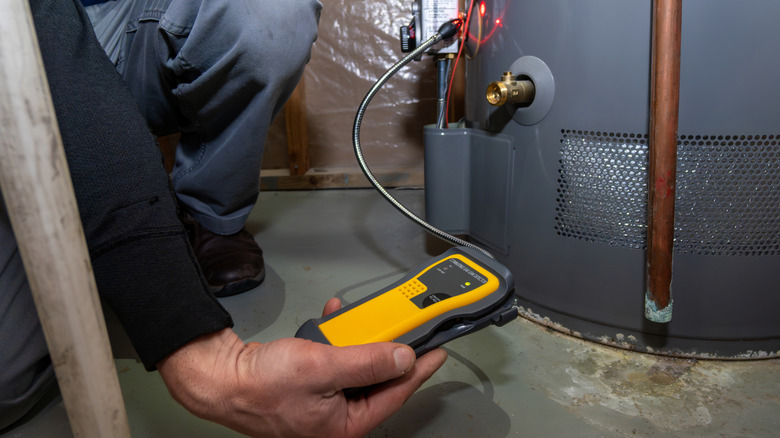
Whether your gas furnace outlives its expected span is also a matter of your upkeep. Routinely maintained appliances have fully functional and lubricated working parts that work properly, sans undue stress. Plus, you must get your furnace inspected annually so any minor repairs are taken care of before they snowball into something greater. Having a gas valve, sensors, or the switches repaired or replaced is far cheaper and easier than dealing with a failed heat exchanger. In the case of the latter — especially for an old furnace — an outright replacement becomes imminent.
Moreover, you're supposed to change your furnace filter every three months, or sooner if it's a busy household where things like pet dander, dust, pollen, and smoke may clog them quicker. Otherwise, your furnace has to work harder to pull in hot air and heat the same area, potentially losing out on precious working years. Although smart filters are convenient for monitoring filter status, standard filters from any reliable company, such as the Filtrete MERV 13 MPR 1900 Air Filter (deemed one of the best by Consumer Reports), perform just fine. Other than that, ensure the vents are clear of dust and obstructions to reduce undue pressure on the system.