

Ditch The Ugly Baffle: Keep Squirrels Out Of Feeders With A Shrub They Can't Resist
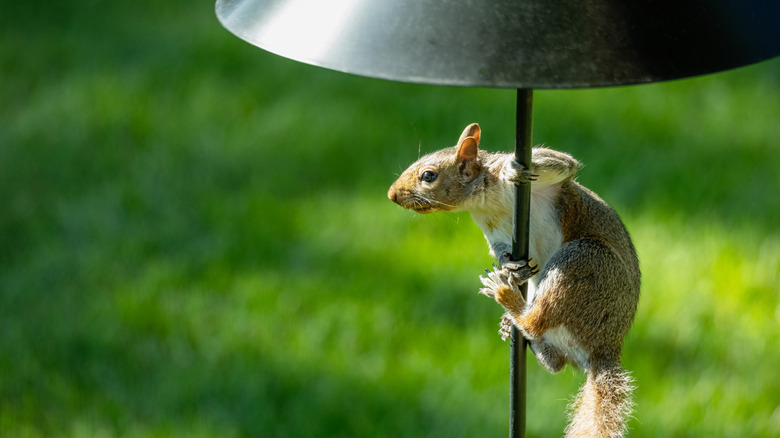
Squirrel acrobatics are amusing and adorable, unless these fuzzy tricksters are going after your expensive birdseed. Among the many hacks to keep squirrels out of our bird feeders, baffles are pretty effective. However, they're not the nicest things to look at. Instead of focusing solely on defending our feeders, luring hungry squirrels toward a more tempting treat might be worth a try. Enter the American filbert (Corylus americana): a delectable shrub that produces nuts coveted by wildlife.
Better known as hazelnuts, an American filbert shrub pumps out tasty brown nuts about ½ inch long in late summer and early fall. Just when the birds are starting their pre-migration fuel-up, the shrub spreads out the buffet to give squirrels an attractive alternative to expensive birdseed. There's no guarantee they'll ditch the feeders entirely in favor of filberts, but these nuts have been observed as some of squirrels' favorites, as well as a food source they seek in the wild.
The American filbert is one of the best nut trees to grow in your yard. They're hardy from zones 4 to 9 and aren't hard to grow. Nut-loving birds will also flock to filberts. Even though the American filbert spends much of the year nut-free, this small tree will earn its place in your yard with its striking appearance and additional wildlife value. In spring, it blooms with long catkins that provide us with visual drama and butterflies with much-appreciated meals. What's more, the American filbert is a host tree for Saturniidae moth caterpillars. If these reasons weren't enough to sell you on the American filbert, it's also a relatively low-maintenance shrub with few major pest or disease concerns and some fire-resistant qualities.
Adding an American filbert to your landscape
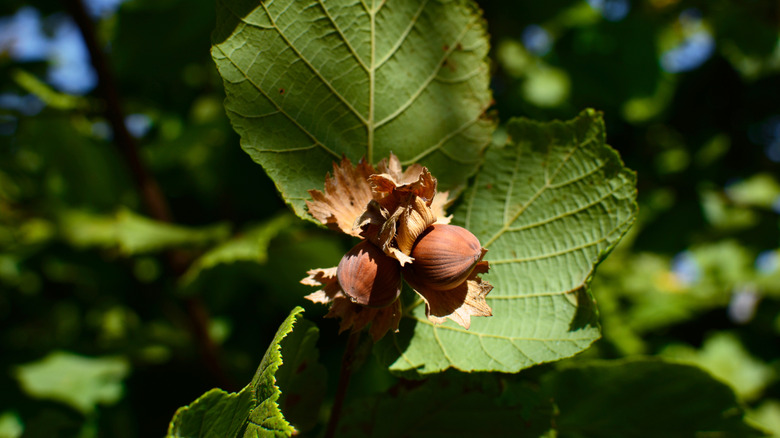
As a native perennial that thrives from the plains states and Canadian provinces all the way to the Atlantic coast, the American filbert can grow in diverse conditions. The shrub tolerates low light to full sun and varying soil types, as long as the soil is acidic to neutral. For the best nut production, scout out a planting spot in full sun. If your outdoor space is shady, American filberts can still grow well — though with reduced nut production — in part sun to full shade.
Although both male and female catkins can bloom on one shrub, they're not self-pollinating. To get a substantial crop, plant another filbert nearby. Filbert shrubs can grow to 8 to 13 feet wide and 9 to 12 feet tall. American filberts tend to spread by suckers. Although you might need to do some thinning to prevent overgrowth, the thick shrubs can also be great for adding privacy to your yard. With their spreading nature, plant a filbert in a spot that allows 12 to 24 feet of room to expand. Plant shrubs 2 to 6 feet apart. Opt for closer spacing if you want them to double as a privacy screen and squirrel food.
White-tailed deer will snack on the nuts and leaves, but they aren't considered a major threat to mature plants. Still, give your new filbert plantings a shot at reaching adulthood by shielding them from nibbles. Placing a tomato cage covered in wire mesh around the plant can be effective. If deer are enjoying your mature American filberts a little too much, alternating between scent and taste repellents can be a more economical option than fencing.