

Not Banana Peels Or Fruit Scraps: What You Could Be Adding To Your Kitchen Compost
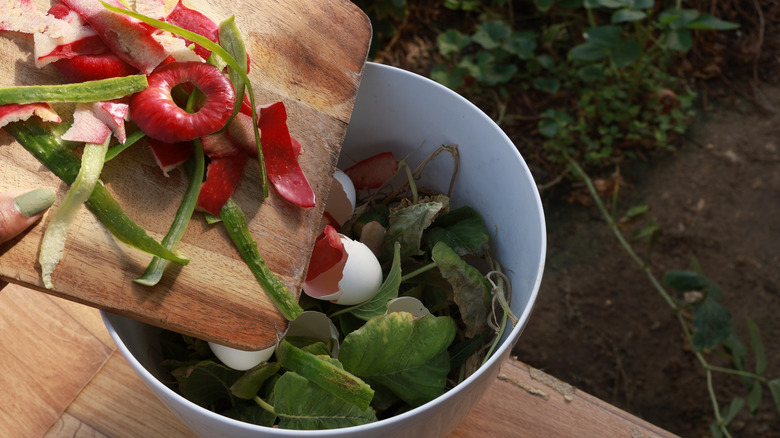
What if instead of tossing away your old clothes and other textile items, you could use them to help grow your plants? Sending your old natural-fiber clothes and fabrics to the compost bin instead of the landfill can contribute to a nutrient-rich soil amendment to help you grow your garden. While not all clothes and fabrics are compostable since many are made with synthetic fibers, natural materials will decompose just as well as any other organic material, though each type of fabric breaks down at a different rate. Once decomposed, fabrics made of natural fibers are safe for soil.
Composting is one of the most environmentally friendly ways to repurpose old clothing in your home and garden. It keeps discarded clothes from joining the millions of tons of textile waste taking up space in landfills, which in turn helps reduce methane gas emissions. The sustainable practice of composting clothing and other fabric items is no more challenging than any other material, so long as you're careful about keeping synthetic materials out of the compost bin.
Check and prepare your old clothes before composting them

The first thing to do is determine the compostability of every fabric item you're considering putting in the bin. Only natural fibers like cotton, silk, bamboo, linen, wool, and hemp are suitable for compost. Natural fabrics are sometimes blended with synthetic materials, so you'll need to read the tags carefully on whatever you're planning to compost. Stay away from materials like polyester, nylon, acrylic, and spandex, which take decades to hundreds of years to decompose and could contribute microplastics to your compost pile.
You'll also want to remove any non-compostable parts from clothing, such as button, zippers, and elastic bands. Avoid composting t-shirts with designs or writing on them that isn't woven into the fabric, since these can contain inks or plastics that can't be broken down. Clothing stained with paint or petroleum products also shouldn't go in compost. You may be able to get around this by cutting out the section with the design or stain, but if you're still on the fence over whether an item is safely biodegradable, it's better to skip the compost bin and donate or upcycle your old clothes instead.
How to get the best results out of composting fabric
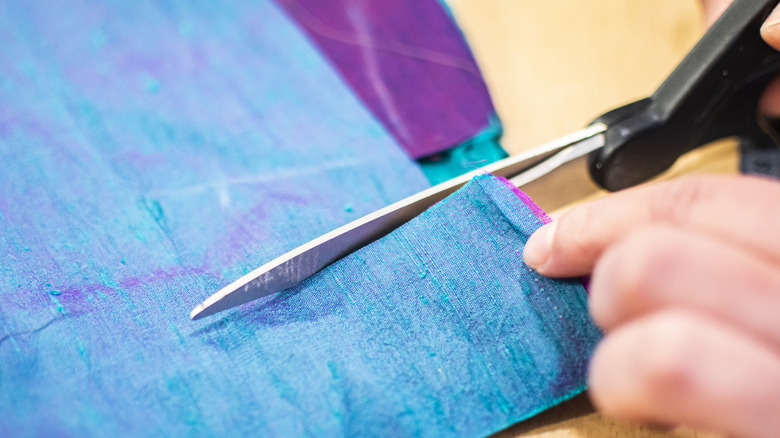
If you already make your own compost, you probably know that items decompose faster when broken down into smaller pieces. The same is true of fabric. It's recommended to cut fabric pieces down to the size of your palm or smaller before adding to your compost bin though you can go smaller if you have the patience.
Composting fabrics via hot composting is the quickest and easiest methodTextiles will still decompose in a cold-composting system, but it will take considerably longer. If you're hot composting, place your fabric bits in the center of the pile where it's hottest, then continue to turn the compost regularly as the textiles decompose. In a well-maintained hot compost system, natural fabrics can decompose in as little as three to six months. Hot and cold composting methods both rely on a ratio of around 25% nitrogen-rich "green" items to 75% carbon-rich "brown" items; fabric is a brown, so if you're adding a lot of it, be sure to balance it out with greens like grass clippings, food scraps, or coffee grounds.