

11 Places Snakes May Be Hiding Out In Your Home & Garden, And What's Best To Do
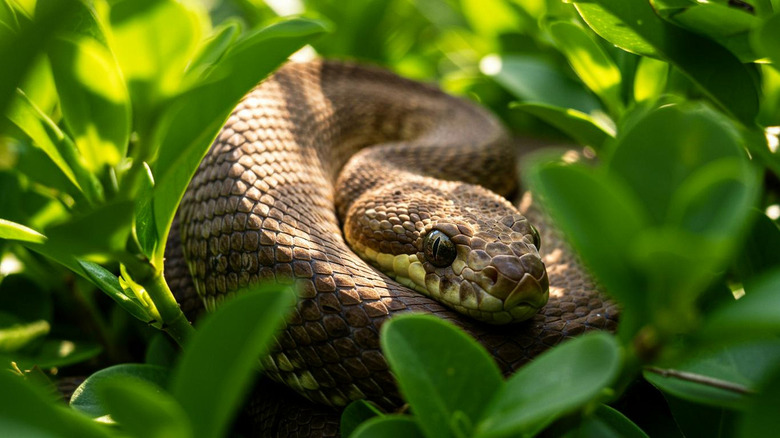
Have you spotted a snake winding its way across your yard? If so, do you know for sure that it's only passing through? Or do you suspect that it could be holed up somewhere around your property? If so, there are various places around your home that are worth inspecting for unwanted reptilian residents.
Some, like certain planting choices, may be harboring their natural prey. Others could be providing a natural source of warmth or shade, which allows cold-blooded creatures like snakes to regulate their internal temperatures. There are even areas around the home and garden that provide both room and board. To help you work out where to look, we've covered 11 different areas around the house that are likely to attract snakes. We are also sharing some of the science behind what attracts snakes to certain environments, along with some tips on how to deal with any unexpected guests.
Snakes favor longer grass for hunting or simply passing through
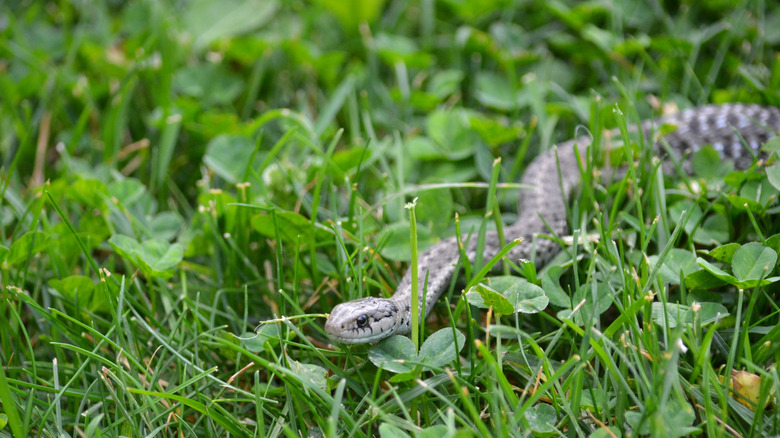
It makes sense that snakes would favor more overgrown areas in order to hunt, since long grass and other plants provide them with natural concealment. However, the main reason that long grass tends to improve the odds of a snake incursion is that it helps to conceal them from predators. There are various animals that hunt snakes, many of which are airborne. Long grass breaks up sightlines, preventing even the most eagle-eyed hunter from spotting the snake in your garden.
Fortunately, it's quite easy to get around this. First, work out which lawn mower settings are best for the grass in your garden. Once you've done that, aim to keep it as short as you can without damaging the lawn. Now, if you live in an area that has lots of snakes, especially if some of them are dangerous, then don't go in guns blazing on a lawn that's already overgrown. You'll want to take it slowly, giving any snakes in the vicinity the chance to escape. It's best to take a careful walk around your garden first, keeping a keen eye out for snakes. The vibrations of your footsteps should be enough to encourage them to vacate before you even see them. If you do spot one, keep your distance, and avoid cornering it. It's also worth watching to see where it goes. If it slithers beneath your shrubbery, then you'll have a good idea of which part of your yard to check next.
Dense shrubbery can provide a shady sanctuary for snakes
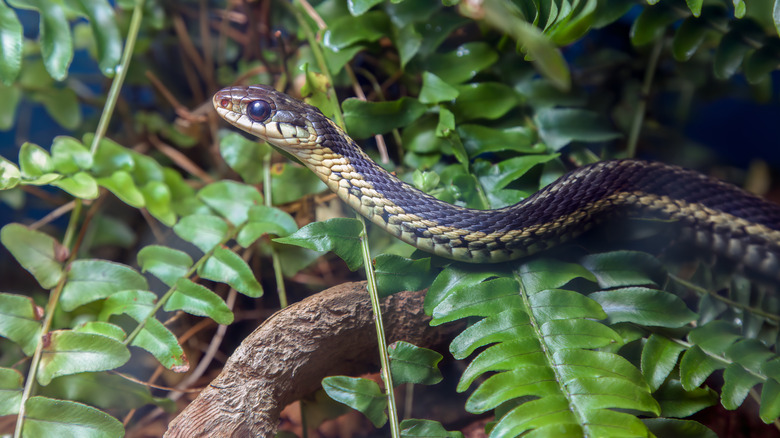
A little bit of science can go a long way to helping you understand why snakes favor certain parts of your yard over others. Snakes are cold-blooded, meaning they're unable to warm themselves. They are also ectothermic, which means they're unable to regulate their internal body temperature. On cold days, this makes your yard's sunny spots attractive. But in the intense heat of the midday summer sun, the opposite is true. When it's really hot, they require cool, shady areas in order to maintain a safe and stable temperature. That makes densely-planted flower beds and thick shrubbery highly attractive during hot spells. It's also important to remember what many snakes eat. Amphibians and rodents are high on the menu for many snake species. Others are more invested in insects. In all cases, dense cover provides an excellent place for such prey to live, burrow, and hide.
If you have shrubs and you suspect that they're harboring snakes, then what you do depends on the species. Unless you have dangerous species in your region, you're usually better off leaving them alone. Certain snakes can actually be beneficial to have around without harming humans, since they can help to keep pest numbers in check. But if you have dangerous snakes in your region, and you have pets or children, you may want to consider thinning out your flower beds and borders. At the very least, you should check them periodically for signs of snakes. Be careful when you do, and be sure to check from a safe distance. If you come across one, and you suspect that it's dangerous, have a wildlife control specialist come out and handle the removal for you.
A pond or water garden is likely to have snakes lurking nearby
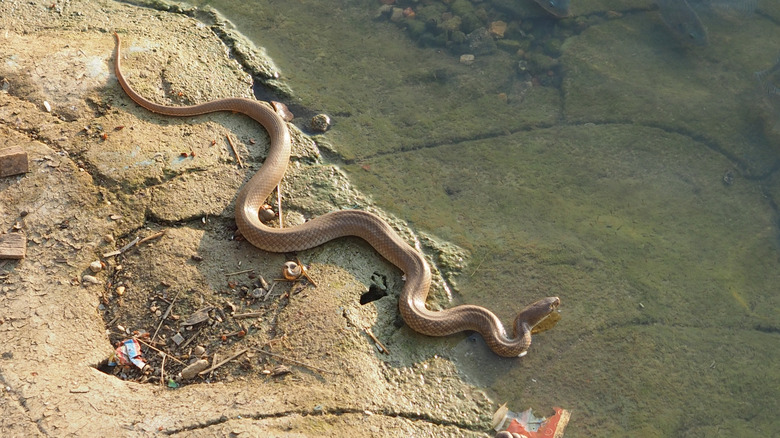
There are various reasons to add a water feature to your garden landscape. Firstly, the sound of water is seriously relaxing, in fact it's been repeatedly linked to lower stress levels and improved mental wellbeing. It's also a great way to attract more wildlife and thus nurture a more bio-diverse landscape. But if you've yet to be sold on the value of snakes, you should know that water can also inadvertently attract them into your garden. Ponds attract various other creatures like rodents, amphibians, and insects. And if a snake gets wind that the getting in your garden is good, it's unlikely to turn down such rich and easy pickings.
As for where to look, you may not find them immediately around the edge of your pond. But they may not be far away, either, especially if there are dense shrubs or flower beds nearby. You may spot one near the water as it stalks its food, and if you do, then once again, as long as it's not a dangerous species, it's best to leave it be. If you really don't like snakes, you could watch to see where it goes afterwards, then use that information to inform your future snake-control strategy. Alternatively, if it is a dangerous species, then contact a professional. They'll be able to advise on how to prevent repeat visits, and if necessary, remove the snake from your garden.
Snakes may seek refuge beneath your firewood pile
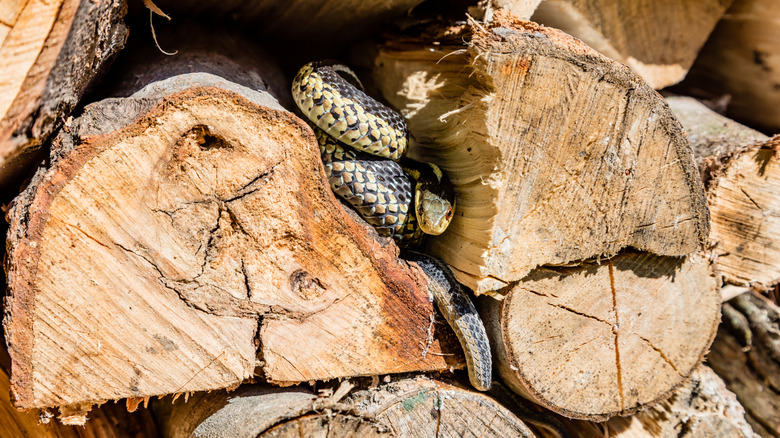
Firewood piles are one of the more surprising reasons for snakes seeking shelter in your yard. As we discovered earlier, snakes cannot regulate their own internal temperatures. Instead, they rely on finding areas that provide a stable source of warmth. Piles of firewood match this description perfectly. During the day, they provide shade from the heat of the sun. At night, they offer sanctuary from the cooler evening temperatures. They also provide a handy hiding place for creatures like rats and mice. Put all of this together, and the gaps between your seasoned logs suddenly become immensely attractive to snakes.
To check them, inspect each gap (from a safe distance) with a flashlight. Any snakes that you suspect to be dangerous should be handled by a wildlife professional. You should also warn anybody else in your house not to go near the pile until after it's been removed. To avoid it happening in the future, it's advised that you raise your wood pile off the ground by at least 12 inches, which should help deter snakes from slithering into it. Then again, if you don't have dangerous snakes in your area, then you're much better off leaving it to its own devices. Any rodents also occupying the wood pile are unlikely to stick around once a snake moves in next door.
Piles of gathered leaves are a likely holding spot for snakes
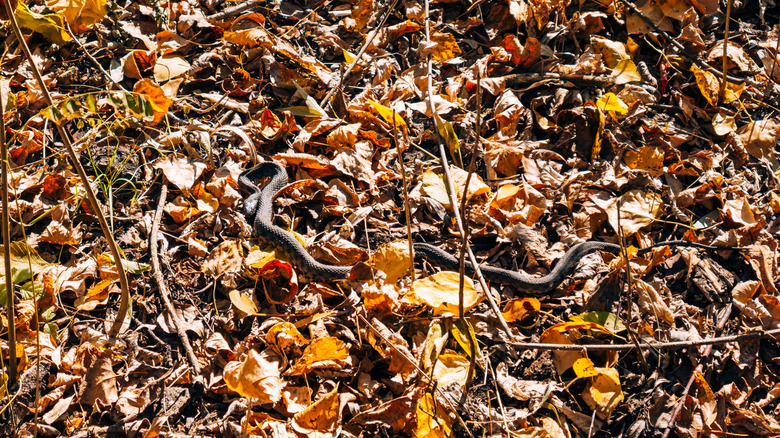
There are several reasons why you should never let the raked leaves pile up in your lawn. For starters, it's bad for the grass, since those leaves tend to block out sunlight. But they can also provide a useful hunting ground for snakes. Large piles of leaves tend to attract other critters, like insects, birds, and rodents, which are all high on the menu for various snakes. They also serve as a natural form of insulation, protecting the ground beneath from extreme heat and cold. For ectothermic creatures like snakes, this is another massive plus.
If you've yet to clear away your raked leaves, and you live in an area with lots of snakes, then go carefully. Start slowly, and consider using a shovel rather than sticking your hands into the pile. Agitate the pile gently to start with, giving any snakes lurking beneath a chance to make their escape. It can also pay to wear a thick pair of gloves, just to be sure.
Sheds hold heat that snakes love
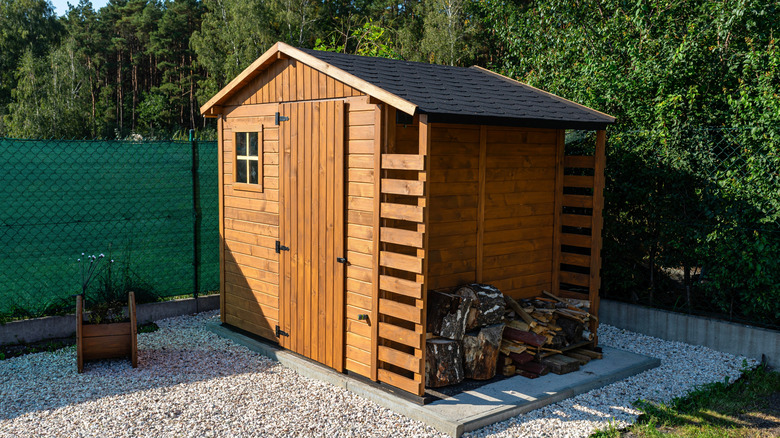
If you've ever walked into your shed during the summer, you'll know how well it holds heat. This makes it a potentially useful hiding place for snakes — provided that they're able to gain entry. They may occupy the horizontal bar of any rafters in your building. Or they may slither beneath or behind items on the floor. In either case, if you suspect there are snakes hanging out in your yard, then it pays to apply caution when using your shed.
Before you enter, check overhead to ensure there are no snakes lying on the rafters. Next, gently lift items off the floor and pull them away from the wall, checking beneath and behind them for snakes. As always, it's best to take this slowly. Particularly if there are dangerous snakes in your region, you want to avoid startling them. Certain snakes, like rattlesnakes, may give themselves away if they feel threatened by your presence. This isn't a hard and fast rule, though, so it pays to be cautious even if all seems quiet. If you do find one, back away and call a wildlife expert. Snakes will usually try to escape if they're able to. But if they feel cornered, which is more likely in a shed than on open ground, then defensive strikes are more likely.
The space beneath your deck is usually worth assessing for snakes
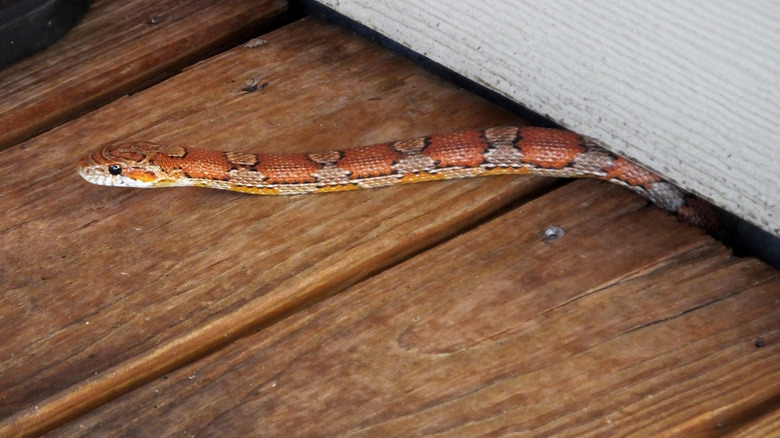
Providing plenty of shade on hot days, the space beneath your deck is always worth checking if you think you have snakes in your yard. If they can gain access, they'll appreciate the ability to get out of the hot midday sun. They may also happen upon a population of rodents, and if they do, they're unlikely to leave such a prime piece of your real estate.
To keep this from happening, first check the area for pests, and if necessary, take humane steps to evict the rodents from under your porch. Next, seal the gap between your deck and the ground. Mesh barriers are a good way to do this. Just be sure that the mesh is made from chew-proof steel wire, and that the gaps are too small for rodents to squeeze through. Dig the mesh into the ground by several inches, too. Certain animals may simply tunnel underneath your barrier if you don't, and any tunnels they dig may later provide a useful way in for snakes.
Rock piles are a natural source of shelter as far as snakes are concerned
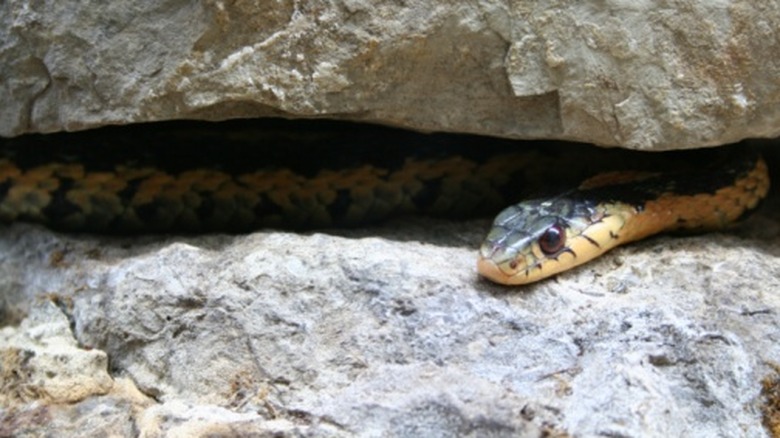
As beautiful as they are in your landscape, there are multiple reasons why snakes may be hiding in your rockpiles. First, they may be harboring pests, like rodents, making them excellent hunting territory for snakes. Rocks also have thermal properties that snakes love. They provide shade during the day, helping snakes to regulate their heat when the sun's at its hottest. When things cool down in the evening, those stones start radiating the warmth back outwards, making the void just as comfortable in the evening. The space beneath the stones may also provide an excellent place for them to have their young and even hibernate.
With all of this in mind, it may well be prudent to have the rocks removed from your landscape. But before you do, check them. Ensure there are no adults hiding out beneath them, and if they are, consider having a professional remove them for you. Next, check for signs of nesting. Oviparous (egg-laying) snakes tend to lay their eggs during early summer, making that the best time to look for clutches. And while there are various types of snake eggs you could find in your yard, the species that lay them are mostly harmless. The only exception in North America is the coral snake, which, along with its hatchlings, has a potent, venomous bite. As for other venomous types, like rattlesnakes, copperheads, and cottonmouths, they usually give birth to live young from late summer to early fall. Like coral snakes, even juvenile members of these species are dangerous. If you're unsure which species the babies belong to, keep your distance, and contact a wildlife removal specialist.
Indoors, snakes favor quieter, warmer spaces, like the attic and behind appliances
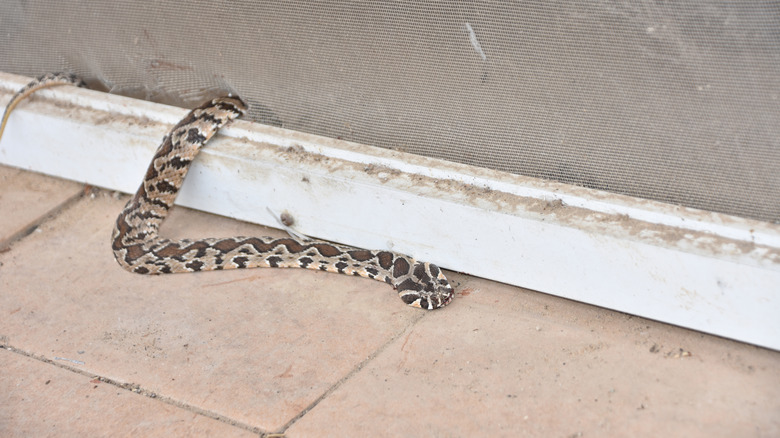
Snakes may be tempted to wander inside your home for several reasons. They favor quiet, warm, stable environments, which help them to regulate their internal temperature. They also prefer areas near food, so if you're currently contending with a rodent problem, then the warm confines of your house are sure to seem doubly appealing. As for where snakes are likely to hide, there are a few places to check. Attic spaces and other quiet, low-traffic zones are likely spots, especially if they also contain rodents. So, too, are the spaces behind certain warmth-emitting appliances, like your refrigerator.
As always, when it comes to checking for snakes, take it slowly and apply caution. Gently pull appliances away from the wall and check from a safe distance. In your loft, use a flashlight, and just like you would in the shed, carefully check behind and beneath insulation and other objects. Call a wildlife professional to remove any snakes for you, and ask for their advice on preventing future invasions. As well as eradicating potential prey sources, like rodents, they may also recommend checking your foundations for cracks, and sealing them. You should also make a point of keeping your outside doors closed. As for your attic, some snakes are excellent climbers. They'll often use vining plants on the side of a house, or nearby tree branches, to gain access. Some snakes can also climb walls, like yellow rat snakes, provided that they're not completely smooth. Prune away any errant branches, and consider removing vining plants from the side of your home. You should also check for gaps between your wall and the roofline, and try to seal them against future incursions.
Uncovered dryer vents are sure to seem attractive to snakes
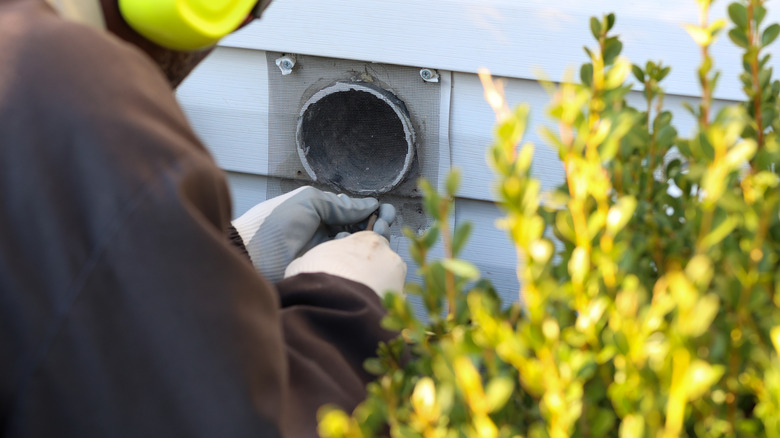
Since they're so warm, uncovered dryer vents are attractive to a variety of garden critters. Rodents and birds will both look favorably upon the chance to seek shelter from the elements. So, too, will snakes, who tend to favor warm, sheltered spots to help regulate their body temperature. If there also happens to be some tasty prey waiting for them inside, then that's really just a bonus. Luckily, it's an easy eventuality to avoid — you just need to keep the vents well covered. Monitor them periodically to ensure they're in good shape, and make sure they're on your list of things to check for damage after a storm.
However, if it's been a while since you checked the vent, and you've discovered that it's either broken or come off entirely, then it's worth inspecting the ductwork. Avoid reaching in to find out whether something's living inside. Instead, use a flashlight. If you spot a snake, then seek professional assistance to remove it. Alternatively, you may find that the snake eventually leaves of its own accord, especially if the vents are devoid of other resources like food and water. When it does, give the inside a quick final check with your flashlight. Once you're certain that it's clear, fix a new cover into place.
Thick ground cover plants may inadvertently attract hungry snakes
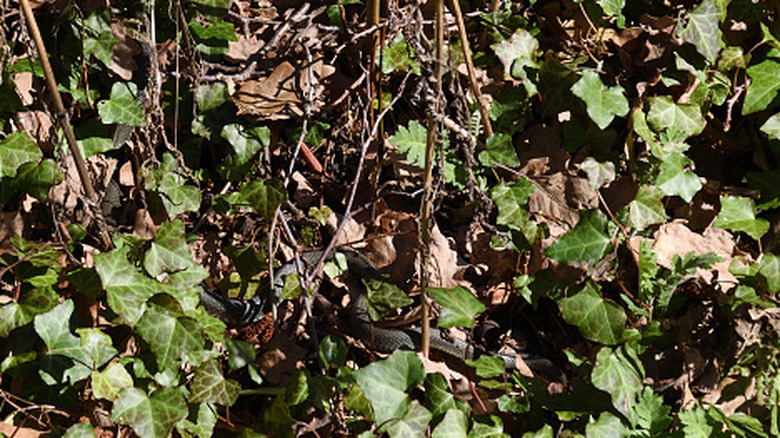
Various creatures will thank you for planting groundcovers. Peek beneath the leaves and you're sure to find an array of different insects. Rodents, too, appreciate thick vegetation. It provides a useful spot for nesting, excellent cover from aerial predators, plus a useful place to hide from humans. These reasons also ring true with snakes. Thick vegetation provides a handy hiding place from noisy homeowners; cool, dark, and confined areas are often favored for nesting, and they're far safer from predatory hawks and owls if hidden beneath a blanket of leaves. Throw in a banquet of insects and rodents, and really, it's no wonder that snakes find groundcover plants so appealing.
As for which groundcover plants are most attractive to snakes, there are several. Any that grow with thick, dense foliage, like Ivy, are more likely, since they provide the most amount of shelter for both snakes and their prey. And unfortunately, the only surefire way to ensure snakes don't take up residence beneath them is to remove them from your garden. This may be advisable, depending on whether the species in your area are dangerous. However, without taking steps to make other parts of your yard less attractive, it's usually hard to banish them entirely. What's more, snakes are an important and natural part of the landscape. Provided that they aren't dangerous or posing a risk to your household, it's usually better to leave them alone.