

The Ultimate Checklist For Assessing Yard & Home Damage After A Storm
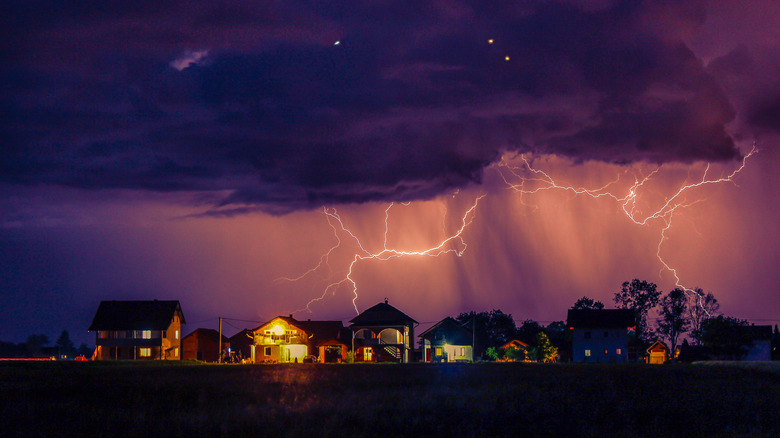
Unless the roof blows off or a window gets stoved in, it's easy to think that your home has weathered a storm unscathed. However, even if you took every step in the book to prepare your home for a storm, there's a chance that something, somewhere, has taken a hit. As convenient and comfortable as they are, modern households often have lots that can go wrong. Our HVAC systems, for instance, feature a number of delicate parts that need to be kept in ship shape. Glass windows, if not shuttered, can easily become cracked as debris takes flight on the wind. And if the breeze is on the severe end of stiff, then roof tiles and shingles can easily be torn away.
So, what should you do when your home has weathered a storm? Well, once you've ensured that everybody is safe, the next priority is to check your house. Below, we've covered 11 essential items that are particularly worthy of your attention. Some are easily identifiable, while others may require a closer look. Certain areas of your house may need your immediate attention in order to restore your home to safe, working order. And, depending on the damage, there may be some repair jobs that you're better off leaving to a professional.
Check your roof and shingles to ensure you don't spring a leak
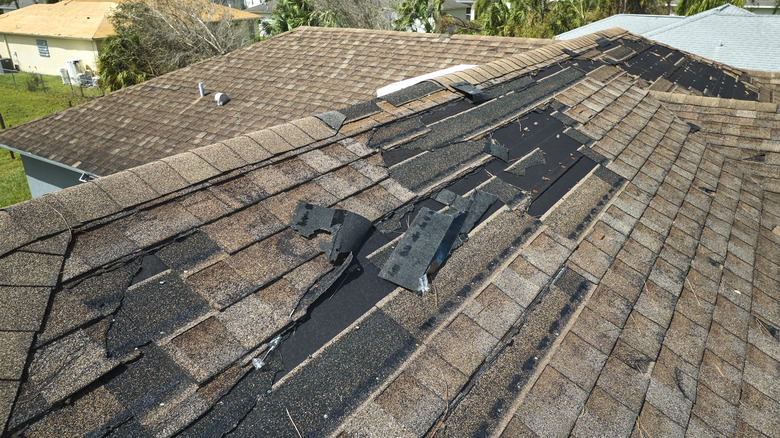
The roof of your house is its first line of defence. If a storm blows through and takes even one of your tiles or shingles with it, that's a surefire recipe for leaks. So, once the storm settles down, get outside and check it. Use a pair of binoculars to assess it from both sides, and avoid the temptation to get up close with a ladder. If you've managed to weather a severe storm, don't tempt fate further by clambering onto a wet roof!
As for the things you should check for, there are several. First, look for bald spots. These are the most obvious signs, and usually mean that a tile is missing. You may also spot cracked tiles, although these can be tricky to see, depending on how badly they're cracked. Bruising, or impact marks on your shingles, may be more noticeable, and are usually caused by hail. Alternatively, some tiles may be "blistering" upwards. This may not happen immediately. Instead, it may show itself later, when the weather starts to improve. It happens when trapped air beneath loosened shingles heats up and expands, leading to a raised, or "blistered," appearance. As for what to do if a storm has damaged your roof, try not to waste time. Seek the opinion of a professional, and if necessary, have them repair it. If you leave roof damage unchecked, it's only likely to get worse the next time bad weather blows through.
Inspect your attic interior for sneaky leaks and underlayment damage
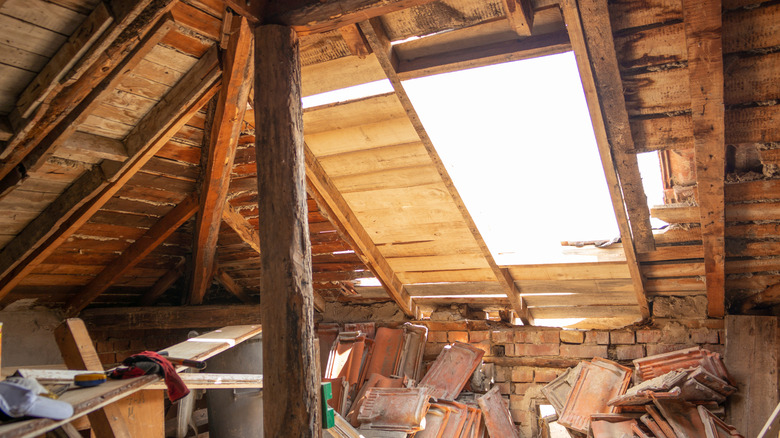
After your roof, the next area to check is inside your attic. Even if your roof looks fine, you'll want to conduct a quick sweep beneath the tiles and shingles, to ensure that water isn't seeping through. It's fairly easy to identify a leaky ceiling in your attic, even if it's not actually raining. Inspect the underside of the roof, and look for areas where sunshine is peeking through. If it isn't, then that's a good sign. But if it is, then remember that if sunlight can get inside, so can water.
Using a flashlight, check for signs of moisture on the rafters. Look on the floor of your attic, too, and check the insulation to see if it's absorbed any moisture. If you find a leak or wet patch, place a bucket there to catch any future drips, and enlist a professional to inspect and repair your roof. Once it's been fixed, aim to replace any damp insulation. Mold absolutely loves dark spaces, so if there's any moisture in your attic, it's sure to start growing and spreading.
Ensure your gutters and downspouts are still channeling water away from your house
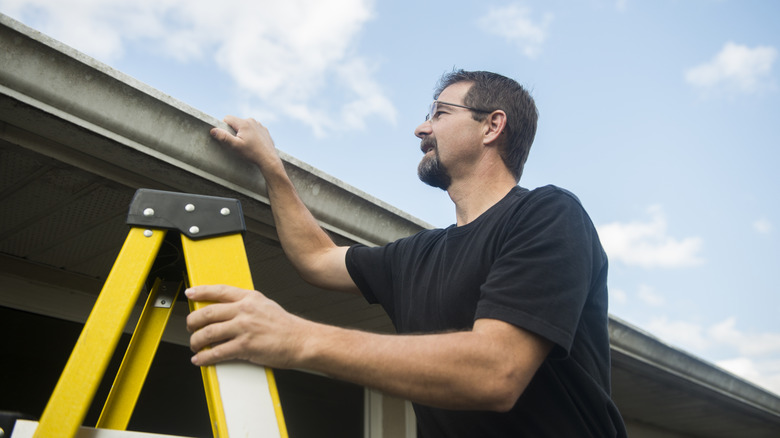
The next part of your house to check for storm damage is your guttering. The cost to repair a gutter can vary from a few hundred to thousands of dollars, depending on the area you live in, the type (and extent) of the damage, and the size of your system. Minor repairs naturally cost less, and a quick check now could help prevent any niggling issues from becoming major headaches. It's not just the cost of a gutter repair that makes it worth checking, either. If water isn't moved away from your house, it can pool at your foundations, leading to basement flooding, soil erosion, and rising damp. And if it sheets down the side of your house (often due to blocked gutters), it can also lead to damage and water ingress, especially if there are cracks in your wall.
The easiest way to tell whether your gutters are clogged is if water isn't flowing freely from the downspout. You can also get up on a ladder and inspect the gutters and downspouts for yourself. If you suspect a clog, then clear it. Once that's done, ensure that the gutters remain firmly fixed to the house. Double check that the downspouts are pointing away from the foundations, and ensure the system isn't sagging. Heavy weather can loosen the plastic clamps, and if water pools up due to a clog, the weight can stress and "sag" the system. Finally, while you're up the ladder, inspect the gutters for sand. Small amounts are normal, but if there's a considerable build-up, that could be another sign of shingle damage. That sand is actually shingle grit, and it's a good indicator that your roof took a serious hit during the storm. If you're concerned about the amount, call a professional and have them double check your roof.
Review your windows and skylights for cracks and ruptured seals
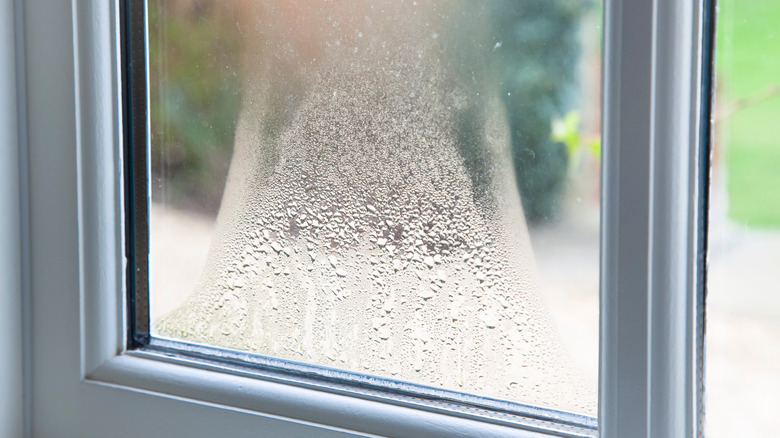
As modern humans, we put an awful lot of faith in our windows to protect us from the outside world. Modern windows and skylights are secure, guarding our homes against intruders. They're also extremely efficient at keeping the weather out. But they're far from infallible, so once you're happy that your roof and gutters are in fine fettle, make sure to give them a once over. Look for cracks in the glass, and ensure your seals are still air- and watertight. You can even use a candle to check for drafty seals. Alternatively, if you notice fogging between the panes, then that's a fairly reliable sign that the seals have blown. Finally, try opening them. If your windows or skylights are difficult or awkward to open — and they weren't before the storm — then the frames may have warped or become swollen.
If the glass is damaged, then you may be able to fix the cracked window yourself. However, depending on the extent of the damage, you may be better off having a professional come and replace the glazing. As for seals, it's usually quite easy to reseal a drafty window, however, you should only do this if the rest of the window is in good shape.
If those compromised seals have allowed the space between the panes to fog, then once again, you may need to have the panes professionally replaced. Finally, if your fixtures are no longer opening smoothly, don't ignore it. A damaged frame is unlikely to protect your home from the elements properly, and it's sure to be annoying in the summer when you want to let fresh air in. Better to have it repaired or replaced by a reputable window fitter.
Check your exterior siding for cracks, dents, and chipped paint
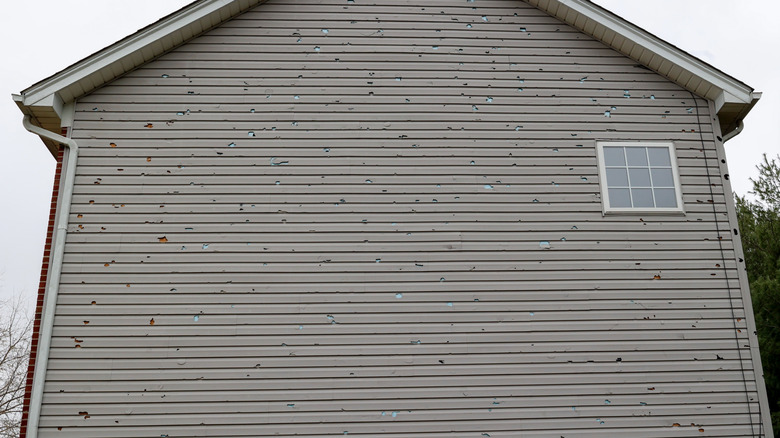
Hail and wind-blown debris can easily damage a variety of siding materials, rendering them less effective at protecting your home. If damage is left without repair, it can leave your property vulnerable. Water can become trapped between the siding and your house, saturating your walls and leading to major headaches like rot. In severe cases, it could start to call your home's structural integrity into question.
This makes a sweep of your siding important once the storm has blown through. If you have vinyl siding, look out for splits and cracks. Wood and aluminum siding are usually more robust, although they may still become dented, loose, or even detached. The same can be said for composite and cement-type materials. Whatever it's made from, check it at different times of the day. Certain areas of damage may show themselves better in certain light. You can also press gently on different sections, to see if they feel loose. And as well as keeping your eyes peeled, you should also keep your nostrils open. Any musty smells coming from areas of your siding, especially in tandem with visible damage, could point to water damage.
To repair any minor holes or cracks in your siding, it's best to use an outdoor-grade caulking agent. However, if the damage is extensive, or panels have become loose or detached, then you may need to replace an entire panel. This is possible to do by yourself, although only if you're confident and have the required tools. Otherwise, given that your home's structural integrity is on the line, it may be more prudent to hire a professional.
Inspect your trees for damaged branches
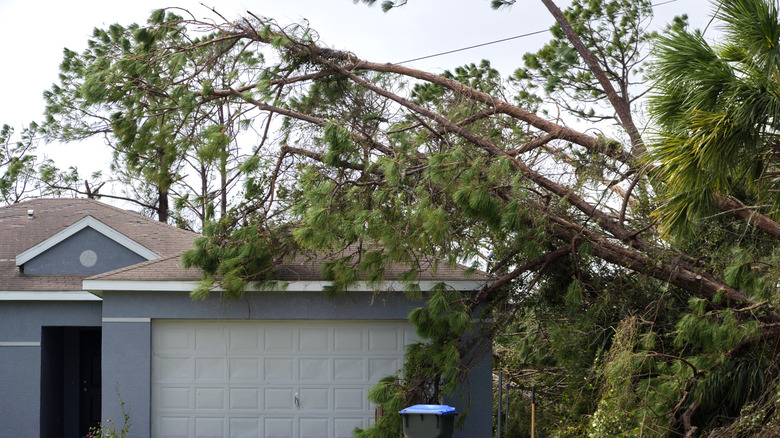
In heavy winds, even the largest, thickest branches can snap off. Sometimes, the damage isn't as clear cut as a branch lying forlornly on the ground. In some cases, they don't break off, but just hang there, by a thread, waiting to snap. This is dangerous, especially if you have family or pets who regularly spend time around the tree in question.
To avoid any accidents, check your trees. Provided that it's safe to do so, trim away any branches that are ready to come off. If the branches are long and chunky, then they're likely very heavy, too. With those, it's often better to hire a professional tree surgeon, who'll be able to remove them safely.
In the case of a fallen tree, then you may be able to claim the cost of tree removal on your home insurance. But only in certain cases. If, for example, it's blocking a driveway or a wheelchair access ramp, then the cost may well be covered. The same can be said if the fallen tree has damaged your home. But if it's not impeding access to your home, and especially if it remains standing (however precariously), it's often down to you to take action. Once again, it's recommended that you do this quickly. A tree that's barely standing is a serious hazard. Having a professional either stabilize or remove the tree promptly is essential to safeguard the safety of you and your neighbors.
Inspect your home's AC unit condenser
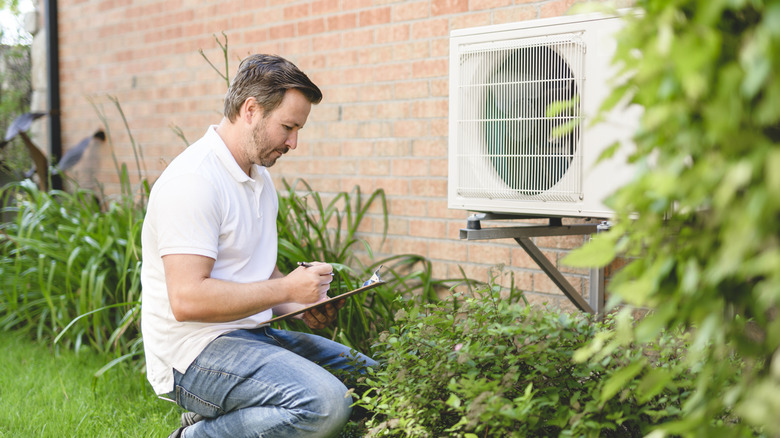
Roof shingles and siding aren't the only parts of your house that can take a battering when debris starts whipping its way around in a storm. Those same items can also damage and even flatten the delicate fins on your AC system's outdoor unit, leading to reduced air flow. Power surges can also damage the electrical system, impacting the performance of the compressor. You probably won't notice problems straight away, since it's recommended that you switch your air con off during a storm to protect the system from damage. However, you shouldn't rely on switching it on in order to notice damage. Instead, it's best to visually inspect it first.
Check the fins for signs of denting or warping, and if you notice a build-up of debris inside, try to clean it out. To straighten out the fins, you can use a fin comb, although that will only help with minor damage. Cracked or snapped fins should be replaced. While you're at it, check the shell of your outdoor unit for impact marks. Heavier impacts from flying and falling debris can lead to internal damage, like refrigerant line punctures. The fan may also jam if lots of dirt and leaves have embedded themselves inside. If you notice any serious damage, or the fan doesn't work when you switch it back on, then contact a professional.
Give your fence a once over to ensure it's standing strong
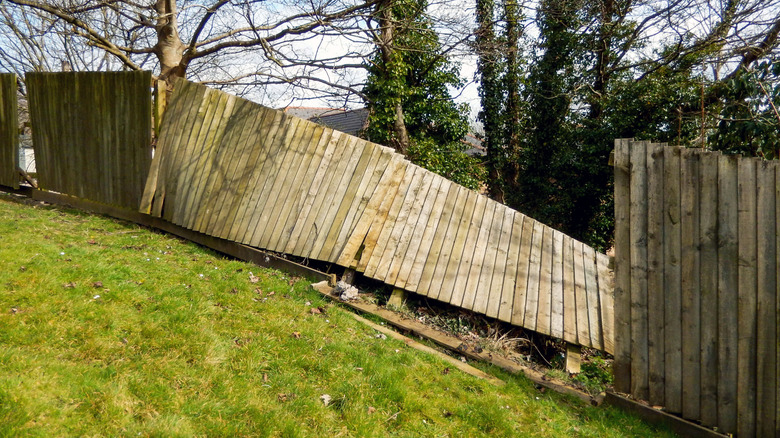
Is there anything worse than watching helplessly from indoors as a storm batters your fences? Whether it's your own time or money on a contractor that you spend, fences rarely come cheap, which makes maintaining them crucial to keeping costs down. Such maintenance is perhaps never more important than after a storm. Depending on how they're built, fences can easily take damage from high winds. What's more, saturated soil around the base can weaken their foundations.
So, once the blue sky gives you the all-clear, head outside and walk your fenceline. Give the posts a gentle shake, to ensure they're still sturdy. Look for cracked panels or pickets, and note any sections that are leaning. If it does show signs of damage, or has blown over entirely, then, depending on your policy, you may be able to claim your fence on your home insurance. Even if it's still standing straight, you should check for missing, loose, or corroded fasteners and hardware, like screws and gate hinges. Check they're still in place, and plan to replace any that are either missing or no longer doing their job properly. As a temporary measure, you can bolster any panels that are leaning with lumber. But if you notice any breakages at the base of your posts, you should dig them out, concrete and all, and replace them with new wood and fresh footings. Finally, check your gates to ensure they're still properly aligned. If a gate rubs against the posts when you open it (and it didn't before the storm) this is a subtle "tell" that something has either warped or shifted during the storm.
Inspect your deck and porch for damage and loose connections
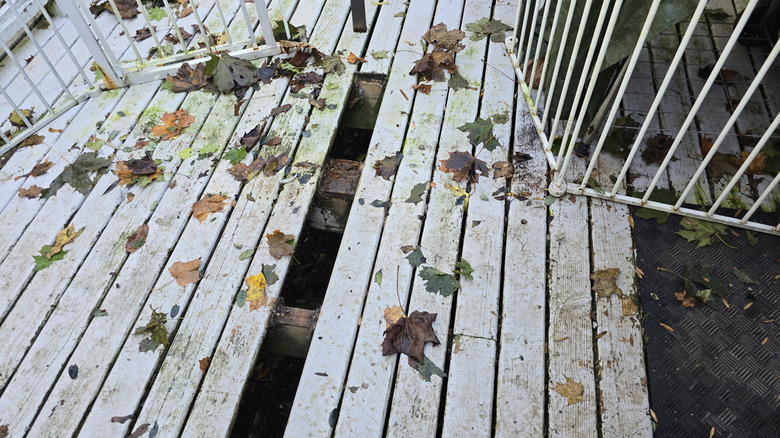
Just like your fence, there are several ways to know if your wood deck is beyond repair following a storm. Unfortunately, decks are especially prone to damage in heavy weather. They're raised from the ground, giving high winds an easy way in. They're often bedecked with loose items, like furniture, and if you're lucky, they are sometimes surrounded by trees. During a bad storm, falling items, like trees, can cause boards to crack, weakening the overall structure and potentially creating a hazard. Heavy wind can also get underneath the ledger boards — where your deck and porch attach to the house. And if that comes loose, then the entire structure becomes compromised.
After a storm, you should check the underside of the deck for loosened bolts to ensure it's all fastened tightly. Any visibly cracked boards should be noted and, depending on the damage, replaced. And as for the ledger board, look closely to ensure there are no gaps between the deck and the house. Even if the ledger board comes away by a small amount, you should avoid using the structure until it's been reinforced. You can attempt yourself if you fitted the deck and know what needs to be done. Alternatively, you may be better off enlisting the help of a contractor.
Assess your yard's natural water collection areas, and drain them if necessary
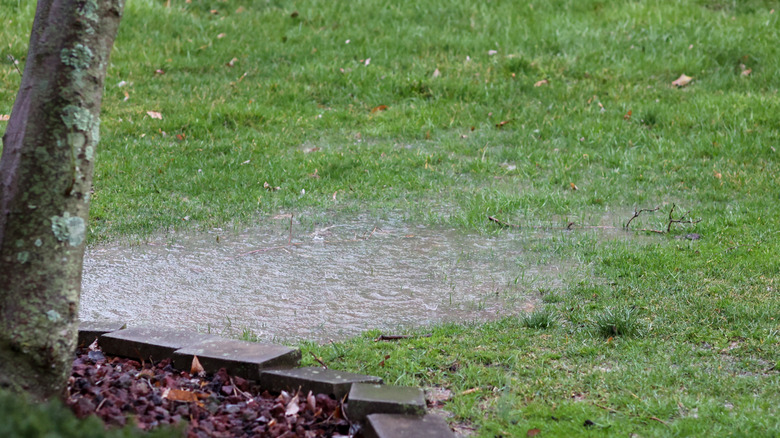
Pools of water in the low spots of your garden is, on the surface, less of a concern than missing roof tiles or broken fences. However, if allowed to remain in situ, it can quickly kill off the grass and any plants that happen to be submerged beneath it. Standing water is also a magnet for mosquitoes. With the National Library of Medicine warning of radical increases in populations in the last few decades, eradicating sources of attraction like standing water is key to ensuring mosquitoes don't make themselves at home in your yard.
After a storm, look in your garden for areas where water has pooled. If it's near your property, you'll want to channel it away to avoid damp problems, like flooding in the basement and crawl space. Wherever it is, once the water has dried, you should try to make adjustments to prevent it happening in the future. You could re-level your lawn with a gradient in place to slope the water away. Or you could install drainage, like a French drain. Alternatively, if the pooling is merely a result of compacted soil (which stops water from soaking readily into the ground), then aeration may be the best way to fix your waterlogged lawn.
Inspect the integrity of your garage door
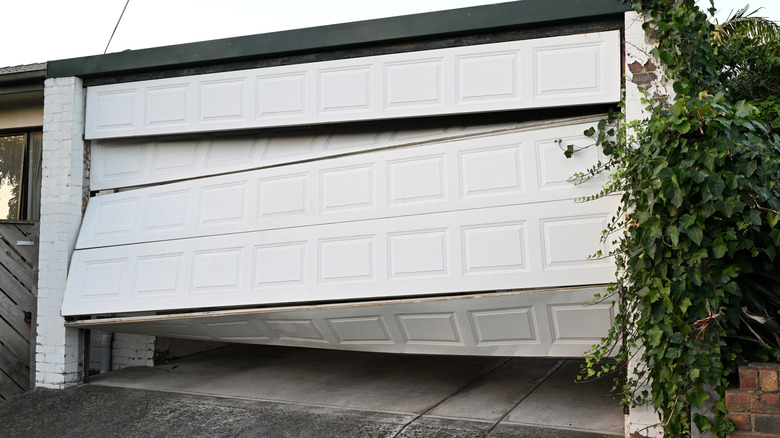
Stormy weather is hard on garage doors. It can easily bend and warp their tracks, making the door harder to use. It can also make it dangerous. If you have electrical garage doors, then storms can also wreak havoc on those. The electrical components can become damaged during hefty storms, with power cuts and short circuits being common culprits for system failure.
To check for damage, simply open them as you normally would. Listen out for strange noises coming from your garage door that weren't there before. These are good indicators that something's wrong. If you also feel the door "clunk," then the problem may be a kinked door track. If it's stuck, then don't force it open, as this could make the problem worse. For kinks, you may be able to access the area and re-straighten the track yourself. But if you need to remove the garage door to repair it, be careful. Many garage doors have torsion springs, which are fitted under extremely high pressure, making DIY fixes potentially dangerous. As for electrical systems, again, unless you're qualified (or have lots of experience with electrical systems), then it may be safer to have a professional fix the problem.