

Stop Deathwatch Beetles From Destroying Your Old Deck With A Preventative Tip
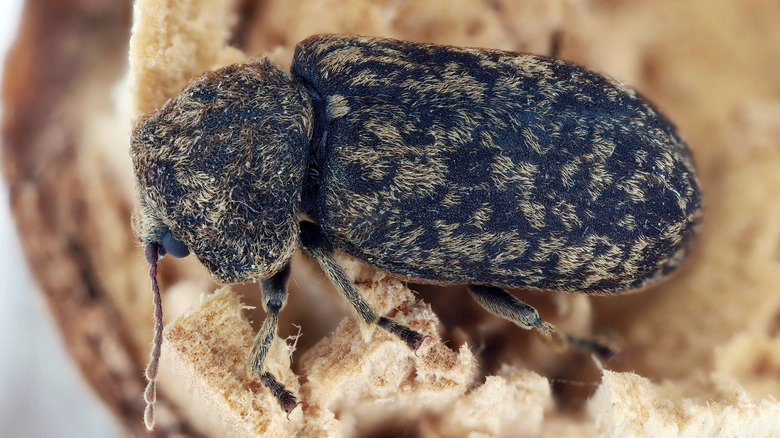
Legend has it, in the darkest hours of the night, people could hear the tap, tap, tap of the grim reaper's staff while standing vigil with a dying relative. Today, we attribute this medieval tale to a different kind of misfortune: The tapping of a wood-boring nemesis called the deathwatch beetle. These mottled brown, oval-shaped bugs usually emerge during spring in North America and Europe, but their larvae are the real problem. They can compromise older structures made of soft, damp wood, including structural boards and supports. Prime locations are outdoors and have a moisture content of 14% or higher, making your old deck that sits in the elements a possible target. To prevent this, you'll have to rethink what materials you use — and possibly start from scratch.
If you see deathwatch beetles, or more likely the holes the adults leave behind when they emerge, then your deck was probably on the way out already, as they are drawn to partially decaying, wet wood. You can try treating an infested deck with surface-applied or injected insecticides, but larvae can remain in wood for up to 13 years. For some of us, that's a bit too much of a chore for something that is already decaying. If that's the case for you, and you aren't ready to ditch wood entirely for a more durable alternative, try tearing it down and consider rebuilding with future pest prevention in mind.
Keep deathwatch beetles out of your new deck
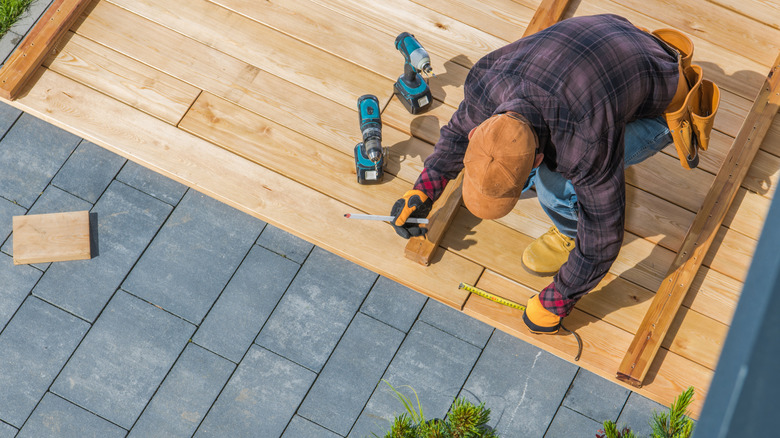
Wood-boring insects sound like a great reason to upgrade your outdoor area by switching from a rotten deck to a patio. While you could just replace the infested boards, rather than the entire structure, it's difficult to do when the only signs of the beetles are when they leave. However, if you don't mind rebuilding, you can reduce the likelihood of a deathwatch beetle infestation by preventing wood decay. You could also repurpose any leftover decking materials for other smart DIYs around your home to save money elsewhere.
Indoors, you could do this with better air circulation and dehumidifiers, but it's a bit more difficult for a structure that sits outside in the rain and humidity. Opting for rot-resistant wood like cedar is a great option, but remember it will still need to be maintained over time. Another tip is to use pressure-treated wood and a sealant. The sealant should limit the amount of moisture that the wood soaks up. But first, if you know it won't rain for a couple of days, you can apply a preventative insecticide on the wood before sealing.
Designing with water movement in mind is also helpful. Leaving enough space between deck boards can improve airflow and help prevent standing water. Adding regular cleaning to your to-do list can help prevent bacteria, moisture, and debris buildup beneath the deck surface. If you scout for signs of water and rot every year, you'll be less likely to hear the deathwatch beetle grim reaper coming from your deck.