

Keep Aphids Away From Your Plants With A Sweet Smell They Can't Stand
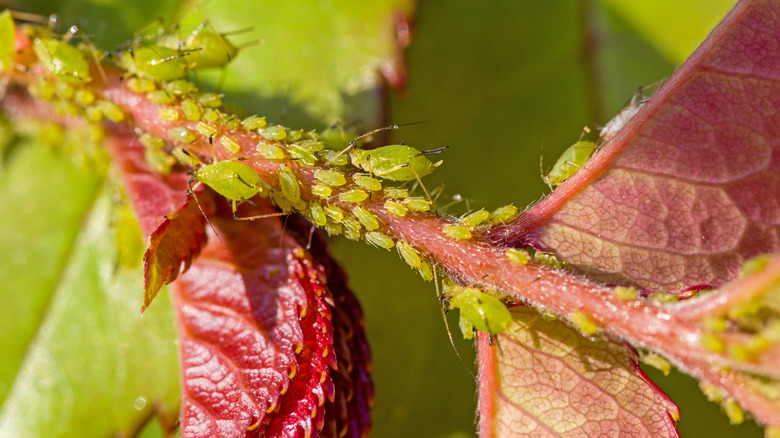
It can be devastating if you're out in your garden, admiring your plants, and you spot an infestation of aphids. Of course, your immediate reaction might be to declare war on those aphids and grab whatever insecticide you have on hand to blast the little pests with everything you've got. Before you give in to this impulse, consider all the beneficial insects that might just be lurking nearby. For a safer option, why not consider sweet-smelling orange peels, as aphids are deterred by the scent?
Orange peels contain a natural oil that has d-limonene in it, which is a compound that is toxic to aphids. If orange oil is used on the pests, the limonene will destroy the wax coating that covers the aphids' bodies, and they'll suffocate. But the real benefit of scattering orange peels is explained in a 2024 study published in the Journal of Toxicology that mentioned the fact that citrus plants, like oranges, contained an aphid-alarm pheromone known as (E)-β-farnesene, which repels the pests.
The same study also said that orange peel and leaf extracts contain the compound, sesquiterpene, which has true repellency and makes aphids instinctively move away from the scent. So, scattering orange peels around your plants — especially those with new growth or buds —can really help to keep those pests at bay. You could even take this one step further and target the pests directly in the form of an orange peel spray. Don't forget that there are plenty of other clever ways you should be using orange peels in your house and garden.
Two ways to use orange peels to keep aphids away from your plants
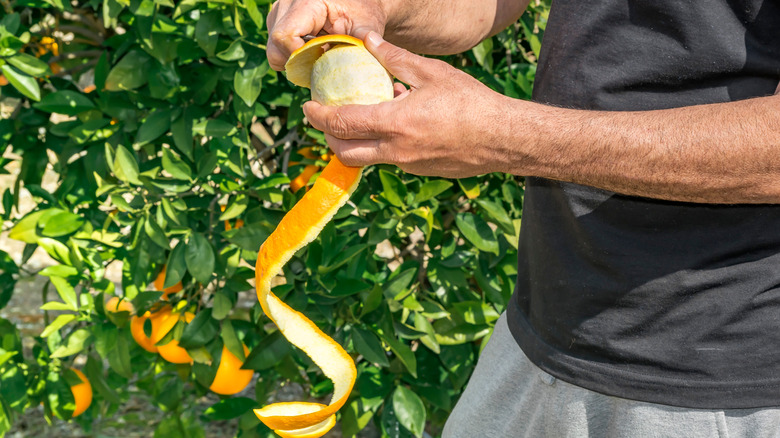
To effectively deter aphids, just scatter a handful of peels around the base of susceptible plants that have tender new growth and flower buds. Bear in mind that the fragrance is going to dissipate fairly quickly, so you'll want to replace dried peels with fresh ones on a regular basis, even daily, depending on how hot the weather has been. If you cut oranges in half in the morning for juicing, try to chop the peels up a bit smaller to release more of the scent and make them go a bit further in the garden.
Another thing you can do is make a spray by boiling some peels in water for around 10 minutes. Let this cool overnight before straining the liquid into a spray bottle and adding a few drops of dish soap. You can then use this spray to cover the tips of plants that you know aphids make a beeline for. Make sure you do a small test first to ensure the mixture won't have any adverse effect on your plants, as d-limonene can burn plant leaves if it's too concentrated.
Once you know your plants don't mind the citrus spray, you can even use it to target the aphids directly, thereby killing them fairly quickly. As the smell won't last all that long and more aphids will find your plants, you'll probably want to re-apply the spray every three days. Finally, did you consider that the overuse of high-nitrogen fertilizers may be the real reason your plants are covered in aphids?