

What Happens If You Plant Grass Seed Before A Downpour?
We may receive a commission on purchases made from links.
Do you intend to plant some grass seed over the weekend, but the weather forecast is predicting a heavy downpour just after? Depending on what type of area you're sowing and your lawn seeding technique, you might want to hold off scattering that seed because you may just find that the rain is going to wash a lot of it away. This will be even more likely if you're seeding exposed dirt and the area is on a slight slope. As the rain falls, it's going to create little rivulets of water that will take any seed that's sitting on top of the soil and move it further down the hill, and there's really nothing you can do about it.
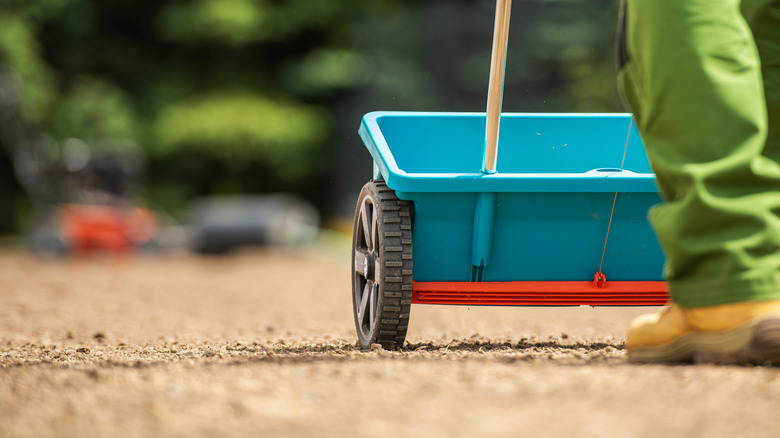
Grass seed is small and light, and a lot of people just use a seeder to scatter it as evenly as possible over the bare ground. How long it takes for that grass seed to grow will depend on the species, but most lawn seeds will take at least seven days to germinate, so if there's a downpour a day or two after seeding, there will be no roots yet to hold the seeds in place. This means that it's going to be easy for the water to just carry the seed away as it washes over your turf area. This can result in bare patches and thick clumps of germinating seeds in other spots. However, if you're just overseeding an area that already has some grass coverage, you'll find that the seed will be a little more protected and is likely to stay in place.
What you can do to protect your grass seed
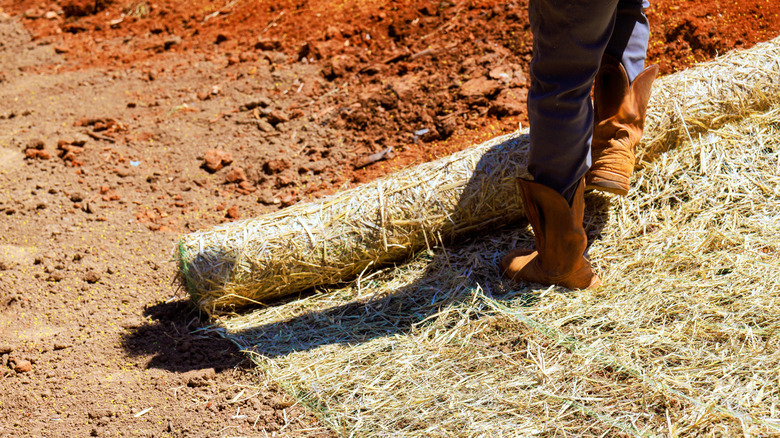
If you can't reschedule your grass seeding job and the only time you can do it is just before there's a storm predicted, then there are a couple of things you can do to try and protect the seed and keep it in place. After you've spread the seed over the dirt, use a landscape rake to gently rake the seed further into the soil. You might even like to add some mulch over the ground, such as straw, but make sure that it's weed-free. This will help to break the force of the heavy raindrops and dissipate the water so that it soaks into the ground rather than running off straight away. The straw mulch will also help to keep the seeds moist, helping them to germinate.
Another thing you can do to protect your freshly sown grass seed from getting washed away by an impending downpour is to cover the entire area with something like an erosion control or straw seeding blanket, like this biodegradable EZ Straw Grass Seed Germination and Erosion Control Blanket. This type of product will also protect your seeds from being blown away or picked up by birds. If you just have some bare spots in an existing lawn, heavy rain shouldn't wash the seed away because the rest of the turf will provide some protection. However, you might still like to lightly cover the seeded areas with a bit of straw. For the greatest success, though, you might want to find out the best time to plant grass seed for a lush lawn.