

Not Coffee Grounds, Not Banana Peels, The Kitchen Scrap Your Compost Will Love
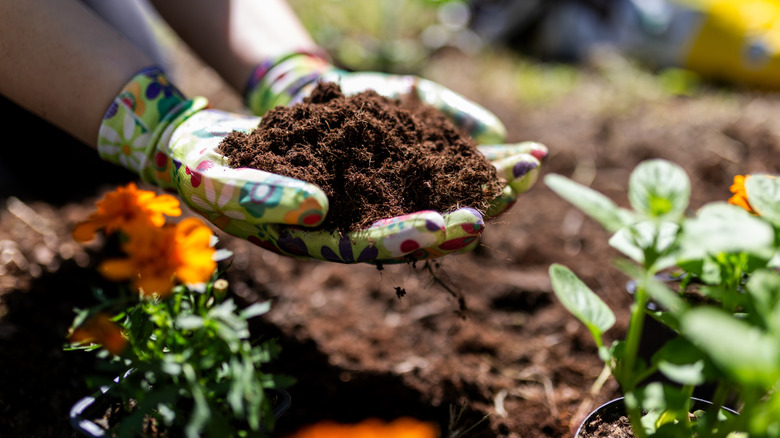
Coffee grounds, banana peels, egg shells, and vegetable scraps barely scratch the surface of what you can include when making your own DIY compost. If you just look around your home, you're bound to discover plenty of items that function as green or brown material (both of which are essential to the process of creating compost). By knowing exactly what's okay to add, you can start saving money on store-bought fertilizer and create your own liquid gold.
You may not have thought of it before, but the wilted remnants of flower arrangements in your home can also be put into your compost bin — adding valuable green material for microorganisms to feed off of. Most people just discard them when they show signs of dying. However, for gardeners, it's an opportunity for bouquets to gain a whole new purpose as fuel for your composting efforts. If you need another reason to grow your own flowers or treat yourself to a farmer's market arrangement on a weekly basis, you're welcome.
Tips and cautions for composting bouquet flowers
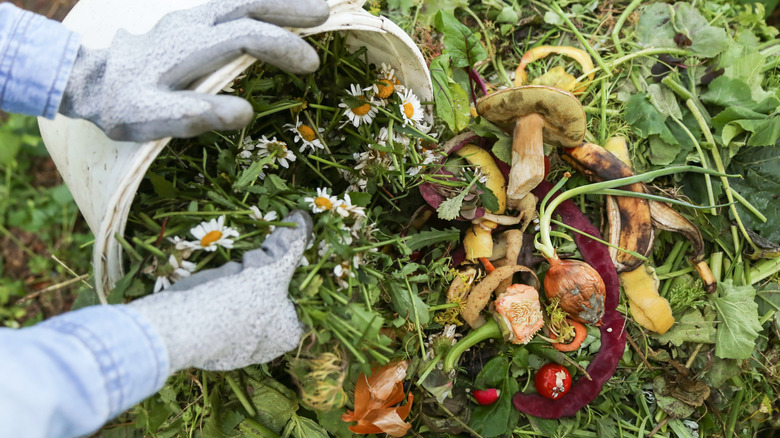
Before you can start recycling bouquet flowers for compost, there are a few things to be aware of to ensure success. First, flowers don't have to be completely dried to go in the compost bin — although dried flowers act as brown material, wilted or slightly dried also works as green material. You can add flowers at any stage. Consider leaving roses and thorny plants out of your compost pile since they take forever to break down and can produce some unpleasant surprises when handling compost later on. You should also exempt store-bought bouquets unless they come with a label certifying they were grown without harmful pesticides. This is important if you're planning to add them to compost that will feed edible plants, as it ensures your fertilizer is organic and free of chemicals. Since pesticides and commercial treatments are designed to kill pests and limit bacteria, they can also disturb the balance of nutrients and beneficial microbes within compost. The same goes for dyed flowers and those that have been resting in water treated with liquid feed packets.
You won't have to play a guessing game if you learn how to home grow flowers or only get bouquets from a sustainable, eco-friendly source. Once you've determined what can and can't be repurposed as fertilizer, you need to discard plastic pieces and chop up flower arrangements just like you would any other organic material. This helps them decompose quicker and gives worms and microorganisms a head start on breaking it down, ultimately speeding up the compositing process.