

Is The Solution To Keeping Snails And Slugs Out Of Raised Beds Already In Your Yard?
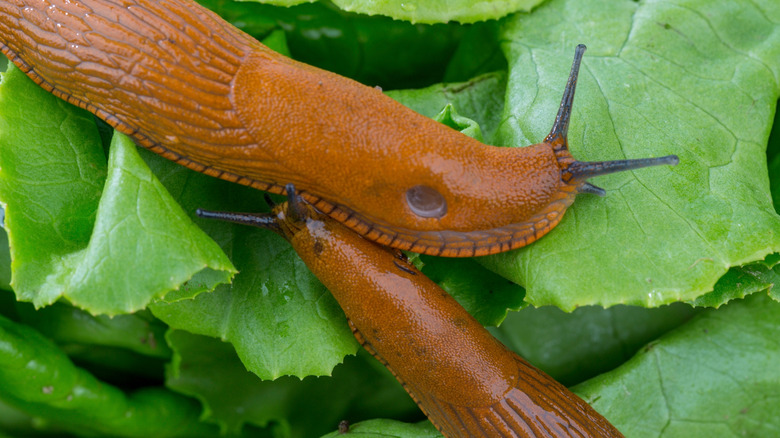
If you have raised beds in your yard, you probably grow lots of annual plants, like vegetables and flowers. You'll also know that those tender young seedlings are an absolute smorgasbord for all the snails and slugs in your neighborhood. It might seem like the gastropods have traveled from near and far for a veritable feast when you go out to the garden in the morning and see all of your seedlings have disappeared overnight. In desperation, you search online and end up finding ways to protect your seedlings from pests, plus a few recommendations for using a natural solution you can already find in your yard (or, at least, nearby) that will deter the pests — pine cones. But do they really work?
The premise is that because pine cones are quite rough in texture, the soft-bodied pests won't like crawling over them. So, if you place pine cones around your tender plants, your seedlings will be safe. This might make sense at first, but science tells us that the mucus snails and slugs produce allows them to easily crawl over even razor-sharp edges. Although a few social media creators say this method works, we couldn't find any evidence that backs this up.
However, if you have pine cones in your yard or there's a pine forest not that far from your home, this is a free option you could try. There's no harm in testing this out for yourself to see if you have any success, as the cones do make a useful mulch. At the very least, they should keep cats out of your raised garden bed.
How to try the pine cone solution for deterring pests
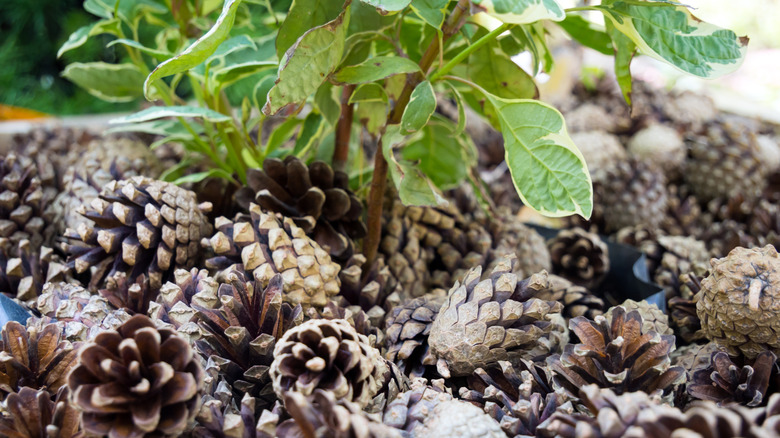
To see whether this hack is going to work for you, the first thing you'll have to do is collect as many pine cones as possible. This is easy if you have a pine tree in your yard, but if you don't, check with your neighbors to see whether or not you could collect their fallen cones. If there are no pine trees in your neighborhood at all, you might just have to travel a bit further and find a pine forest. But, before you stop at just any pine forest, contact the U.S. Forest Service office or the Bureau of Land Management. Some areas require permits to collect cones.
Once you have some rounded up, pile them around the plants in your raised beds. Depending on the size of your beds, you may prefer placing them around the perimeter as a type of barrier. You'll actually find that if the bed is raised high enough, it will be more difficult for the slugs and snails to get to your seedlings, anyway.
However, the mollusks can still reach your plants, no matter what type of barrier you try to use. According to The Royal Horticultural Society, a study run by entomologist Hayley Jones found that none of the plant barriers (including options such as crushed eggshells and pine bark mulch) tested reduced snail damage on lettuce plants. Of course, one way you can prevent snails from invading your garden is to grow plants they don't like (such as fennel, rosemary, or thyme) as a border around your more susceptible species.