

What To Do If You Find Squirrels In Your Compost Bin
We may receive a commission on purchases made from links.
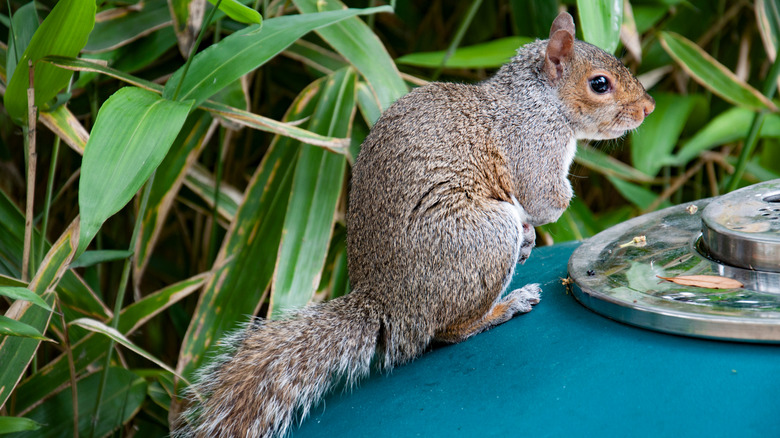
Nothing quite prepares you for the shock of eyeballing your compost bin and finding it punctured by a nasty, ragged hole. The squirrels are at it again. After going through the immense pain of correcting all the common mistakes that attract squirrels to your bird feeder, you're now tasked with keeping these marauders out of your compost bin. Not an easy endeavor, but luckily, surmountable. The strategy? Watch what, when, and how you toss into your compost bin, and ensure that the waste is decomposing properly. Elevating the bin over a hard surface and protecting it with mesh wire or reinforcing its lid may also tire out squirrels, sending them elsewhere. Other propositions include reducing food smells by regularly emptying and washing the bin, or relocating the bin if everything else fails.
Before taking any retrofitting and future-proofing measures, however, make sure squirrels have left the bin. If you find them mid-meal, depending on how brave they feel, they may just go on eating until they have had their fill, and leave thereafter, which makes it easier to track their exit. However, if you're unsure, cover the hole with a wad of paper and monitor for movement for about two days. Once you're assured they are in no danger of getting trapped inside (they'll move the paper on their way out), take the following measures.
Change how you dispose of food waste in the compost
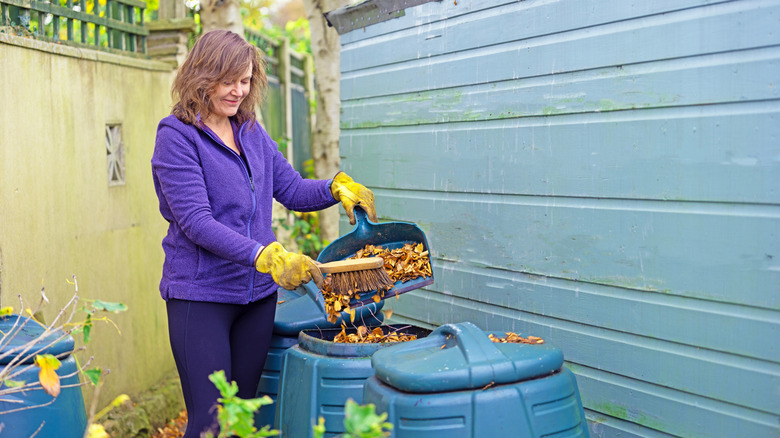
According to the Environmental Protection Agency, over half of municipal waste is made up of food and other organic waste like shed leaves, cardboard, and wood. Since, in landfills, they decompose to release methane, many cities provide curbside compost bins so they may be converted into valuable soil amendments instead. However, when rodents give trouble, you must watch what you toss out.
Squirrels arrive when they sniff out food and gnaw through the bin to help themselves to the scraps. While it may seem harmless, it creates an entryway for other disease-carrying pests, including rats, mice, and raccoons. Your neighbors are unlikely to look upon this travesty, the ensuing outpouring of rotten material, or the odors favorably. To avoid that, be wary of placing dross from oily or seasoned food, meat, fish, dairy, or eggshells into the bin. Pack food waste in compostable bags, like these compostable bags from Unni on Amazon, to mask its odor, or freeze it if you have the space and wait until trash collection day to put it in the bin. Make sure no food spills over to the plastic — keeping a newspaper underneath can be handy.
Another option, if you have considerable yard waste and like to make your own DIY compost, is to first line the bin with plant materials such as leaves or sawdust, known as "browns," and then decant food materials (or "greens") in the center. Top dress again with brown materials to add a carbon boost, maintaining the greens-to-browns ratio at 1:3 (also called "lasagna style" composting).
Repair or modify the compost bin to keep squirrels out
Cities that sponsor compost bins usually repair them or replace them, if asked. If that's not an option, you can patch the hole with a ¼-inch heavy-duty wire mesh or hardware cloth, such as this option by Forimo on Amazon (avoid chicken wire as it won't hold up against squirrels' ever-growing nosh). Afterward, ensure the lid sits square, or the squirrels may chew through the edges or knock the whole thing down. String a pair of bungee strings through the handles and put down a brick to fully secure the lid, or add a secondary lock, until collection day.
Move your compost bin from soil to a hard surface, or pile up bricks around the base to prevent burrowing from underneath. You can also wrap the bin in hardware cloth about 18 inches up from the bottom, as well as along the interior base and the opening, to foil squirrels' sneaky tactics. If this hurts curb appeal, relocate the bin to a secure, shaded spot, like a spare closet, garage, or basement, and return it to the curb before collection. Spray it down with a water-diluted cayenne pepper solution, coffee, or peppermint oil for further deterrence, and respray after it rains.
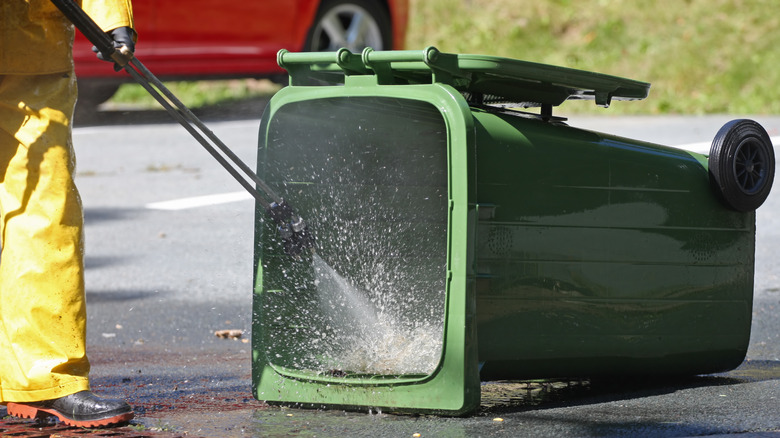
Lastly, empty your compost can weekly, even if it isn't full. Wash it routinely to hide food odors; you may also add baking soda at the bottom afterward. Let it dry fully before replacing the lid.