

Give Tomatoes A Boost With A Fast-Growing Companion That Also Blocks Out Weeds
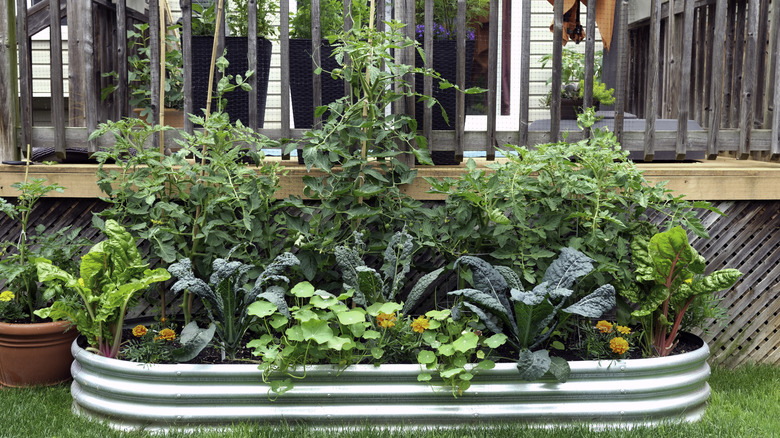
Most people who plant tomatoes would probably agree that they are some of the most rewarding crops to grow. The taste of a sun-warmed, vine-ripened tomato straight out of the garden is genuinely impossible to beat with any tomato you would get from the grocery store. However, those same people would likely agree that tomatoes can be needy in terms of water, food, and growing conditions. I'm a permaculture specialist, and I think those issues can be greatly remedied by a good ground cover like white clover (Trifolium repens).
White clover is one of the best low-maintenance ground covers for tomatoes. It spreads fast, is super low-cost, and can withstand mowing and foot traffic. It's also a perennial, so it will come back year after year without any extra effort. Do note, though, that white clover is listed as invasive in Oregon, Wisconsin, Michigan, Kentucky, and West Virginia.
As a permaculture specialist, I'm generally opposed to bare soil. Exposed ground around your tomatoes can invite weeds that compete with and smother your tomatoes, like bindweed or chickweed. Trying to maintain bare ground around tomato plants also means that the soil will lose moisture quickly, increasing the chance of blossom end rot and other issues. The soil will also compact with lots of rain, or you'll lose nutrients and volume to surface runoff. It can also cause heat stress to the surface roots as the soil gets too hot. Thus, a good ground cover is key.
Why white clover works so well for tomatoes
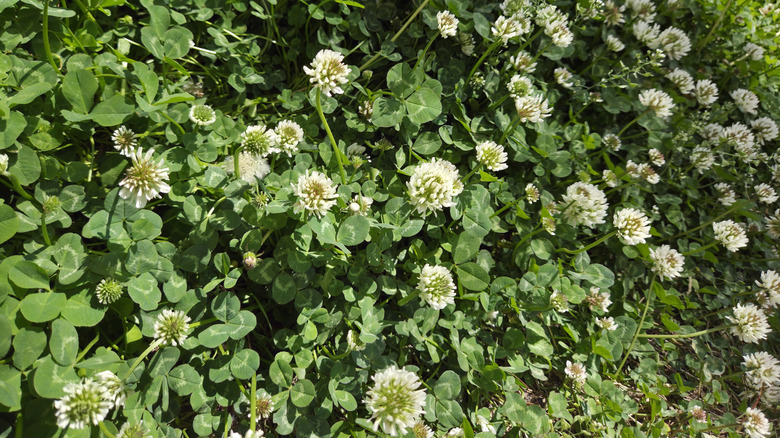
White clover is one of the options for plants that need lots of nitrogen. It is a legume, so it acts as a nitrogen fixer, which means that it hosts rhizobia bacteria in specialist nodules on its roots and can fix atmospheric nitrogen into the soil and switch it to a form that nearby plants can directly use. The stolons (or root-like stems) of white clover also help to break up compact soil and create air pockets as it moves.
Tomatoes are notoriously heavy feeders, so using white clover is a smart way to provide a low, steady nitrogen supplement that the plant can feed from as needed without any intervention from you. It basically acts as a self-renewing, slow-release fertilizer. As a weed suppressant, white clover is simple and effective. It forms a dense, low-growing mat that blocks light and helps to prevent weed seeds from germinating. Plus, aside from the tap root, the rest of the roots remain shallow, so it won't excessively compete for nutrients.
Another one of the things I love about white clover is that it attracts hordes of bees and other pollinators once it flowers, which helps to more fully pollinate your tomatoes. Because it behaves like mulch, clover helps to retain moisture, reducing evaporation and the frequency with which you need to water your tomato plants. On top of that, tomatoes are particularly prone to a huge range of fungal and bacterial plant pathogens, many of which are transferred by water splashing from the soil, picking up contaminated soil particles that bounce back up onto the tomato plant leaves. With a covering of clover in the way, this risk is significantly reduced.
How to plant white clover, and pitfalls to avoid
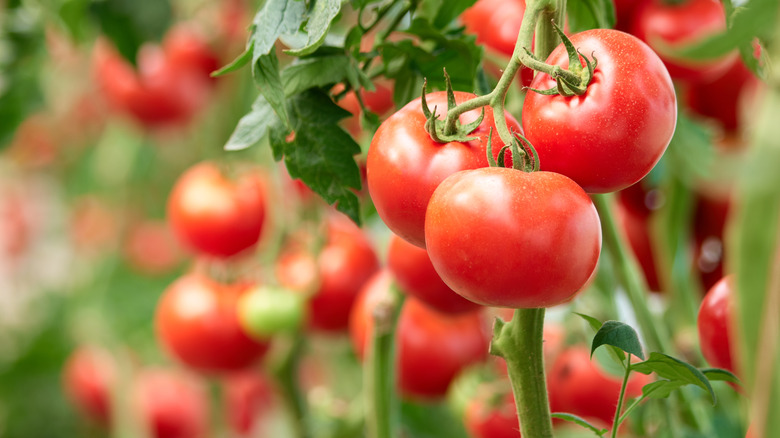
Planting white clover is super easy. The biggest key to success when using it as a companion plant for tomatoes is to wait until your tomato plants are well established. Otherwise, the clover may out-compete them. Plant large, healthy tomato starts in their final position, and give them about two weeks to get established before you sow the clover seed. Sow clover thinly between the tomato plants, water it in, and wait. It will germinate fairly quickly; once established, it will spread and form mats.
White clover can tolerate the partial shade created by big bushy tomato plants. If it starts getting too thick or begins crowding the tomato stems, clip it back and leave the trimmings in place as a light mulch. Just remember that clover is a source of nitrogen, so avoid using nitrogen-heavy feeds; otherwise, you'll end up with magnificently leafy tomato plants with hardly any fruit.
If you want an alternative to white clover that you can just turn back into the soil at the end of the year, crimson clover is a solid choice that just does pretty much the same job, but is an annual. When you turn it back into the soil or after it dies off, it quickly breaks down and adds nutrients and organic matter back into the top layer of the soil.