

What Is The 20% Rule For Solar Panels?
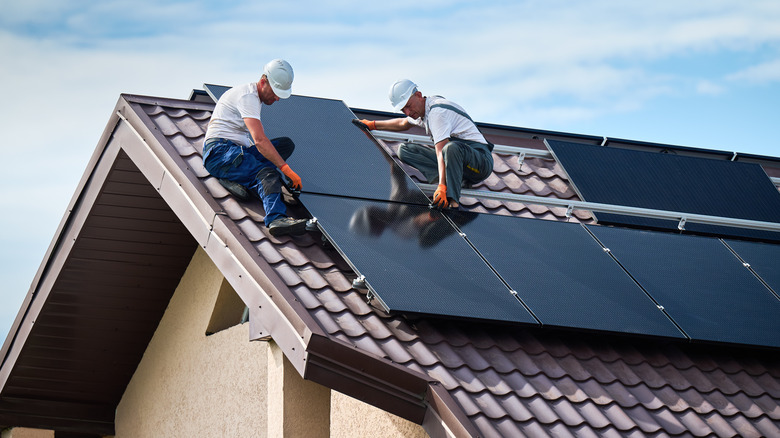
The expression "saving for a rainy day" can be literal when it comes to solar energy. Rainy days are part of the rationale behind the 20% rule for solar panels, but there's more to this guideline. When you're outfitting your home with solar panels, companies recommend that you size the system to supply 20% more energy than you use on average per month. For example, the average U.S. household consumes roughly 30 kilowatt hours (kWh) per day; with this number in mind, according to the 20% rule, a solar panel system would supply 36 kWh.
This additional 20% "buffer zone" fills gaps in energy production that may be caused by fluctuations in sunlight. But even if you live in a region with abundant sun, there are other reasons to follow the 20% rule when preparing for your energy needs. Cloud cover isn't the only possible barrier between solar light and your panels. Less daylight during the winter months, along with anything that lands on the panels (think dust, debris, and snow), will affect how much energy you're able to reap from the system.
There will also be months when you use more electricity than normal, and this bit of energy cushion ensures you won't find yourself short of sustainable power when you need it most. Conversely, during periods when the sun is delivering more juice than you need, you may be able to earn an exciting credit on your energy bill. Power companies in some areas buy back surplus electricity produced by customers with solar power; check with your local utility company, since compensation varies and isn't uniformly available across the nation.
Using the 20% rule to calculate the solar panel system size
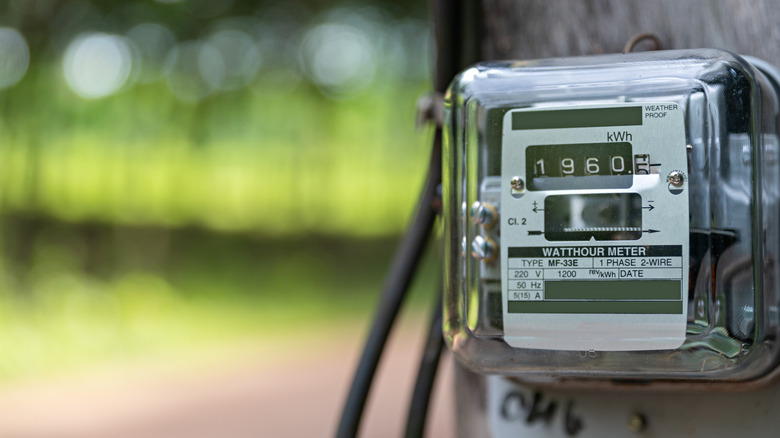
To calculate the system size using the 20% rule, gather a year's worth of electricity bills. Add the usage together (in kWh) and divide the sum by 12 to get your average monthly consumption. Then, multiply the average by 1.2 to add the 20% — that's the total system capacity you're aiming for. An expert solar panel installation company should be able to help you meet this target number by figuring out the right quantity of panels and their optimal roof placement. These experts can also give you insights into possible solar energy buyback programs in your area and discuss options for adding a battery to your setup for sunless periods.
Paying for more panels than you strictly need can take a big bite out of your finances and may feel hard to justify. However, keep in mind that even if your utility company doesn't offer buybacks for surplus energy, adding solar panels is an eco-friendly upgrade that can boost your home's value. More importantly, the extra 20% of capacity gives you leeway for weather fluctuations and changes in your household's power usage. Finally, the buffer will provide a safety net for the system's inherent energy losses and offset its gradually decreasing efficiency as it reaches the end of its service life.