

Concrete Vs Cement: What's The Difference? (Plus Which One Lasts Longer)
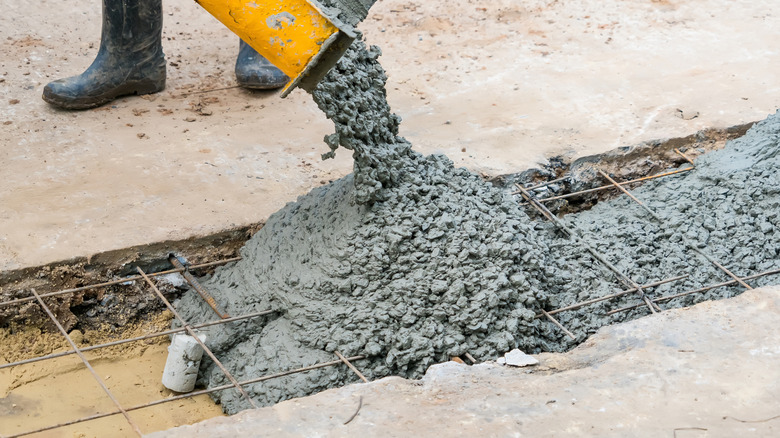
DIYing quick fixes around your home can help you to save a ton of money, but only if you can do it right the first time. For some DIY projects, you'll find yourself standing in the store, debating between concrete and cement, wondering if there is any difference. After all, people often swap around the two words without much thought. The truth is, though they look similar, they are made up of different materials, and each has a specific role to fill.
Cement is a mix of minerals like limestone, iron, and shale that have been heated and ground up finely. Concrete, on the other hand, is actually a large percentage of sand or gravel along with a bit of cement to act as a binder. Both need a bit of water to activate.
Concrete is sturdy and it tends to stick around longer than cement. This makes it the better option for anything you want to last a long time. Depending on what weather elements and weight it has to handle as well as the kind you use, concrete's lifespan is somewhere between 30 and 100 years, though things that undergo significant wear and tear, like driveways, may only be in good shape for 20 years. Cement is far less sturdy and is too porous to last decades. It doesn't get stronger as it dries and can easily crumble, which is just one of the dangers of confusing concrete with cement.
Choosing between cement and concrete for your project
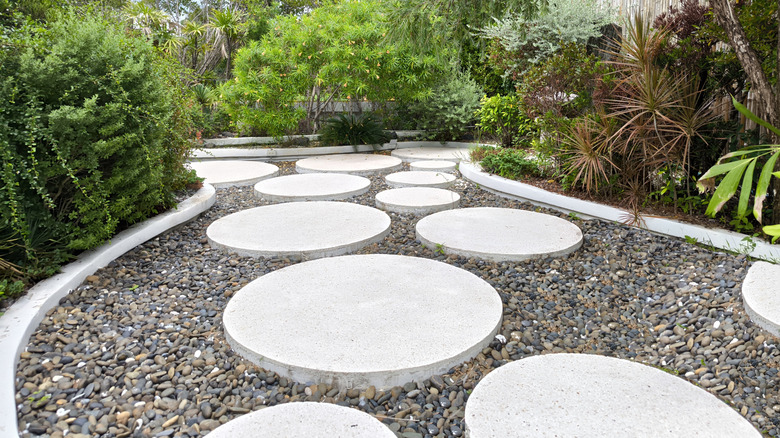
Because it can be rather detrimental to mix up these two materials, you need to understand when to use one over the other. Cement is often used for smaller projects where you want the build to set fast. It also has adhesive qualities. This is why it's used as a binding agent in mixtures like concrete and mortar. You can, of course, use it by itself in projects, such as the easy-to-make outdoor project using quick-setting cement — solar light holders. Additionally, it is often cheaper and dries faster, so it can be used for things like garden planters, tiles, and stepping stones. It's also useful for small driveway and patio repairs, though if your concrete driveway is crumbling, you may need to look at hiring a professional to fix big mistakes.
Concrete is more heavy-duty. Structures that will handle a lot of wear and tear and need to last a long time should be made with concrete. Some examples include patios, fence posts, foundations, and driveways. Because it takes longer to dry, it's also good for projects where you need a bit of time to get everything set up right.
In short, if you're looking for something cheap and easy for a cute DIY project around your home, cement is a good option, though it won't last forever. If you want something sturdy that will survive for decades, concrete is the better choice.