

They Were Everywhere In The 1920s — Now You Can Score One Secondhand At The Thrift Store
The 1920s was an era that pioneered modernity, with Art Deco glamour influencing many of the designs we see across different homes and aesthetics today. Vibrant colors, geometric patterns, and stylized adaptations of ancient cultures were some of the design elements that defined this era, seen through the period's architecture, interior design, and furniture. Sky-high buildings, grandiose arched doorways, and geometric wallpapers may be some of the more notable Art Deco products that come to mind, but a certain piece of decor was a staple during the 1920s that duly represented this movement — statement mirrors. We often see mirrors for their practical purpose, but the looking glasses from the Art Deco movement were one of the period's representations of loud luxury — a major contrast to today's quiet luxury trend.
As people moved on to softer interior aesthetics, Art Deco statement mirrors have either vanished or landed in curated antique stores. That, or they've found their way into a noteworthy go-to for shoppers who are frugal, eco-conscious, on the hunt for hidden gems, or a mix of all three: thrift stores. While most of the authentic 1920s statement mirrors listed on sites like eBay go for hundreds of dollars, you still have the chance to spot one in the thrift store if you know how to distinguish their traits.
How to find an Art Deco mirror at the thrift store
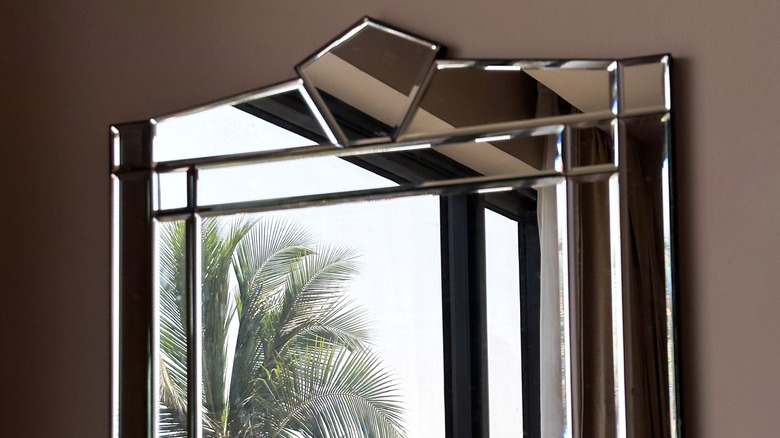
Thrifting Art Deco gems like statement mirrors may take more than understanding vintage aesthetics. Mirrors from this era were designed to feel modern and luxurious, hence their frequent use of geometric shapes. Look for either sharp angles or defined curves, both usually symmetrical in design. These statement mirrors were finished with either beveled glass edges, metallic frames, or an ornate wooden frame. If you see cloudy specks or dark spots on the mirror's surface, also called foxing, this is a sign that it's actually of the era rather than a reproduction.
Bringing vintage furniture back to life can take a lot of effort and patience, as the process will likely involve gentle cleaning and consistent maintenance over time. To restore your 1920s mirror into a better condition, prepare a soft, linen cloth or a microfiber cloth for cleaning, an old toothbrush that can gently brush away dust and grime, and some cotton buds to polish crevices. If your mirror has a wooden frame, wipe and brush the entire surface gently to get rid of any debris before wiping the frame with an orange oil cleaner or polish. For metal frames, clean with a silver polish foam to prevent tarnishing. Finally, for the glass itself, simply clean any stains with a mixture of two parts water and one part white vinegar.