

What To Do If You See Large, Bump-Like Mushrooms Growing On Your Trees
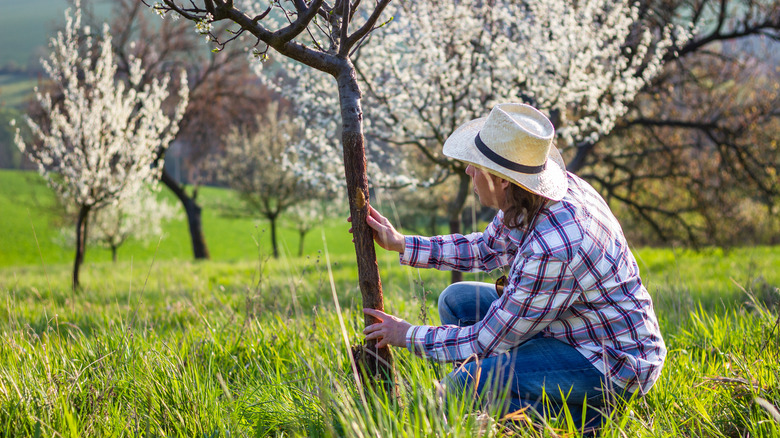
Hands down the most rewarding part of maintaining a beautiful, lush backyard garden is enjoying a nice stroll through it once in a while. What's less enjoyable is noticing a bizarre charcoal-like lump clinging to the trunk of one of your trees during said walk. It's alarming, especially after you've put so much work into cultivating healthy shrubbery. In fact, if the growth really does resemble a chunk of burned wood, you may be looking at a type of fungus: the chaga mushroom. While there are plenty of common mushrooms that grow on trees in your yard, chaga mushrooms (Inonotus obliquus) are a species that warrants immediate attention.
If mushrooms are growing on your trees, what does it mean? Usually nothing. Most mushroom species are harmless to plants at worst and helpful to your garden at best. The majority of fungi help to break down dead organic material, alongside insects like worms and other microscopic critters. The nutrients released during this process go back into the soil. However, chaga is a parasitic fungus that actively grows on living host trees — birch trees are its preferred target. If you spot a large, crusty mass on a tree trunk, the fungus has already set up camp deep inside your beloved tree. While the tree may look healthy on the outside, the presence of this fungal lump is unfortunately a sign of internal rot. While chaga mushrooms grow slowly, an infection can eventually compromise the structural integrity of the tree.
What can you do about a chaga infection on your tree?
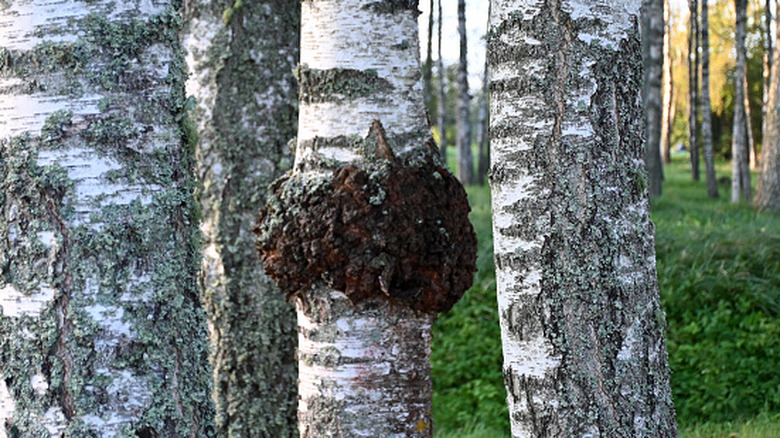
While this fungus isn't a deadly mushroom that could be growing in your yard, at least where humans and pets are concerned, it definitely spells bad news for trees. Your first instinct might be to scrape the bump off the trunk, but that won't quell the underlying infection. Mushrooms on the surface of the soil — or, in this case, a tree trunk — are the fruit of a much larger organism. The rest of the organism, the mycelium, lies hidden below the surface.
Chaga infects the heartwood of a trunk, not the softwood, so an infected tree can live for decades. However, if the tree is growing near your home or vital services, like power lines, be proactive about safety. If you have experience removing trees, you could chop it down, then carefully dispose of the dead wood to avoid spreading the fungus. Chaga mushroom spores spread mostly by wind, so avoid chipping the infected trunk, leaving sawdust on the ground, or throwing chunks of wood. Or better yet, pay a certified arborist to evaluate the extent of the internal decay and determine whether the tree is a hazard that should be removed.
To prevent chaga infections in healthy trees — particularly if they're birch trees — protect the bark. Chaga spores enter tree trunks through surface wounds caused by physical damage. Take a wide berth around your trees when mowing your lawn or using a string trimmer to avoid the blades nicking the trunk. Cut off dead or broken branches flush with the branch collar using sharp, sterile pruners to reduce wound size. If your tree does get wounded, encourage quick callus formation by avoiding wound paint and spreading composted mulch around its base.