

Not English Ivy: The Less Invasive Alternative For Your Yard
English ivy (Hedera spp.) can be lovely, but it's a plant you'll want to avoid adding to your garden. Although visually appealing, with eye-catching leaves that provide ground cover, English ivy is invasive in the United States. It can easily spread beyond its original planting site and overtake trees, eventually killing them. So, when you're planning the perfect ground cover for your yard, you'll want to pass on planting English ivy. Fortunately, there are less invasive alternatives — and that includes this spring-flowering vine.
Also known as rattan vine, supplejack (Berchemia scandens) is native to the United States. Out in the wild, you're likely to find it in the central and southeastern regions, where it grows in a variety of areas. It can grow up to 60 feet tall and blooms throughout the spring and summer with small greenish-white flowers. Supplejack is an exceptionally hardy plant, resisting not only drought but also wet soil. Because of this, it can be a great plant for beginner gardeners who are still learning the specifics of nailing a perfect watering routine. It also supports wildlife, with its fruit eaten by game birds such as wild turkeys, as well as mammals like raccoons and squirrels. You may even see songbirds visiting supplejack in your yard, making it a unique choice for attracting more birds to your yard.
How to grow supplejack
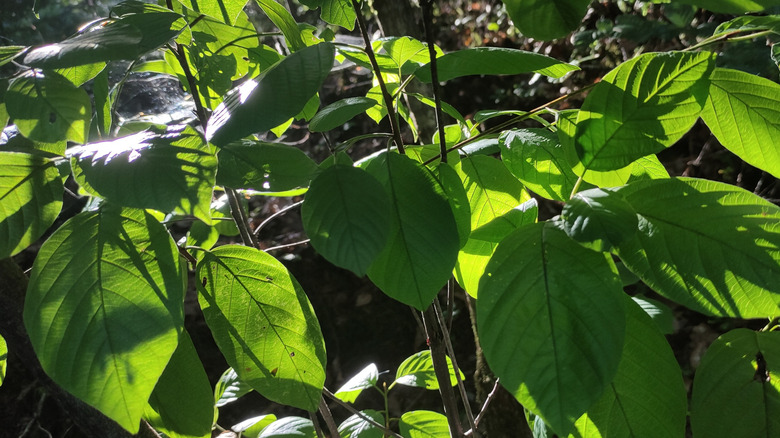
Native-species status isn't the only benefit of supplejack. The plant is also low-maintenance, making care a breeze once it's established in your yard. Vines only get larger with age, so maintaining this plant through several seasons often yields impressive results. Because it's a perennial, check your USDA growing zone to make sure it can thrive in your area. Supplejack is hardy in zones 6-9.
As far as location goes, supplejack, like English ivy, can grow on the ground or along trees. It grows well in forested conditions, with dappled sunlight or partial shade, but it also thrives in full sun, so you can easily incorporate this plant into a variety of areas throughout your yard. This durable plant doesn't just resist drought and wet soil; it also stands up to occasional flooding, making it perfect for lower-grade areas that may take longer to dry out.
Supplejack does benefit from pruning, especially if it begins to grow too dense. You can also prune it for aesthetic purposes if you want to keep it in a particular shape or area. As with many plants, you'll want to take care of any pruning before it begins its growing season, aiming for the dormancy cycle that comes with late winter.