

Goodbye Traditional Nursery Pots: There's A Non-Toxic Alternative For Your Garden
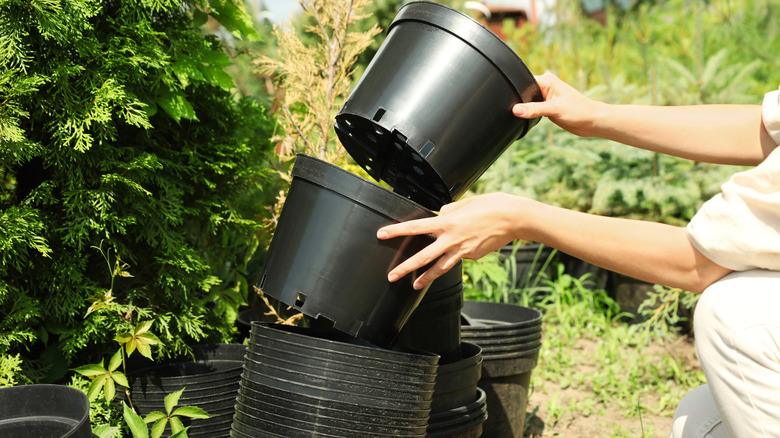
Even though you might have a stack of them in your garage or garden shed, it might just be time to say goodbye to traditional nursery pots when starting seeds and embrace a non-toxic alternative, like fiber plant pots. These are just one of several sustainable alternatives to plastic that manufacturers are working on in an effort to provide good plastic-free solutions within the nursery and plant industry.
While most plastic plant pots are generally safe to use, you don't actually know what type of plastic you may be dealing with, and some are made with lower-quality materials and could contain compounds like BPA. Over time, these may leach those toxic chemical additives into the soil and also release microplastics as they start to degrade. This is especially of concern if you're growing edible plants, which could absorb some of those harmful toxins. On the other hand, fiber plant pots are made from natural materials such as coconut coir, cardboard, wood pulp, and even cow manure. As a whole, these pots are biodegradable, which means that if you're using them for seedlings, you can plant them straight into the garden without disturbing the tender roots of young plants. As an example, some wood fiber pots manufactured in the U.S. contain no glues or binders, and can be left to safely break down in the soil over time. This leaves you with nothing to get rid of once you've planted your young seedlings in the garden, which makes it a more environmentally-friendly gardening solution.
Benefits of using fiber plant pots
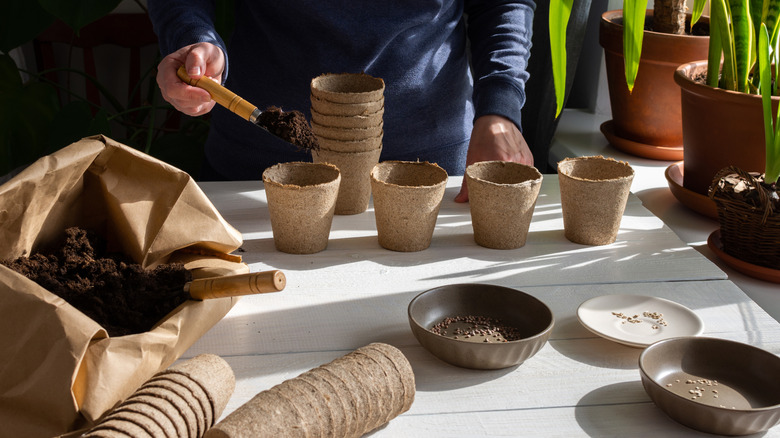
Of course, the greatest benefit of using fiber plant pots is that it reduces the reliance on plastic and thus limits the amount of plastic pots that will eventually end up in landfills. But the advantages don't stop there. The ability to plant them straight into the garden without having to disturb the roots of the species you're growing should result in healthier plants and is a simple way to save your garden seedlings from transplant shock. It also saves a little time because you don't have to ease the little plants out of their pots or the cells in the seedling trays. Any rough handling at this stage could easily damage the roots and set your plants back.
Of equal importance is the fact that these fiber pots will decompose while they're in the soil and add nutrients at the same time. Studies have found that this can happen within a single growing season, so there's no need to worry about remnants being left in the ground or the plant roots being overly restricted. Although fiber pots may initially be a little more expensive than plastic ones, the benefits to the environment, the health of the plants, and their non-toxic nature are well worth the extra expense. Plus, there's no need to waste time, water, and possibly harmful chemicals on cleaning them, so they can be reused because they can only be used once. So, whether you're using biodegradable pots made from wood fiber, coconut fiber, or other compressed fiber, reducing your reliance on plastic is good for the environment, the soil, the plants, and even your wallet. Now all that's left for you to do is to find creative ways to reuse those plastic nursery pots that are still sitting in your shed.