

Use Old Egg Cartons To Create Budget-Friendly Pavers With This Savvy DIY
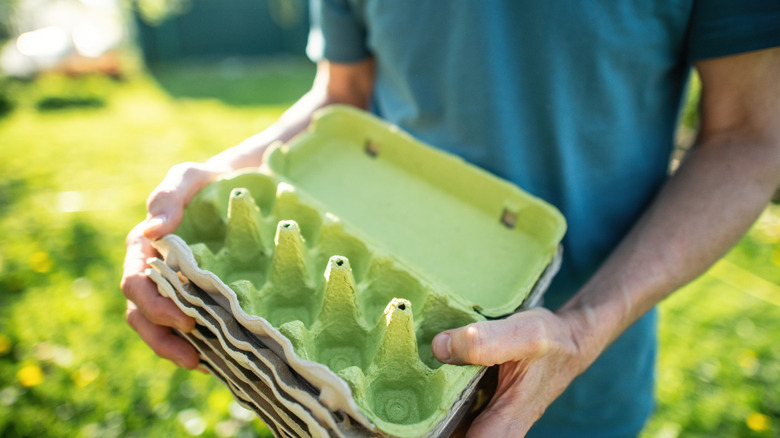
While eggs may be a good source of protein, when you buy them in large amounts, they come with a few DIY uses as well, and this hack is all about the cartons that they come in. From growing seedlings in your home to storing Christmas ornaments once the festive season is over, the trays that hold your eggs are handy for a variety of uses. One use that you may not have considered is to create budget-friendly DIY garden paths and pavers. For this home paving workaround, you won't be using the egg cartons as a compacted material but rather as a mold to create an unusual look in your yard.
This particular hack offers simplicity and affordability. Pavers can be expensive, even if you only have a small area to cover. While traditional square pavers can cost $8 to $25 per square foot, egg cartons make pavers that truly stand out with their unique shape and look, and also help reduce the amount of cement you'll be using in the design to save money. There's also a certain amount of satisfaction that comes with having created something for your yard out of hardly anything.
The finished result of these pavers offers quite an unusual look, so it may not be for everyone, but for those looking for something different, it's definitely worth giving it a go. To create your egg carton pavers, you'll need egg cartons (obviously), a few 2x4s, some sand, and the all-important cement. You'll also need a hammer, a few nails, and a masonry trowel if you have one (although not critical).
How to make pavers out of egg cartons
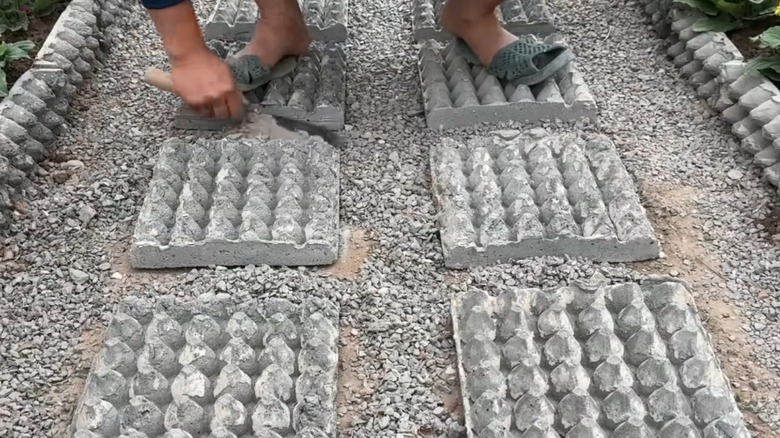
When choosing your egg cartons, opt for the larger ones that usually hold around 30 eggs. This will give you a good paving size to work with. To create the mold, you'll need to use the 2x4s as the border around the carton. Make it as flush with the sides as you can, so that you get the exact shape. Once you've prepared the sand and cement using the 4-2-1 rule for mixing concrete, position the carton in the mold you've created with the 2x4s. Then, add in the concrete and smooth it down using the trowel. You'll want to make sure the top side is level, as it will form the base of the paver when you flip it over.
You'll need to let the concrete cure before moving your new pavers into position. Depending on where you're located in the U.S. and your climate, you're probably looking at 1 to 2 days. As you can see in the video, the DIYer simply pulls up the 2x4s to get the pavers loose once cured. Depending on what sort of look you're going for, you could place the pavers as DIY stepping stones. For an added aesthetic touch, you can add garden pebbles between the pavers, especially if you're creating a walkway.
How to complement your egg carton pavers
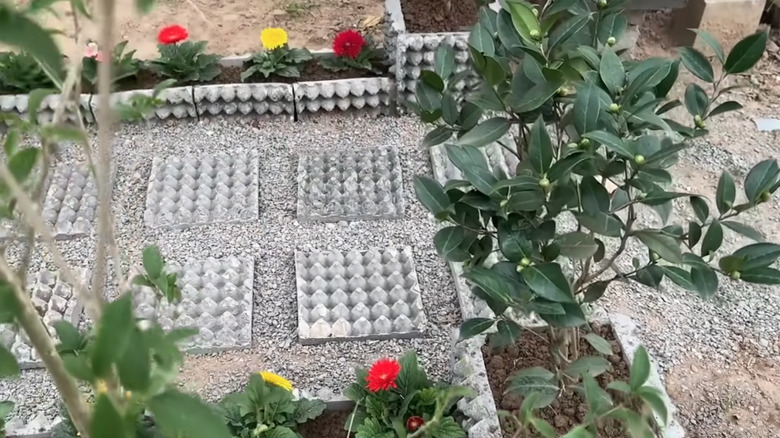
As egg carton pavers can be quite a standout feature in your yard, there are ways to complement the design with other similar touches. One of these is with flower bed borders made the same way you would the egg carton pavers.
Follow the same process as before, except cut each paver in half to create two equal rectangular pieces. You can also make a smaller mold using a regular-sized egg carton. Repeat the process, and then line these up as the borders of your flower beds. Cement them in place or simply create a line in the soil, add them in, and press them into place. The latter will give a more rustic look to your yard as they may shift over time. We recommend the cement option for something more permanent.
You can then also create DIY cement planters made with the egg cartons to place around your paving. Again, you can follow the same process as the pavers, but instead of laying them flat, position and secure them together into the shape of a planter. Using cement is a good option here. You can use these planters to help frame your outdoor space and complement the egg carton paving, which now forms part of your yard. If you get the balance right, you can create an "egg-traordinary" layout to enjoy.