

Not Worms, Not Insects: The Strange Backyard Creature That Helps Your Soil Flourish

You've likely heard that worms and other invertebrates can be good for your garden, but there's another curious creature in your yard that can help your soil to flourish, and healthy soil means healthier plants and a better-looking lawn. What could they be? These little guys are known as the star-nosed mole, a species with a very distinctive appearance. Unfortunately, moles are common but rarely seen critters that have a bad reputation for damaging turf with their tunnels and hills. But don't get too concerned if you find a star-nosed mole, because there is an unexpected benefit to having them in your yard.
These itty-bitty backyard creatures don't actually destroy your plants. You won't find them nibbling on your prized rosebushes or gobbling up your lettuce sprouts. They rarely bother with plants at all; instead, you'll find them hunting down slugs, grubs, beetles, and other bugs that will damage your beautiful plants. This makes them an excellent alternative to pesticides, and they'll also aerate your lawn for you, as well.
The star-nosed mole is a fascinating garden companion
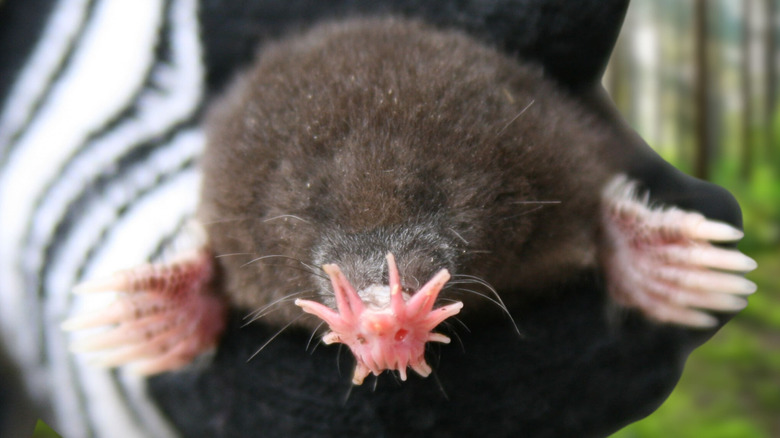
The star-nosed mole, or Condylura cristata, is a small mammal known for its strange, star-shaped nose, which gives it a rather alien appearance. They are around 5 inches long, have paddle-like feet for digging, no visible ears, and small, nearly blind eyes. Their nose doesn't look much like a nose at all. In fact, it looks more like small ring of little tentacles protruding from the front of its snout. These tentacles contain sensory organs which are known as Eimer's organs. Their nose contains over 25,000 of these special touch receptors, which enable the mole to smell its prey -– even underwater. Most moles will only swim if their life depends on it, but star-nosed moles are excellent swimmers that prefer to live in damp meadows, streambanks, and bog-like yards.
Star-nosed moles do a great job of eating the types of bugs that can destroy your beloved plants. And they can eat fast — fast enough to earn them a spot in the Guinness Book of World Records for recognizing and downing prey as quick as 0.12 seconds. They have quite a varied diet, eating everything from Japanese beetle larvae to cutworms, crane flies, midges, leeches, snails, crayfish, and even small fish. You probably won't actually see a star-nosed mole in your yard, but you might know they're there if you have shallow tunnels or small hills across the yard. The good news is that these tunnels help churn soil nutrients and aerate your lawn, providing better drainage and oxygen for your plants.
How to take advantage of star-nosed moles in your lawn
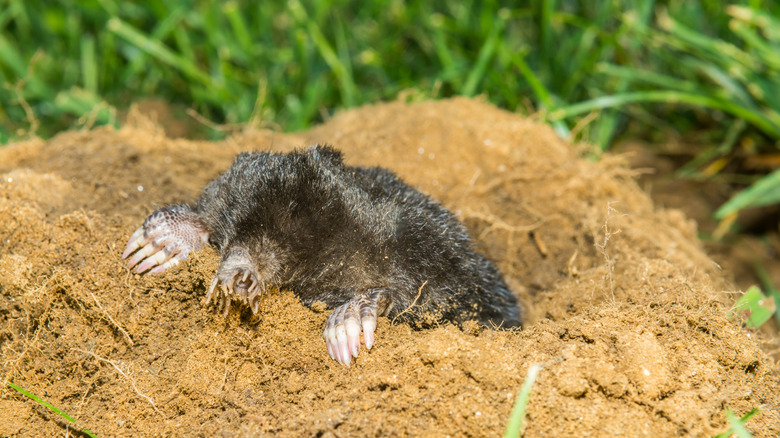
Star-nosed moles are found in the northeastern portion of North America, including the United States and Canada. You'll mostly find them in moist, poor-draining soil, near the banks of lakes and streams, in forests, and in swampy meadows. It's unlikely to find them in busy, suburban neighborhoods, because their habitat is so specific. On the other hand, it's also possible to have these moles and not even know it, since they have a high tolerance for low-oxygen, high-carbon-dioxide spaces. This allows them to stay deep underground and out of site.
If you don't live in an area that naturally has these curious-looking critters, you most likely can't purchase or capture them (or any other wildlife) to add to your yard. Your lawn will be more attractive to moles if it has swampy, wet areas with loose soil and lots of food in a space that isn't disturbed often by cars, pets, or people. If you want to keep star-nosed moles around, you should also avoid growing plants moles cannot stand.
Before luring them onto your land, you should know that star-nosed moles can inadvertently uproot small seedlings or damage plant roots by tunneling. However, if you see significant damage to plants, it's likely the work of a vole, and not a mole. It might be tricky to tell which pest is digging in your yard because you don't often see them up close. Just remember that voles are rodents that do eat plants, while moles and shrews are cousins that simply prefer the bugs.