

The Low-Maintenance Flower That Attracts Butterflies In The Spring & Summer
We may receive a commission on purchases made from links.
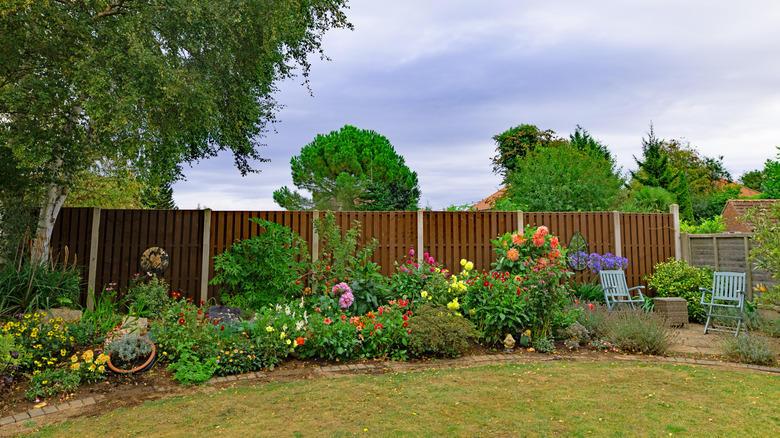
You feel like your yard could use a little extra something, though you're not exactly sure what it's missing. Maybe it's a few more pops of color — and definitely something to attract butterflies all season long. You don't have a ton of time to devote to gardening, so you're looking for a flower that can be a bit self-sufficient. If that's you, meet bigroot cranesbill (Geranium macrorrhizum).
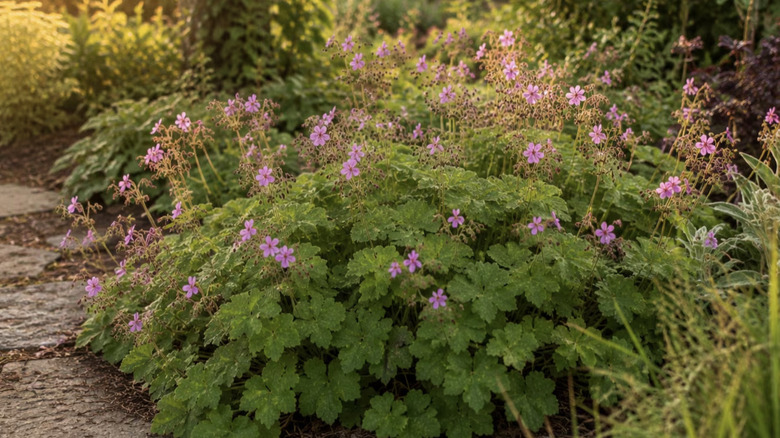
This perennial flowers with blooms of pink, purple, and white, which emerge in late spring and early summer and attract pollinators like bees and butterflies. It then shows off gorgeous red foliage in the fall. When brushed or grazed, its leaves produce a scent reminiscent of mint, which helps keep deer and rabbits away. Bigroot cranesbill doesn't just look and smell good, though; it also comes with the added benefit of being low maintenance. These plants require minimal watering, pruning, and fertilizing over the course of the season and aren't picky about soil conditions, as long as the medium drains well.
Bigroot cransebill self-seeds like a superstar, making it an excellent ground cover, while still being relatively easy to contain. Thriving in full sun or partial shade, this drama-free, independent flower can grow just about anywhere, making it a good choice if you have a sloped area that's hard to maintain. It can also be used as edging or in a pollinator garden. A bonus that most gardeners will appreciate is that its dense growth habit is great for smothering unwanted weeds.
How to plant and grow bigroot cranesbill in the garden
As long as you're in the USDA zone 3 to 8 range, where bigroot cranesbill is hardy, and you have well-draining soil, you're ready to create your low-maintenance flower garden and start the planting process. To begin, water the plants well in their nursery containers to help the transition from pot to ground. Dig a hole that is about the same depth as the nursery pot. Then gently remove the plant from the pot and carefully loosen the roots if they've become tightly wound together. Place it into the hole you just dug and add only enough soil to fill in any empty spots. If you are planting more than one, leave about 12 to 18 inches between them. Water the young plants once a week in the first year to help them get established.
Pruning is optional for bigroot cranesbill, but you can cut your plants back to encourage new growth once they're done flowering. You can also deadhead the plant to prevent self-seeding and spreading, if you are not using it as ground cover. Depending on the climate, the foliage may remain evergreen throughout the year or die off for winter. In spring, when you see new growth sprouting, you can apply a bit of fertilizer to help kick start the new season. If you're looking for more plants like this, you can explore these other 12 low-maintenance flowers that give a high-end garden look without the work, and make your summer gardening a breeze.