

Not Fallen Leaves: The Other Plant Scrap You Should Add To Your Compost
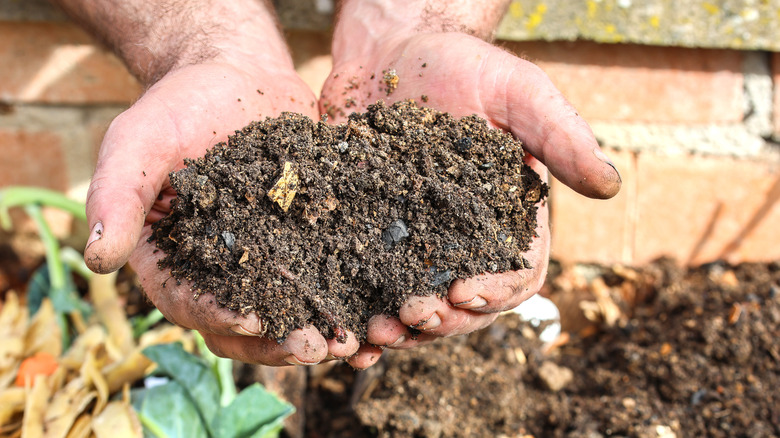
When you think about what to add to a compost pile, fallen leaves, grass clippings, and kitchen scraps may come to mind first. But they are not the only plant materials that can break down into useful organic matter. If you regularly prune your pothos, philodendrons, spider plants, ferns, or other indoor plants, those healthy houseplant trimmings can usually go into your compost, too.
There are some indoor plants you should prune for a fresh start, while others have dry brim leaves that need to be trimmed on occasion. Composting is an easy way to make better use of leaves, stems, and vines that would otherwise end up in the trash. Since houseplant trimmings come from natural plant material, they can decompose alongside other common compost ingredients and help build a more balanced pile over time. The key is making sure the scraps are healthy before you add them. Clean, pest-free trimmings are generally fair game, while diseased leaves, moldy stems, or cuttings covered in insects should be kept out. Used wisely, houseplant scraps are a simple addition that can help you waste less and get more value from your routine plant care.
Putting houseplant trimmings in a compost bin
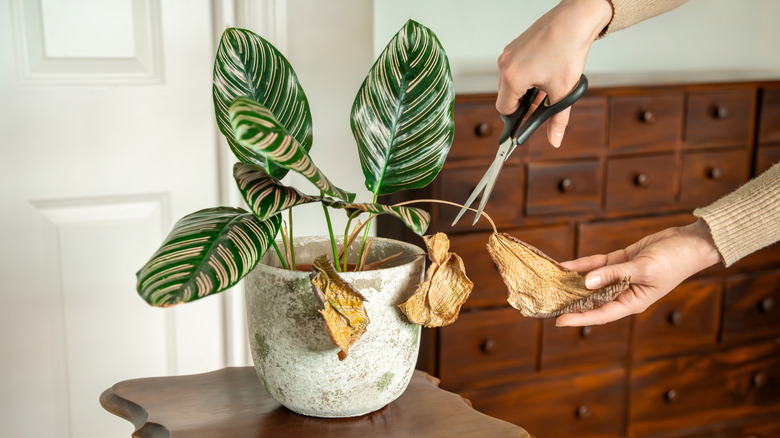
Healthy houseplant trimmings such as leaves, soft stems, spent vines, and small pruned pieces can break down much like garden clippings or other plant scraps. Putting them in a compost bin keeps usable material out of the trash and gives you one more way to turn routine plant care into something that benefits your garden later.
For the best results, cut larger trimmings into smaller pieces before adding them. Long pothos vines, thick succulent leaves, or woody stems may take longer to decompose if tossed in whole. Smaller pieces give microbes more surface area to work on, helping the material break down faster and mix more evenly with the rest of the compost.
Houseplant scraps also work best when they are balanced with other compost ingredients. Fresh green leaves and soft stems are "green" materials that will give your compost pile a serious nitrogen boost, while dried leaves or crispy plant bits act like "brown" materials that offer carbon. If your bin smells bad or looks slimy, add more dry material. If it is too dry and slow, add moisture and fresh greens.
When you should never compost houseplant trimmings
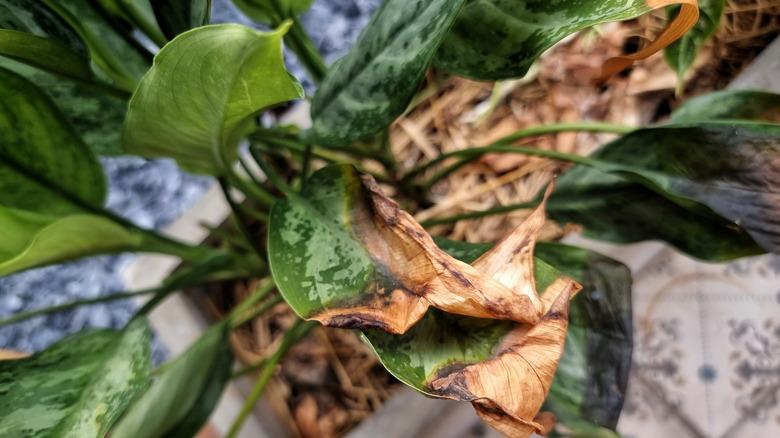
Houseplant trimmings are only a good compost addition if they are healthy. Skip any leaves, stems, or vines that show signs of disease, mold, rot, or heavy pest damage. Compost piles can get rather hot as they decompose, but they always get hot enough to kill every pathogen, especially in small backyard bins. Adding infected plant materials can spread issues back into your garden later.
There's another case where you should never add these to the compost heap: plants that were recently treated with pesticides, herbicides, or other long-lasting chemicals. If you are not sure what was used, it is safer to throw those scraps away than churn them into your garden. The same caution applies to cuttings that root or spread aggressively. Some plant pieces may survive long enough to sprout instead of breaking down.
Before adding houseplant scraps to your compost, take a quick look at both sides of the leaves and along the stems. If the plant looks clean, pest-free, and untreated, chop it up and add it to the pile. If it looks questionable, keep it out. That small check can save you from turning a helpful compost habit into a future plant problem.