

What Is The Average Lifespan Of A TV?

Once upon a time, televisions were a true investment. Back in the late '90s, the first plasma TVs cost customers upwards of $10,000 — the equivalent of over $20,000 today when you factor in inflation. With such a hefty price tag, it makes sense that users would rely on these devices until they simply couldn't any more, often sticking with the same product for decades. Nowadays, however, things have changed. Televisions have seen a major dip in pricing thanks to the development of less expensive manufacturing processes, and buying a new TV is no longer a task that requires months or years of saving up. This new tech is less expensive to produce and sell, but it also lacks the longevity of the products of the past. Current LED TVs can typically run for around 40,000 to 60,000 hours before they start to break down and show wear, which is about four to seven years for frequent users. OLED and smart TVs can last for up to 100,000 hours, or up to 12 years.
With that being said, however, there are several factors that can impact the lifespan of your television. Avoiding unreliable TV brands at all costs is a great first step in getting the most bang for your buck, but the amount of time you actually spend using the screen also has a major impact on its longevity. Additionally, factors like placement, maintenance, and even the brand's willingness to provide software updates may influence the amount of time you can go before needing to purchase a new TV.
How to extend the life of your TV and when to get a replacement
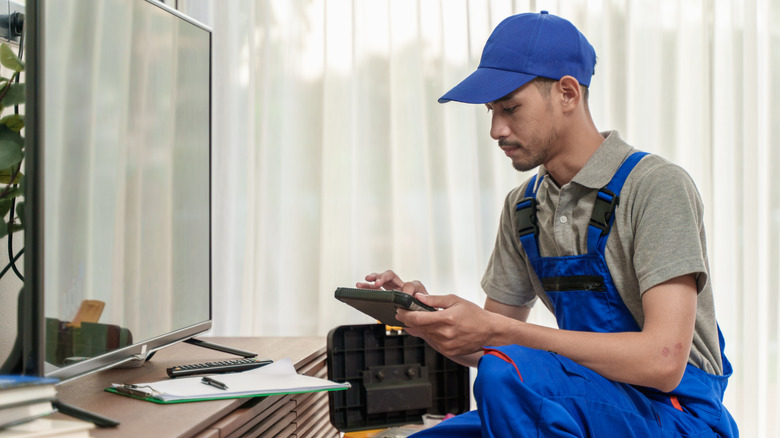
Some television issues are easy to repair — you can fix a scratched screen with a simple office supply, for example — but others are clearer signs that you need a replacement. When it comes to modern TVs, the big problems often fall into two categories: screen quality and software issues. Problems like dead pixels, burnt-in images, and fading lights are almost always signs that your screen is at the tail end of its life, and in many cases, it will cost just as much for repairs as it will to purchase a new model. Software problems are also a major cause for replacements — even if your television seems to be in good shape physically, companies will stop providing software updates for products after a certain point. This can result in a user experience that's laggy, buggy, or simply frustrating, especially if you're not able to access your streaming services or subscriptions.
While there's really nothing you can do when it comes to software-based issues, you can take steps to extend your screen's life. If you're not actively watching your television, turn off the screen. This will reduce the amount of wear and tear. It's also a good idea to avoid pausing the screen on one frame for an extended period of time, as this can cause burn-in. Luckily, many modern televisions utilize moving screensavers to help prevent this, so don't turn this off in the settings, even if you find it somewhat annoying. Finally, there's simple maintenance — dust regularly, avoid high humidity areas, and place the screen away from direct sunlight. While it will still need to be replaced eventually, these steps can help you get the most out of your TV.