

Not Coffee Grounds: The Sweet Pantry Staple To Add To Your Compost
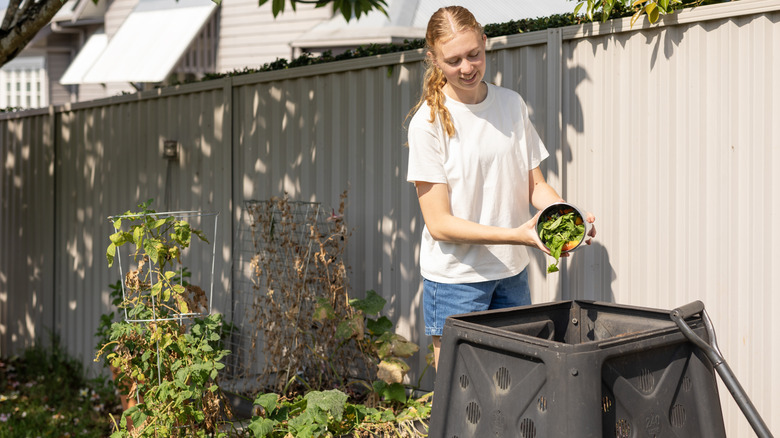
If you've just started composting your kitchen and yard waste, it can be difficult to determine exactly what you should and should not add to your compost bin. There are a lot of rules to pay heed to. You can't put anything inorganic in there. It's best to avoid dumping weeds that have gone to seed inside. Even leftovers from cooked meals are a no-go. It can be tempting to limit your compostable items to whatever you've read is 100% safe — think grass clippings, unbleached cardboard, and fruit and vegetable peelings. However, by doing so, you're missing out on a whole lot of benefits for the composition of your compost and your eventual garden health. In short, you lose some of the biggest benefits of composting at home.
One everyday food category that feels odd to add to a compost pile is fruit preserves. In fact, jellies, jams, chutneys, and similar foodstuffs are actually ripe for composting. Don't let those last few tablespoons of grape jelly or red fig fruit spread take up space in your refrigerator door — or worse, slowly grow a fine fuzz of mold. Scrape out the preserve, add it to your compost pile, and then wash out the glass jar. There are, after all, all sorts of clever ways to reuse old glass jars around the house. You'll declutter your fridge, get a new storage container or flower vase, and give your compost a sugary boost (more on why this is great soon). What's not to love?
How to properly compost fruit preserves
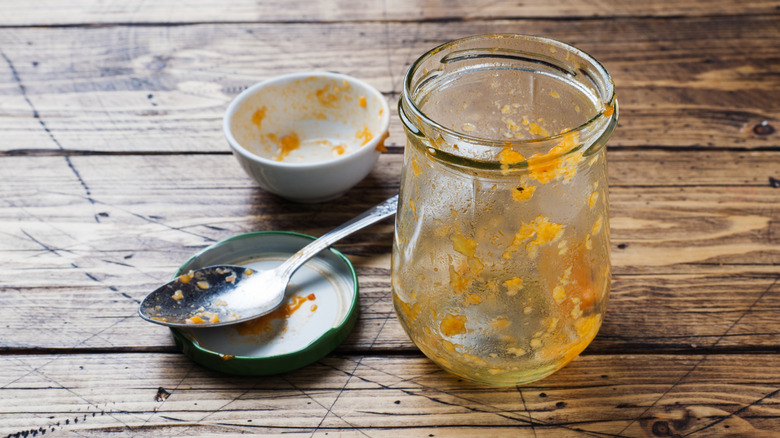
While it's certainly possible to just dump the last of your fruit preserves into your compost pile, this method has drawbacks. For starters, sugar is osmotic — it draws water out of anything near it. That's what makes it so useful for food preservation. However, less water in a compost pile means less bacterial activity, and you need that activity for a healthy compost. Sugar is such an effective dehydrator that it may also be a death sentence for the worms and other beneficial critters living in your compost bin. What's more, sugar might attract pests with a sweet tooth, like the flies that swarm the fresh-baked fruit pie or the ants and wasps that find their way into your can of soda at a picnic.
Because of these risks, less is more when adding fruit preserves to your compost pile. A little goes a long way. To do it safely, dilute the leftover jam or jelly by pouring a little water into the jar. Then dump the whole lot on the pile. This helps to distribute the sugar more evenly through the decomposing materials and decreases the sugar's potency. Plus, it makes it much easier to clean out the jar for reuse. In fact, a little bit of sugar mixed with water can activate an underactive hot compost. Because too much sugar is bad, you could also mix the watery mixture with other food scraps or organic yard waste before adding the whole lot to your compost. Oh, and try not to compost too many sticky sweet items at the same time.