

8 Clever Ways To Keep Mosquitoes Away From Your Home (& Methods To Avoid)
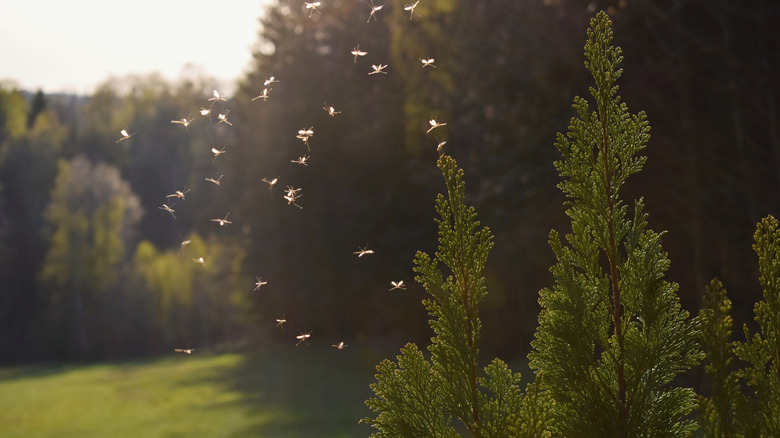
Mosquitoes are nothing if not seriously annoying. Their presence can be something of a head-scratcher, especially if you're unfamiliar with what attracts them. Even if you are, eradicating them from your property is often easier said than done. They're persistent creatures, and if afforded the right conditions, they will continue to breed. When they do, your problem will only continue to get worse. Fortunately, we live in a golden age of information, and you don't have to look far on the internet to find tips and tricks to eradicate mosquitoes from your home. But before you go ahead and start investing your hard-earned money in so-called mosquito busters, it's worth checking that they actually work.
That's what we're here to help you do. As you'll discover, the majority of effective control strategies involve finding and removing the thing that's attracting mosquitoes into your garden. And in some cases, even if you'd prefer not to remove certain elements from your landscape, there are natural additions you can make to help keep populations under control. In the sections below, we'll offer eight different approaches to keep mosquitoes away from your home. And to be sure that you invest your anti-insect budget wisely, we'll also cover five commonly-touted repellents and deterrents that don't, in fact, work.
Add a fountain to your pond or water garden to deter marauding mosquitoes
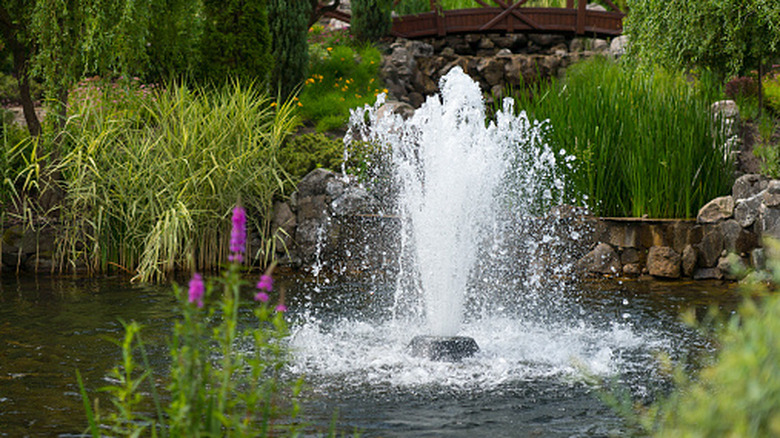
According to the Centers for Disease Control and Prevention, the most effective ways to prevent mosquitoes from overtaking your yard mostly involve removing standing water. The reason is that mosquitoes require still bodies of water in order to lay their eggs. They're not particularly fussy about where those bodies of water are. Neither do they need much water, which means it can often be hard to locate and remove it all. But one obvious source of standing water, if you have one, is a pond without circulation.
There are two ways to fix this problem. One is to drain the pond and fill it in, thus preventing it from refilling with rainwater. Or, if you've come to enjoy its presence and the benefits of having a pond, consider adding a fountain. You don't have to add complicated networks of pipes. You don't even need mains power. Provided that your pond receives lots of sunlight, a good solar-powered pump and fountain kit will do the job. The key is to keep the water moving consistently. Do that, and the moving water will make it difficult for mosquitoes to lay eggs and for larvae to survive. It'll also deter mosquitoes from laying their eggs in the future.
Change your birdbath water regularly to prevent infestation
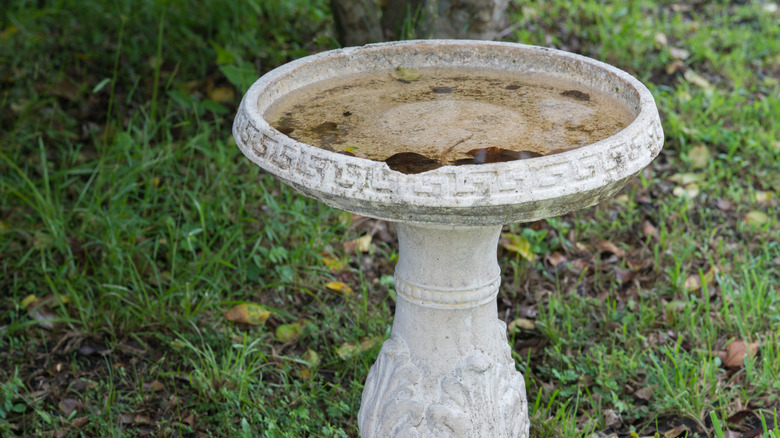
Another common source of standing water that's often forgotten about is the liquid inside your birdbath. Not only is the water still in most traditional bird baths, but since birds frequently drink from and bathe in it, it tends to get dirty fast. If it stagnates, then any mosquitoes loitering around the perimeter of your garden are sure to see it and pounce on the opportunity to lay eggs. And when they do that, your peaceful afternoons of birdwatching will instead be spent swatting away insects.
So, keep an eye on your birdbath water and make a point of changing it regularly. Not only is this good practice to keep mosquitoes away and interrupt the breeding cycle, but it also helps protect birds. The bacteria in the water can also harbor all kinds of nasty avian pathogens; in fact, not cleaning it is one of the most common ways that homeowners accidentally harm their local birds. If you can't commit to regular cleaning, consider draining the birdbath during peak mosquito season — from spring until the end of summer. Alternatively, opt for a recirculating bath. These still need cleaning quite regularly to prevent the spread of bird-borne diseases; however, one of the main advantages of adding a fountain to your bird bath is that it will, at least, deter mosquitoes.
Check your gutters and ensure they drain freely
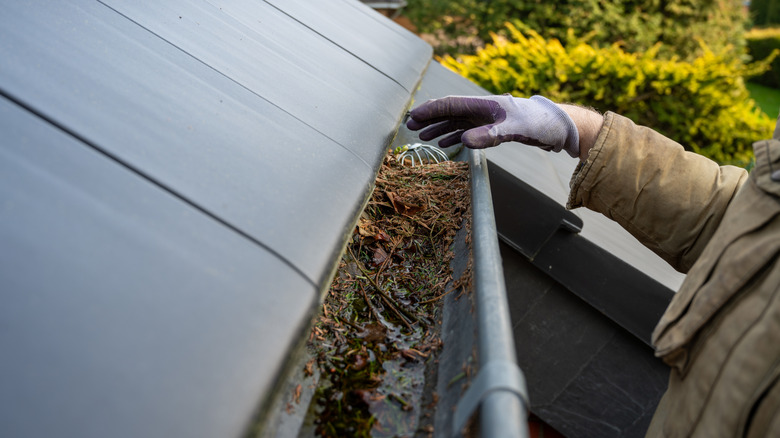
Gutters are a great example of the saying "out of sight, out of mind." The problem is, they don't stay that way for long, not if they're allowed to clog and start pooling with rainwater. When that happens, you can run into all kinds of problems. Water running down the side of your house can lead to water ingress, which in turn can lead to dampness and various other structural problems. The water can also provide a handy breeding ground for mosquitoes, who only require small amounts of standing water to lay their eggs.
So, clean your gutters! Check them periodically, and make a point of removing any detritus that's starting to build up in them. Even if you have guards in place, you should still clean your gutters. While useful, the holes in these guards can still let silt and dirt pass through, which eventually builds up and causes blockages. If you find standing water, then clear out all of the detritus and check that the downspout is draining properly. If it's not, there may be a blockage somewhere inside, which means that when it rains, it'll fill up and eventually cause water to pool in the gutters.
If you can't add a fountain to your pond, add goldfish
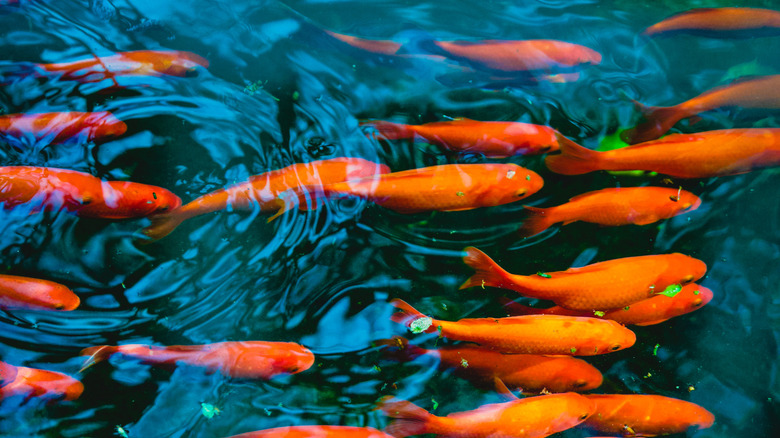
If you've been thinking about how nice it would be to see the golden orbs of fish emerging from beneath the surface of your pond, then it's a good idea. Goldfish naturally feed on the larvae of insects, mosquitoes included. And while you should look to eradicate standing water from other areas of your garden, the fish will at least help to keep the numbers around your pond from spinning out of control.
Before you go ahead and do this, it's important to bear a couple of things in mind. If the water in your pond is green and bordering on stagnant, your fish are unlikely to survive. Most ponds will need a filter system, especially after you add fish (goldfish produce a lot of waste, which needs to be filtered out). In frost-prone areas, you should also make sure your fish's new home is deep enough to prevent freezing. To keep it clean and rich in oxygen, there are several plants you should consider keeping in your pond. Submerged plants, like hornwort and willow moss, will help to keep the water well oxygenated. Floating plants like frogbit can also be included to shade the water. This will protect it from excess sunlight, thus discouraging the suffocating growth of algae.
Keep your doors and windows properly sealed to prevent home invasions
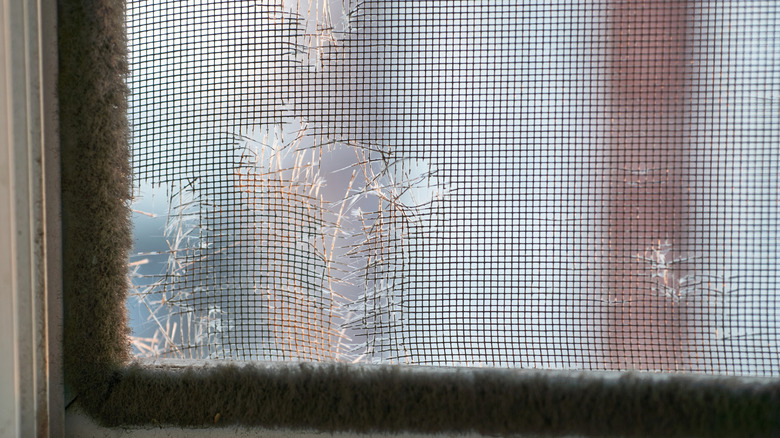
If mosquitoes are managing to find their way inside your home, then check your doors and windows. Regardless of mosquitoes, periodic checks will help you to identify any gaps and blown seals and repair them before the winter weather sets in. In the warmer months, it'll also prevent marauding mosquitoes from buzzing their way through any gaps. While you're at it, be sure to check the gaps beneath your doors and double-check the integrity of any screens. Holes in the mesh are an easy way in for insects, mosquitoes included, and should be repaired or replaced.
Fortunately, it's actually quite easy to repair the seals of your windows yourself. You can use silicone or weatherproof caulk to fill any gaps. And in case you're unsure whether your windows are offering a way in for mosquitoes, try using a candle to identify drafts. Hold the flame near the edge of the frame and move it slowly around the inside of your window. Any drafty spots will cause the flame to sputter, giving you a clear indication of where the gaps may be.
Pop a lid on your rain barrel to stop mosquitoes laying eggs
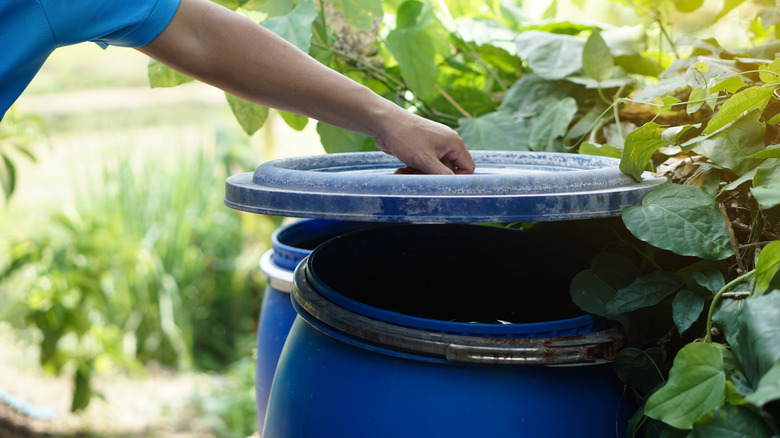
An open rain barrel is asking for mosquito problems. Especially if it's left exposed in the summer, it's sure to collect all kinds of dirt and detritus. Mosquitoes will be delighted when they find it, too, especially if the rest of your summer garden is dry. When they do happen upon it, they won't waste any time laying their eggs. Fortunately, you don't actually have to remove the barrel, which is good to know if you're keen to take advantage of the benefits of watering your yard with rainwater.
However, you do need to ensure it's covered. If you don't have a lid and you can reasonably source a replacement barrel, then consider buying one with a lid pre-fitted. Alternatively, find a piece of wood or metal that's large enough to cover the opening, and weigh it down with a stone. As long as it's properly covered, it'll block mosquitoes, giving them one less place to reproduce in your garden.
Drill holes in your tire swing to ensure it drains when it rains
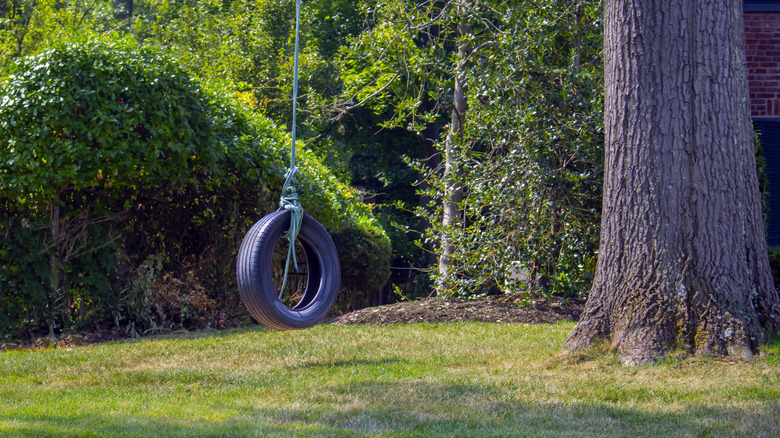
Tire swings are great for kids. Let's be honest, they're great for adults, too. The problem is, they can also provide a sanctuary for mosquitoes in search of a place to lay their eggs. Rainwater tends to collect at the bottom between the tire walls and can remain there even after periods of hot weather. It's easy to miss, too, especially if you only use the swing periodically.
To prevent water from collecting in a tire swing, just drill some holes in the bottom. Try to ensure you drill the holes in the bottom center of the outer wall to make sure that all of the water drains from it. To test it, rehang it from the tree and pour some water inside. Provided the water drains completely from the tire (and you check it periodically to ensure the holes aren't blocked), the mosquitoes in your area will have one less place to proliferate.
Use larvicides to decontaminate small bodies of water
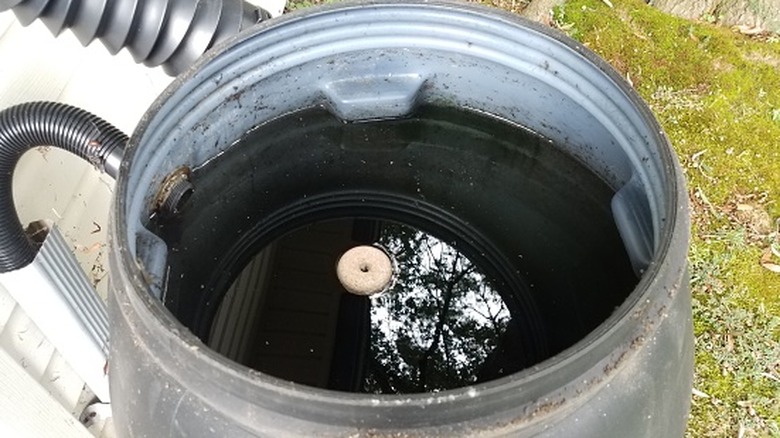
If you're really struggling to get on top of your mosquito problem and you're determined not to drain your pond or birdbath, then larvicides are worth considering. These products are specially formulated to kill mosquito larvae. They come in various forms (including pellets, blocks, and liquids). And since they're generally considered harmless to other wildlife, like fish, frogs, birds, and other animals, you can use them without worry of damaging your garden's ecosystem.
The key to ensuring you use larvicides safely is to follow the manufacturer's instructions. Some of them work upon ingestion by the larvae, while others work when they come into contact with the larvae. And they can be used for various bodies of water, too. Gutters, fountains, rain barrels, ponds — all can benefit from a larvicide dunk. That said, they only last for so long. Yes, in the short term, they can help regain control over a population that's gotten out of control. But for the best long-term results, it's always best to either remove the source of standing water, cover it, or find a way to ensure it drains.
Avoid relying on sprays and fogs if long-term deterrence is your goal
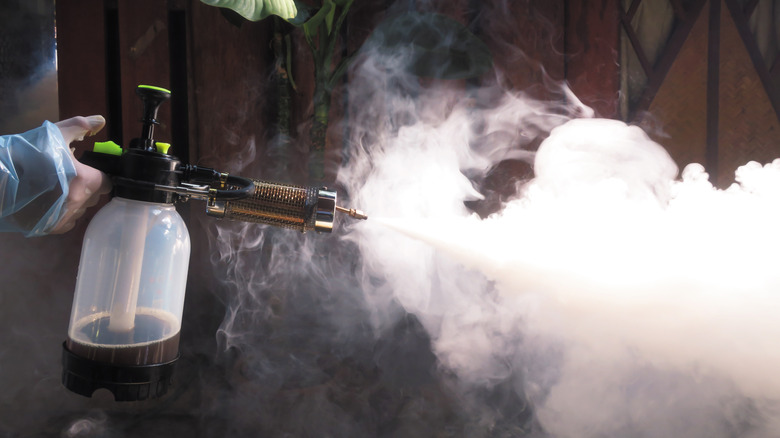
Look online for anti-mosquito tactics and, chances are, you'll come across products that include sprays and fogs. These do work to a certain extent. However, they don't do anything to fix the root of your problem. They could help to make your patio or decking less attractive to mosquitoes for a short time, so they're certainly worth considering as a temporary solution to make social occasions more comfortable. However, they wear off quite quickly.
We're not necessarily saying that you shouldn't use these products at all. In fact, if you have enough mosquitoes buzzing around your garden that you're considering a fog or spray deterrent, then by all means, try it. But once you've applied it, try to find time to check your yard for sources of standing water. As we've seen, tire swings, gutters, rain barrels, ponds, and more could all make your garden attractive. Finding and eliminating these sources of standing water is the best bet for keeping mosquitoes away from your home.
Don't rely on plants alone for their insect-repellent properties
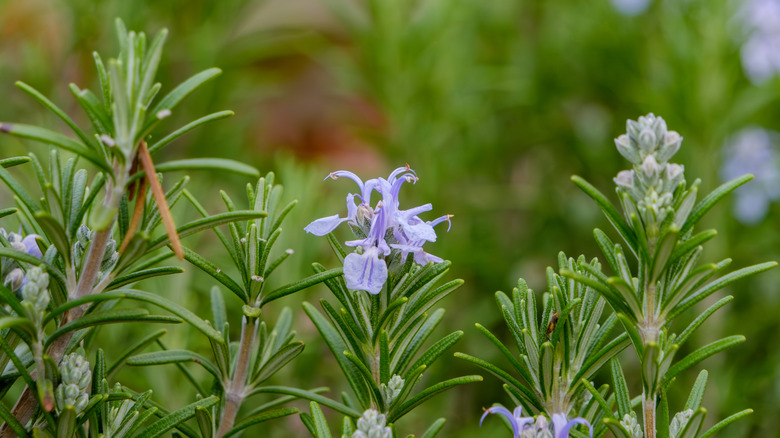
While there are various plants that are believed to deter mosquitoes, the evidence to support their effectiveness is mostly anecdotal. Unfortunately, the science just doesn't back it up. Yes, it's true that certain plants contain chemicals that, when extracted from the plant, can be a potent weapon against mosquitoes. However, you would need to crush the plants and rub them over yourself and your patio in order for them to be effective, which is, at the very least, impractical.
Now, all of this isn't to say that you should avoid planting purported mosquito repellents. Commonly recommended anti-mosquito herbs, like citronella grass and fennel, are a fantastic addition to a patio. They deliver wonderful aromas to your social space, not to mention garden-fresh herbs to brighten your cooking. Some of them, like sage and rosemary, will even attract pollinators if allowed to flower. But if you're planting purely with the goal of chasing away mosquitoes, then once again, it's better to review your yard for standing water and reserve your plants for your own enjoyment.
Be kind on other insects by avoiding traps and zappers
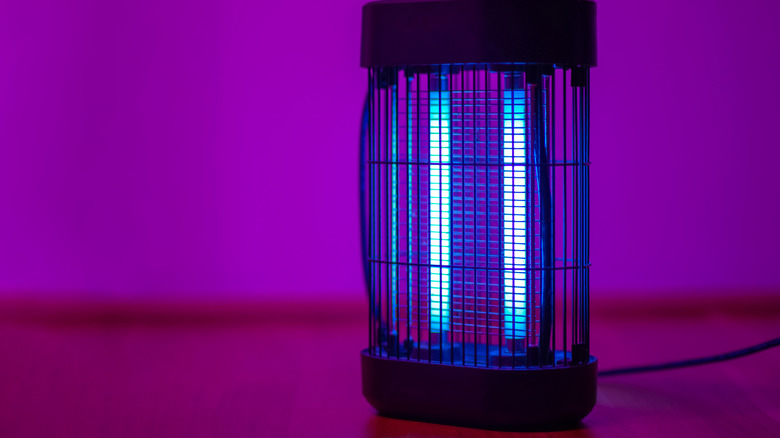
We completely understand the desire to install traps or zappers. Of all the insects that could find their way into your garden, mosquitoes are perhaps the most annoying. Unfortunately, insect traps, and especially zappers, are usually ineffective against mosquitoes. What's more, since they're nonselective, you can end up doing a great deal more harm than good to the biodiversity in your garden. In the case of zappers, they're usually designed for use at night, when the in-built lights are at their most alluring. Since many mosquito species are most active at dawn and dusk, many of the insects caught by your zapper will likely be other, more friendly species. As for sticky traps, there's no denying that they are super attractive to most insects. But therein lies the problem. By using them, you might find that they actually attract more mosquitoes into your patio area.
As always, it's best to eliminate any sources of standing water around your yard as the first defence against mosquitoes. Check beneath your porch or decking to ensure that no water has started to pool up. Even if you need an additional temporary deterrent on your decking to help while you address the issue, opt for something more effective, like fogs, sprays, or citronella candles.
Avoid broad-spectrum pesticides, especially around water supplies
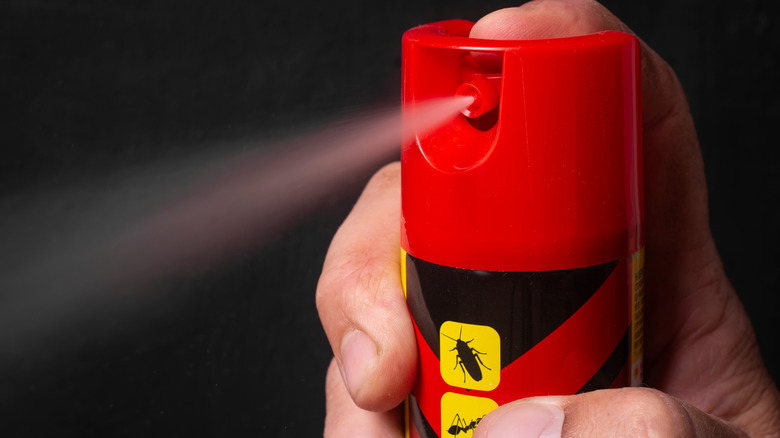
Again, like your insect traps and zappers, broad-spectrum pesticides are a big no-no if you want to preserve the well-being of the other creatures in your yard. Examples include pesticides with the active ingredients tau-fluvalinate, bifenthrin, and permethrin. Using these is one of the biggest mistakes you can make if you're trying to attract pollinators into your garden. Since they're nonselective, they'll harm any other insects that come into contact with them — no matter how localized the treated area is.
These broad-spectrum products may also contaminate nearby water bodies, like ponds. If they leak into those, then any wildlife living in and around the water is at high risk of exposure and harm. Instead, as we've already discovered, it's best to use dedicated larvicide products, which are designed to specifically target mosquitoes and are generally considered low-risk to other species. To further help make your yard less hospitable for moquitoes, clear any overgrown areas of dense brush or tall grass — as these are common hiding spots for mosquitoes.
Ultrasonic devices do more harm to your bank balance than to mosquitoes
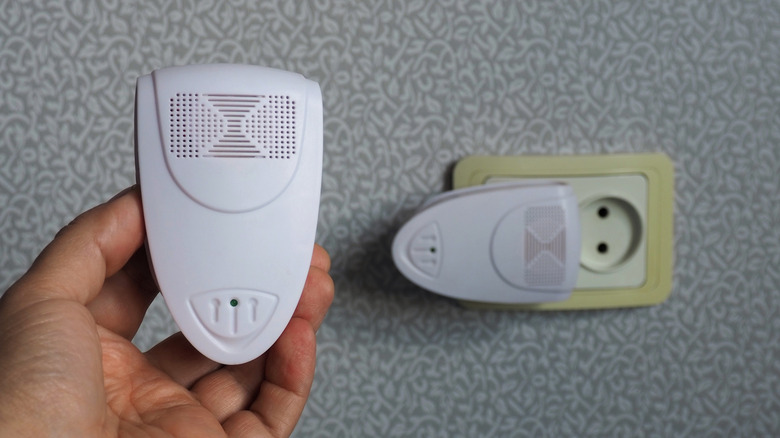
Finally, if you're contemplating installing an ultrasonic device in order to keep mosquitoes away from your home, then don't. These devices are widely touted for their anti-mosquito properties. They emit a high-frequency sound, which is meant to irritate the senses of mosquitoes and other common pests. Unfortunately, there's little scientific evidence to suggest that they actually work. On the contrary, it's been proven several times that they neither repel nor eliminate pests from around the home. In one 2010 study in the Journal of Vector Ecology, sonic devices were shown to actually increase mosquito bite rates — by as much as 50%!
There were several companies in the 1980s that faced false advertising charges from the Federal Trade Commission. The body issued another warning to manufacturers in 2001, explaining that their devices' purported effectiveness must be scientifically proven. Even now, there's little evidence to suggest that the technology has improved. And while new, apparently improved subsonic devices (those that emit a low-frequency sound) are now available, the evidence to prove their effectiveness remains scarce. Instead, you're much better off keeping your dollars in the bank and investing time into managing your home and garden. By removing or treating breeding grounds and sealing your house against invasions, your mosquito-control strategy is much more likely to be effective in the long run.