

Is It Cheaper To Lay Concrete Or Pavers?
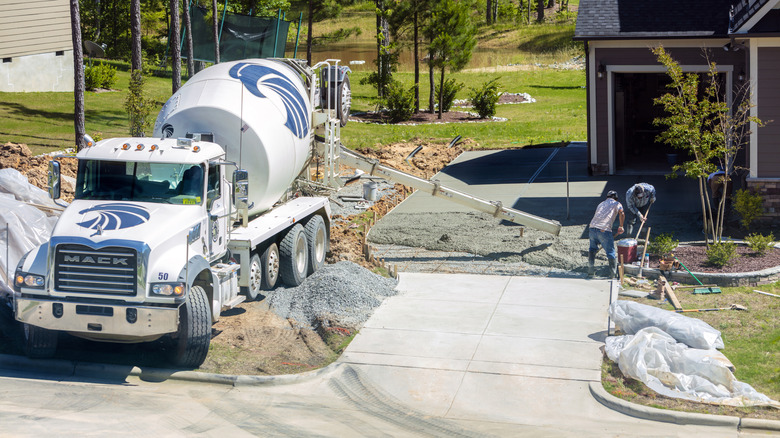
Whether you're in the process of putting in a new driveway, rejuvenating an old one, or building a patio out the back, you might be now considering whether you should select concrete or pavers for the base. If it comes down to cost, you may want to know which one is cheaper to start with. Essentially, you'll find that plain concrete is going to be a little cheaper to lay initially and can range in price from around $4 to $15 per square foot. On the other hand, depending on your selection, pavers can cost between $10 and $30 per square foot to lay, but they could actually prove more cost-effective in the long run.
Of course, this pricing really only relates to plain concrete. If you want something a little fancier, like colored or stamped concrete, which is just one way to spruce up a boring driveway, then the price could go up to $20 per square foot, especially if you have a top cast added to make it more slip-resistant. Alternatively, more labor, preparation, and attention to detail are required when laying pavers, which is why the cost is a little higher upfront.
Why there's a difference in price
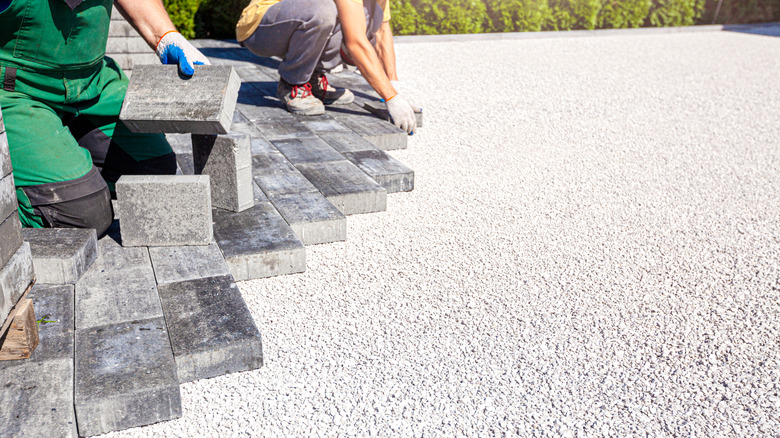
It's interesting to note that the price difference isn't all that much when you consider that laying a concrete driveway can probably be done a lot faster and with fewer materials than laying a driveway made of pavers. A slab is poured in one go using wet concrete from a cement mixer. It's then leveled out and left to cure. Adding a pattern, if wanted, is done when the concrete is wet, and color is added to the wet concrete before it's poured. On the other hand, after careful preparation, pavers need to be laid by hand, tamped down, and then the spaces filled with polymeric sand to keep them in place. Finally, the excess sand needs to be swept and blown off, and then the pavers are lightly watered in order to set the sand to keep everything in place.
However, when it comes down to longevity, you may find that pavers will win out price-wise. Essentially, concrete can deteriorate over time, especially when exposed to extreme temperature fluctuations. Once cracks appear, they're not easy to fix, and you may have to replace the entire slab, especially if your driveway is crumbling. Conversely, pavers have a smaller surface area and can move if the ground does, making them much more durable. Even if one does end up breaking or cracking, it's not that difficult or expensive to replace. Finally, if you're in an area that gets a lot of rain, pavers are one of the popular driveway materials that are permeable, which can help prevent flooding.