

Swap Your Cookie-Cutter Exterior Finish For A Stylish Alternative That Boosts Curb Appeal
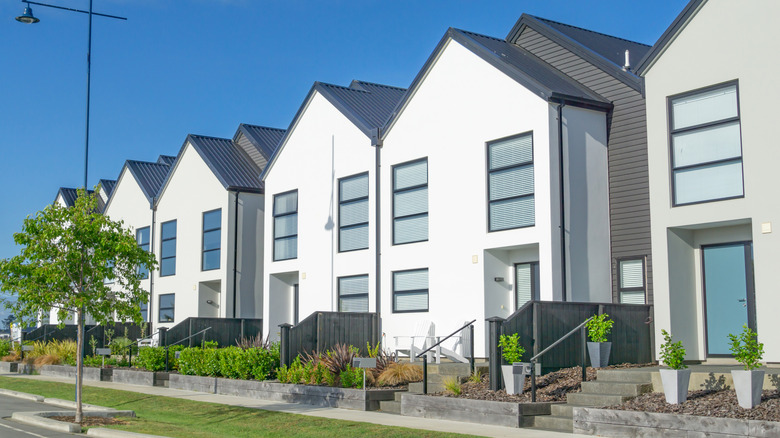
If you're feeling underwhelmed by a home exterior that doesn't stand out, there may be a good reason. The human brain is hardwired to seek out contrast, which is exactly why so many standard, single-surface home exteriors fail to leave a lasting impression. Outstanding curb appeal comes from layered variations in color and texture that draw your eye in and compel you to take notice. Achieve those layered variations by using mixed materials to align with one of the exterior finish trends that add curb appeal.
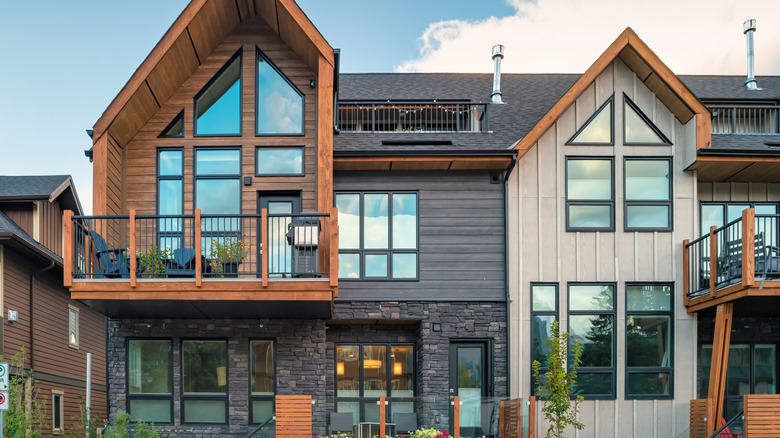
Eyes tend to glaze over at the sight of flat, single-material exteriors, while mixed-material facades capture interest. The selection of materials to consider mixing includes wood, stone, siding, stucco, metal, brick, and even glass, each bringing a different feel and dimension to your exterior facade. Learning to combine and layer them tastefully and integrate compatible colors is the key to successful design with mixed materials. Perusing exterior house color ideas to make your home look more inviting is a terrific way to get inspiration.
Choose materials that work well together
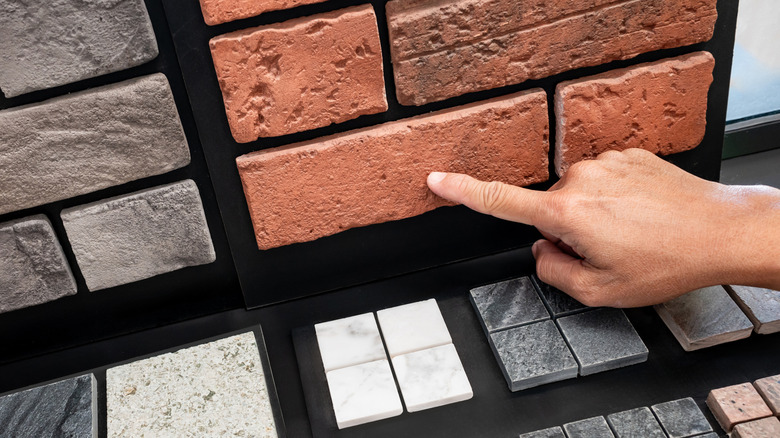
You have a few approaches to choose from for how to get started. You could choose one material that most speaks to you and let it take the lead, decide where to use it, and layer on additional materials. You could select the aspect of your home you most want to showcase, such as the entryway or dormer windows, and decide which material and color will best do the job. You might take a thematic approach that focuses on the feeling you want the exterior to convey or a color that makes a statement. Scrutinize samples of materials; writing for Home Business, Shelby Cara recommends requesting samples that are at least a foot square and viewing them in various lighting conditions.
Don't go overboard with materials or colors. Use no more than three different materials and no more than three colors in your exterior design. Break down the color aspect a step further with the 3-color rule that makes any home exterior look thoughtfully designed, including the 60-30-10 formula in which your base color encompasses 60% of your exterior. Your secondary color should complement the base color and occupy no more that 30% of the exterior, and your accent color should account for around 10%.
Classic combos of materials include stone or brick with wood, stucco and stone or metal, brick and siding, and brick and metal. Ground your home by using weightier materials, like brick and stone, on the lower portion of your exterior. You don't have to limit yourself to stone or brick "skirting," though. Consider other spots, such as columns on porches.
Layer mixed materials for a one-of-a-kind exterior
Three of the four homes designed and completed in Season 7 of HGTV's "Rock the Block" featured mixed-material exteriors. The winning home, designed by Kim Wolfe and Chelsea Meissner, featured a mixed-material entryway and courtyard with concrete elements contrasting with gas lanterns and a textured terracotta outdoor fireplace. The sleek exterior designed by Taniya Nayak and Drew Lachey drew attention with their exterior's dark, deeply saturated tones with mixed textures, including large swaths of wood. Scott McGillivray and Brooke Hogan rendered their "modern hacienda" theme with smooth structural surfaces and traditional textures, anchoring the look with a striking terracotta tile roof.
Given that designers have a good grasp on using mixed materials in exteriors, don't hesitate to turn to a professional. A reputable designer can offer much-needed guidance with a more complex mixed-materials exterior. Designers have tools that enable you to envision various mixed-material combinations before you start spending money on them.