

Why There's Simply No Need To Buy Fertilizer Anymore

Every gardener has done it. Something looks off in our garden, and we immediately think something is missing in the soil and a fertilizer bag can fix it fast. Sometimes that is true, too — for instance, when the soil lacks nutrients. However, in some cases, plants struggle because the soil itself is unhealthy and not because it is lacking nutrients. This is where organic options like compost and leaf mold can help. They not only add nutrients to the soil but also improve its other properties, like water retention and soil compaction. In fact, some soils do not need anything other than organic matter. Experts even say that when you regularly use organic materials in your garden, commercial fertilizers are only needed to add nitrogen to the soil.
Better yet? Unlike most commercial fertilizers, organic matter releases nutrients slowly. This helps feed the plants over a long period of time and also minimizes the risk of overfertilization, which in some cases can even kill the plants. You can even naturally enrich the soil of your garden with nitrogen if you just grow some nitrogen-fixing plants like beans and peas. That said, organic amendments like compost and leaf mold are not perfect.
The quality of compost, for instance, relies heavily on the things it is made out of. Similarly, leaf mold contains essential plant elements in very small amounts. Plus, if your soil has been heavily depleted, you may still need to use a fertilizer. The takeaway is that you need to build a healthy, organically rich soil and should use fertilizers only when they are really needed, not as a habit.
Feeding the garden naturally without commercial fertilizers
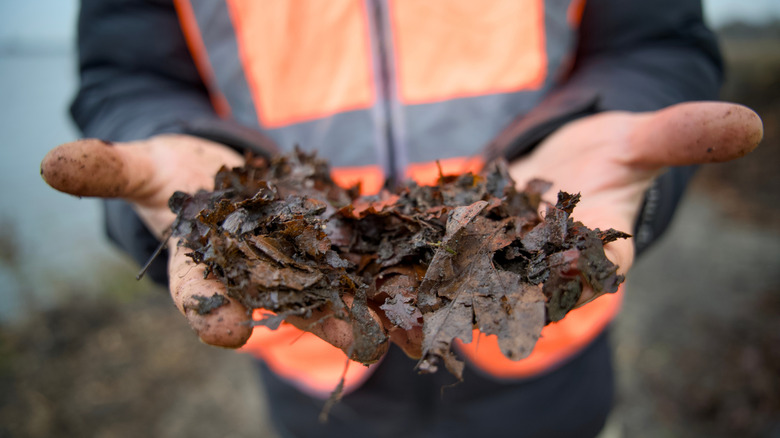
The simplest way to begin is to stop removing what your garden can reuse. For instance, you can use fallen leaves to give garden soil an extra boost. It is really easy, too. All you have to do is rake leaves into a quiet corner, collect them in a wire bin, and crush them into small pieces so they break down faster. Then, just provide them with a little bit of moisture and some time, and soon, fungi and other soil organisms will turn them into leaf mold.
Compost, on the other hand, uses a wider mix of materials. Vegetable peels, fruit scraps, coffee grounds, eggshells, dry leaves, grass clippings, all go into it. You just need to make sure that you keep the mixture balanced. Imbalance creates problems. For instance, if you add too many wet scraps, it can make the pile smell sour. However, if you add a lot of dry material, it can slow everything down. Also, there are a few things you should never add to a compost heap. Some examples are meat, dairy, grease, and diseased plants.
Other than that, though, the process is pretty simple. Just keep the compost pile damp, turn it every once in a while, and wait. Then, once it becomes dark, earthy, and crumbly, spread a thin layer of compost over your garden or mix it in with the soil. As for leaf mold, use it as mulch. Over time, rain, worms, and fungi will break down the compost and leaf mold, adding nutrients to your soil and reducing your dependence on commercial fertilizers.